Let’s be honest for a second—how much of your weekly grocery budget is literally disappearing down the drain? Or rather, coming out of a plastic bottle and into a glass? If you’re still hauling heavy cases of water up your stairs or paying for a subscription service that delivers those massive blue jugs, it’s time we had a serious talk.
We’ve been conditioned to believe that bottled water is the “gold standard” of purity. But between the skyrocketing costs of living in 2026 and the alarming recent data regarding what’s actually floating inside those plastic bottles, the “convenience” of bottled water is starting to look like a very expensive mistake.
Grab a coffee, get comfortable, and let’s break down why you should stop paying for bottled water and which filtration systems are actually worth your hard-earned money this year.
The “Bottled Water Myth” is Dissolving
For years, the marketing was simple: tap water is “risky,” and bottled water is “pristine.” However, recent studies and environmental reports have flipped the script.
The Nanoplastic Revelation
Early in 2024 and throughout 2025, researchers synthesized data that changed the way we look at plastic. It turns out that a single liter of bottled water can contain hundreds of thousands of tiny plastic particles—specifically nanoplastics. These are so small they can enter your bloodstream and even your cells. When you drink from a bottle, you aren’t just drinking H2O; you’re consuming the container itself.
The Financial Drain
If you’re buying a 24-pack of water every week, you’re likely spending between $300 and $500 a year. If you prefer “premium” brands, that number can easily double. In contrast, most high-quality filtration systems pay for themselves within the first six months. After that, you’re essentially drinking for pennies.
The PFAS Problem
“Forever chemicals” (PFAS) have been the headline of 2025 and 2026. While many municipal water supplies are struggling to meet new, stricter standards, bottled water isn’t always the solution—many bottled brands are just filtered tap water anyway. By owning your own high-end filter, you take the power of purification back into your own hands.
Finding the Right Filter: What Actually Works?
Not all filters are synthesized equal. Some just make the water taste better (by removing chlorine), while others actually strip out the heavy hitters like lead, arsenic, and PFAS. Here is the breakdown of the best options available right now.
1. The Gravity-Fed Countertop Powerhouses
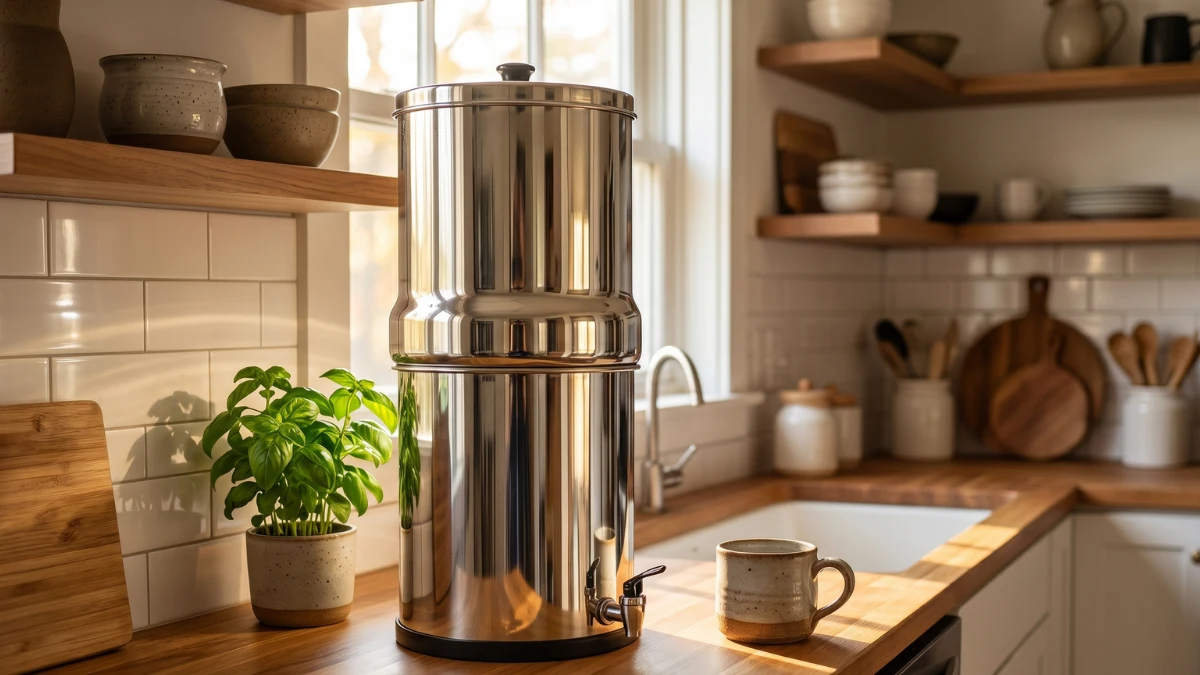
If you’ve spent any time on “Homestead Reddit” or health forums lately, you’ve seen these stainless steel beauties.
- Why they’re great: They don’t require electricity or plumbing. You just pour water in the top, and gravity pulls it through dense carbon and fluoride filters.
- The 2026 Verdict: Brands like Berkey (now back with updated certifications) and Alexapure are the favorites here. They are incredibly effective at removing 99.9% of contaminants.
- The Catch: They take up counter space and you have to remember to refill them.
2. Under-Sink Reverse Osmosis (RO) Systems
For those who want “set it and forget it” purity, Reverse Osmosis is the undisputed king.
- Why they’re great: This is the same technology used by major bottled water brands. It pushes water through a semi-permeable membrane, removing almost everything. Most modern systems now include a “remineralization” stage to add back healthy minerals like calcium and magnesium, so the water doesn’t taste “flat.”
- The 2026 Verdict: Look for tankless RO systems. They are compact, waste less water than older models, and provide an endless supply of purified water through a dedicated faucet.
- Community Experience: A common sentiment on Reddit’s r/HomeImprovement is: “I wish I’d installed my RO system five years ago. My coffee tastes better, my ice cubes are clear, and I haven’t bought a plastic bottle in months.”
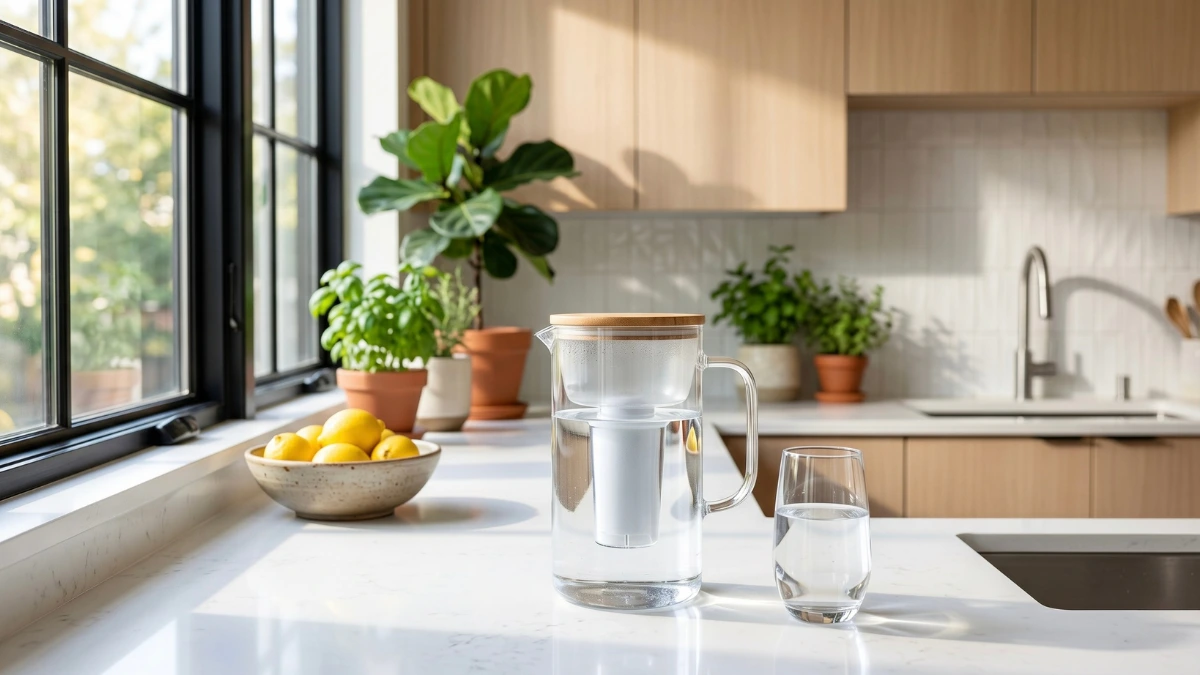
3. Multi-Stage Filter Pitchers
If you’re renting or on a tight budget, don’t overlook the humble pitcher. But forget the basic ones from ten years ago.
- Why they’re great: High-end pitchers now use 5-stage or even 7-stage filtration.
- The 2026 Verdict: The ZeroWater and Brita Elite (Hub) models are the current frontrunners. ZeroWater, in particular, is famous for bringing the Total Dissolved Solids (TDS) reading down to literal zero.
- The Catch: The filters can be expensive and may need frequent replacement if your tap water is particularly “hard.”
What to Look for
When you’re shopping, don’t just look at the price tag. To ensure you’re getting a system that actually protects your health, look for these certifications:
- NSF/ANSI 53: This is the big one. It certifies that the filter reduces contaminants with a health effect (like lead and VOCs).
- NSF/ANSI 401: This covers “emerging contaminants” like pharmaceuticals and those pesky microplastics.
- NSF/ANSI 58: Specifically for Reverse Osmosis systems.
Pro Tip: Always check the “Filter Life” versus the “Filter Cost.” A cheap pitcher with a $20 filter that only lasts two weeks is actually more expensive than a $200 system with a $50 filter that lasts a year.
Real Talk: The “Flavor” Factor
One thing people worry about when switching from bottled to filtered is the taste.
Tap water often tastes like a swimming pool because of chlorine or chloramine used by the city for disinfection. Any decent carbon filter will remove that taste instantly. However, if you find the water tastes “too clean” (especially with RO), it’s likely because you’ve removed the minerals.
Practical Tip: If you prefer the taste of “Spring Water,” look for a filtration system that mentions “Alkaline” or “Remineralization.” These systems construct a mineral balance that mimics natural mountain springs.
Maintenance: Don’t Build a Bio-Film!
The biggest mistake people make—and why some people think tap filters are “gross”—is neglecting maintenance.
If you don’t change your filter according to the manufacturer’s schedule, the carbon inside can become a breeding ground for bacteria.
- Set a Calendar Reminder: Don’t wait for the light to turn red.
- Wash the Reservoir: If you use a pitcher or a countertop gravity filter, wash the actual container with mild soap and warm water every time you change the filter.
By maintaining your system, you ensure that you are building a consistent habit of health rather than just swapping one problem for another.
Final Thoughts: The Choice is Clear
Switching to a home filtration system is one of those rare “win-win-win” scenarios.
- Your Health: You stop ingesting nanoplastics and forever chemicals.
- Your Wallet: You save hundreds, potentially thousands, of dollars over the next few years.
- The Planet: You significantly reduce the amount of plastic waste being synthesized by the bottling industry.
Whether you choose a sleek under-sink RO system or a sturdy countertop gravity filter, the best time to start is today. Stop paying a premium for a plastic bottle that’s hurting the environment and your biology. Your tap has potential—you just need the right tool to unlock it.
Note to Readers: This guide is based on current 2026 water quality standards and independent laboratory testing trends. Always check your local “Consumer Confidence Report” (CCR) from your water utility to see exactly what contaminants you need to target in your specific area.