

6 Crochet Rugs That Recall Grandmother’s Living Room
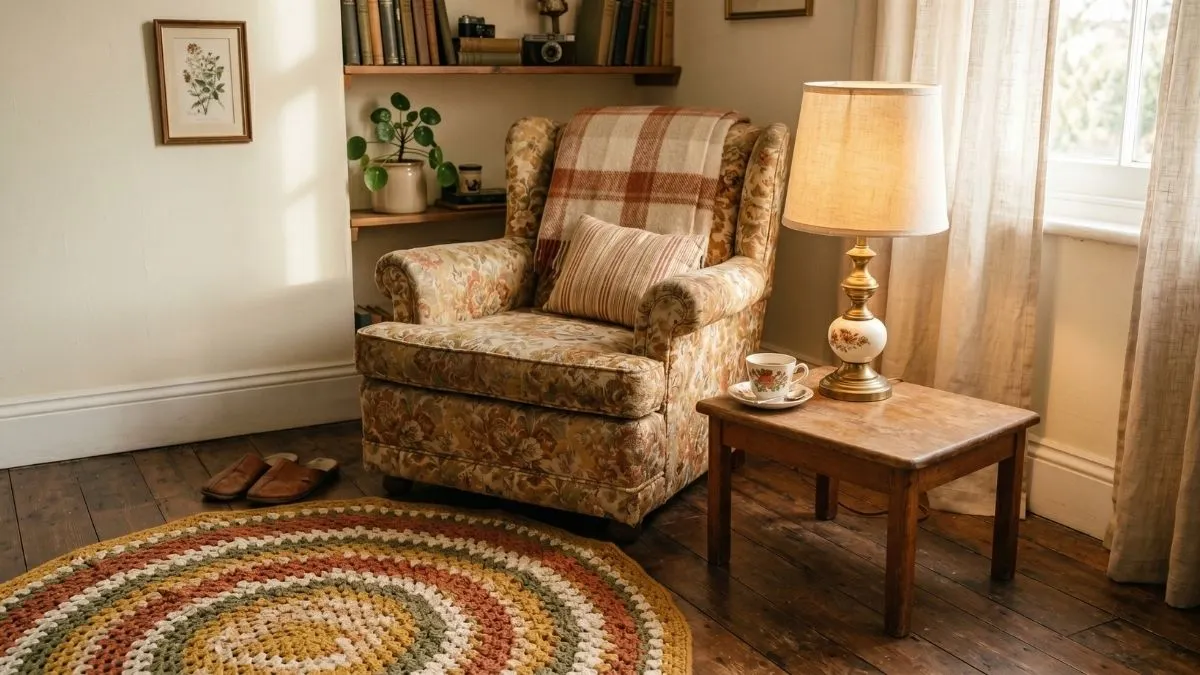
A crocheted rug rarely matches anything else in the room, and that has always been part of its charm. Long before colour-coordinated furniture sets became the norm, a grandmother’s living room rug was built square by square, round by round, from whatever yarn remained in the basket. The six designs below borrow that same instinct, using colour, shape and texture to recall a room that felt lived-in rather than styled for a catalogue.
1. Granny Square Patchwork Rug
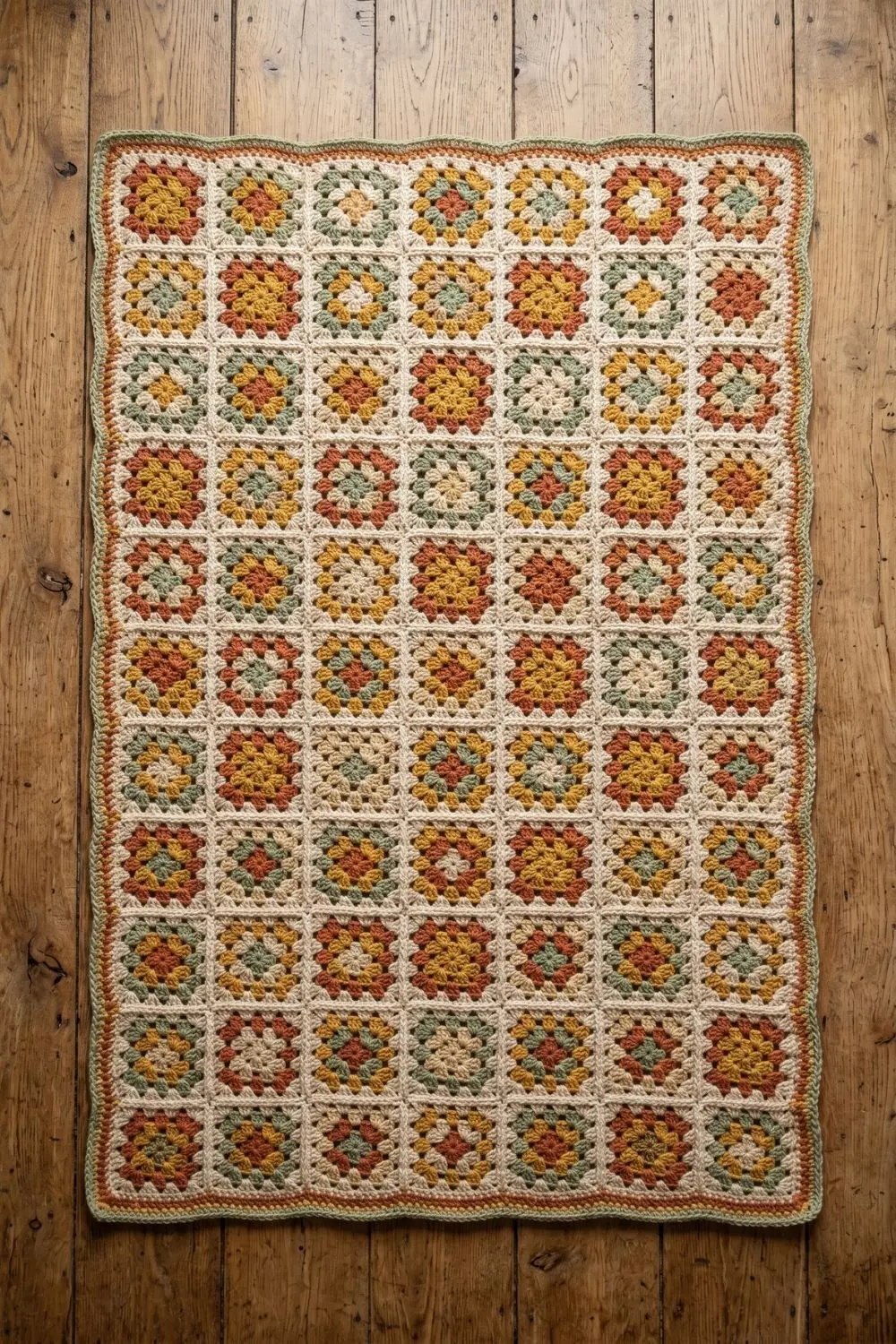
The granny square is the design most closely tied to a grandmother’s living room. A small accent piece might use only two dozen squares, but a floor rug built to anchor a full seating area often runs closer to eighty, each finished around four inches, joined edge to edge into one wide rectangle rather than a small mat. The charm sits in the contrast: no two squares need to share a palette, since the join pulls mismatched leftovers into one cohesive surface. One trick worth borrowing — repeating a single neutral, such as cream, as the final round on every square — keeps a varied colour scheme from looking accidental. The technique has stayed popular long enough that one maker’s collection of granny square rugs has stayed in daily use for years, provided the squares are finished with a sturdy border rather than left to curl.
2. Round Filet Lace Rug
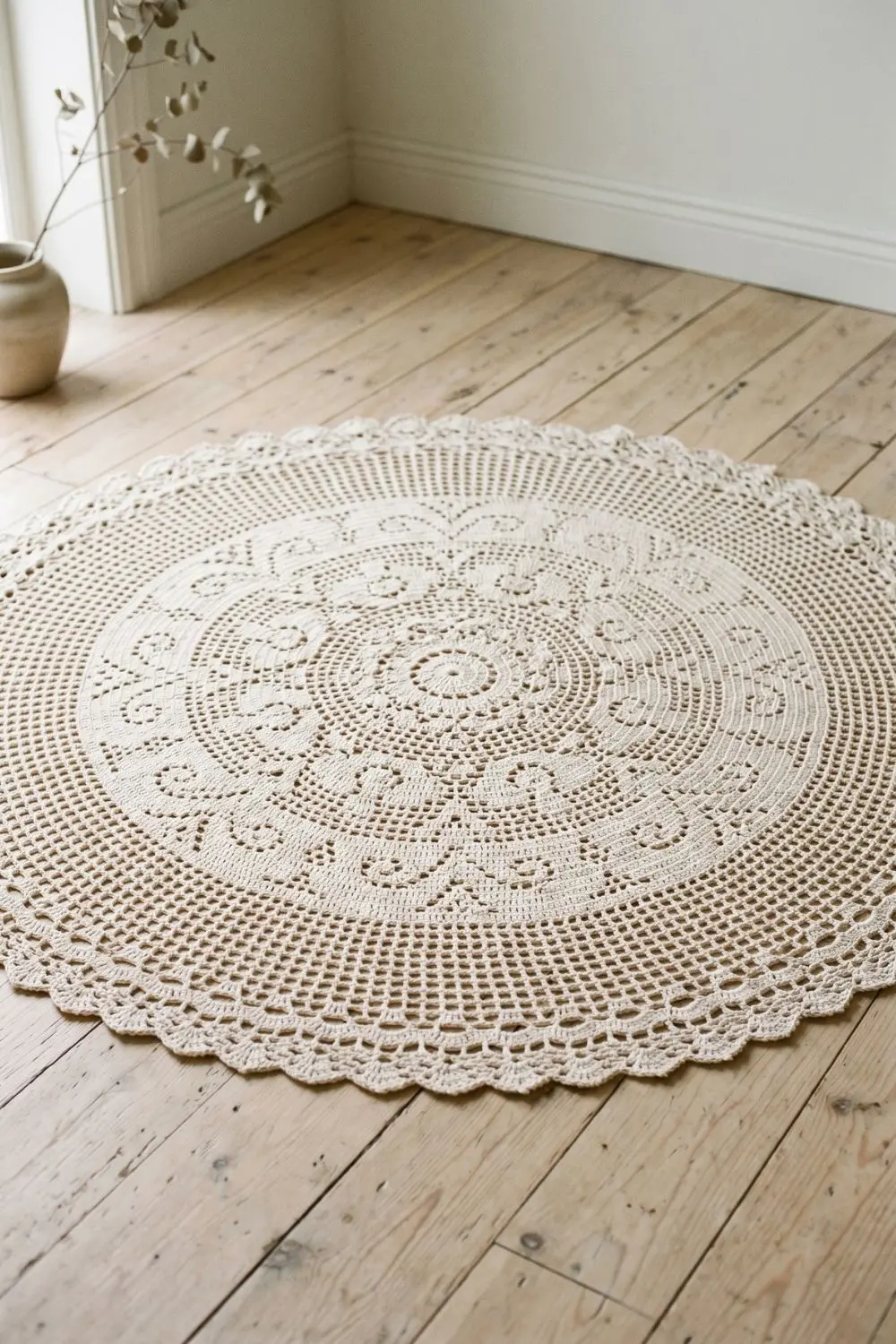
Filet crochet rugs scale up the open, grid-like stitch used in vintage doilies and curtain panels, traditionally worked in heavy rug cotton rather than a finer thread, so the mesh holds its shape underfoot instead of stretching out of square. The result reads more like lace than a typical floor covering, with light passing through the open grid rather than sitting flat against it. That openness is worth planning around: a filet rug offers little cushioning on its own, so it generally sits better over a thin non-slip pad than directly on bare floorboards. Worked in a single neutral shade, it suits a room that wants texture without adding more colour to an already busy palette.
3. Ripple Wave Rug in Warm Vintage Tones
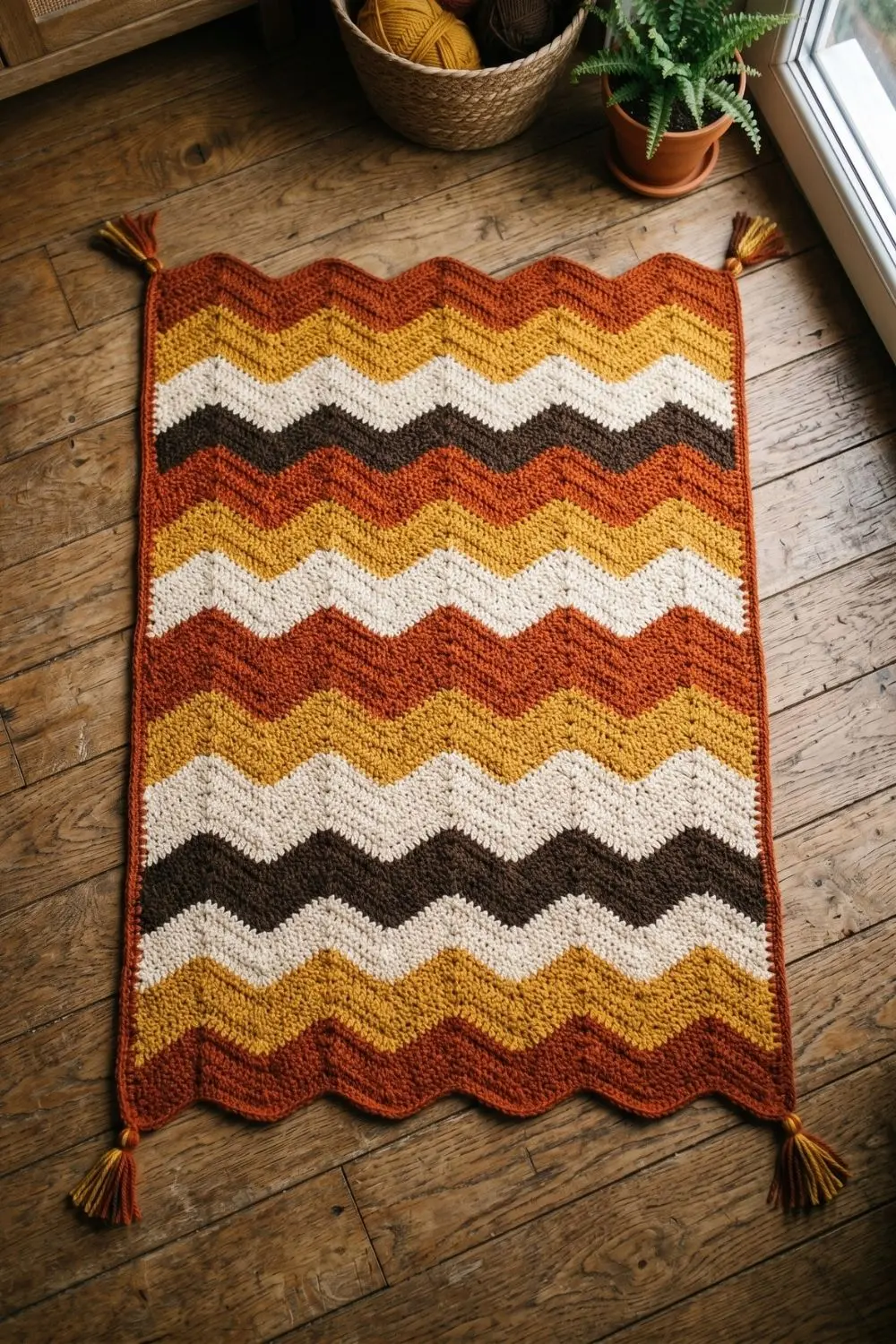
The ripple, or chevron, stitch produces soft peaks and valleys that move in waves across the rug’s surface, usually worked in rows running the short way across a rectangle so the chevrons read clearly from a doorway. It was a popular choice for blankets and rugs alike, typically in warm, autumnal colourways — rust, mustard and deep brown sitting alongside cream. Changing yarn colour every two or three rows, rather than every row, keeps the wave pattern legible instead of blurring into stripes. The textured surface also has a practical advantage over a flat single-colour rug: it disguises footprints and everyday wear noticeably better, making it a reasonable choice for a room that gets used rather than only admired.
4. Oval Rag-Style Striped Rug
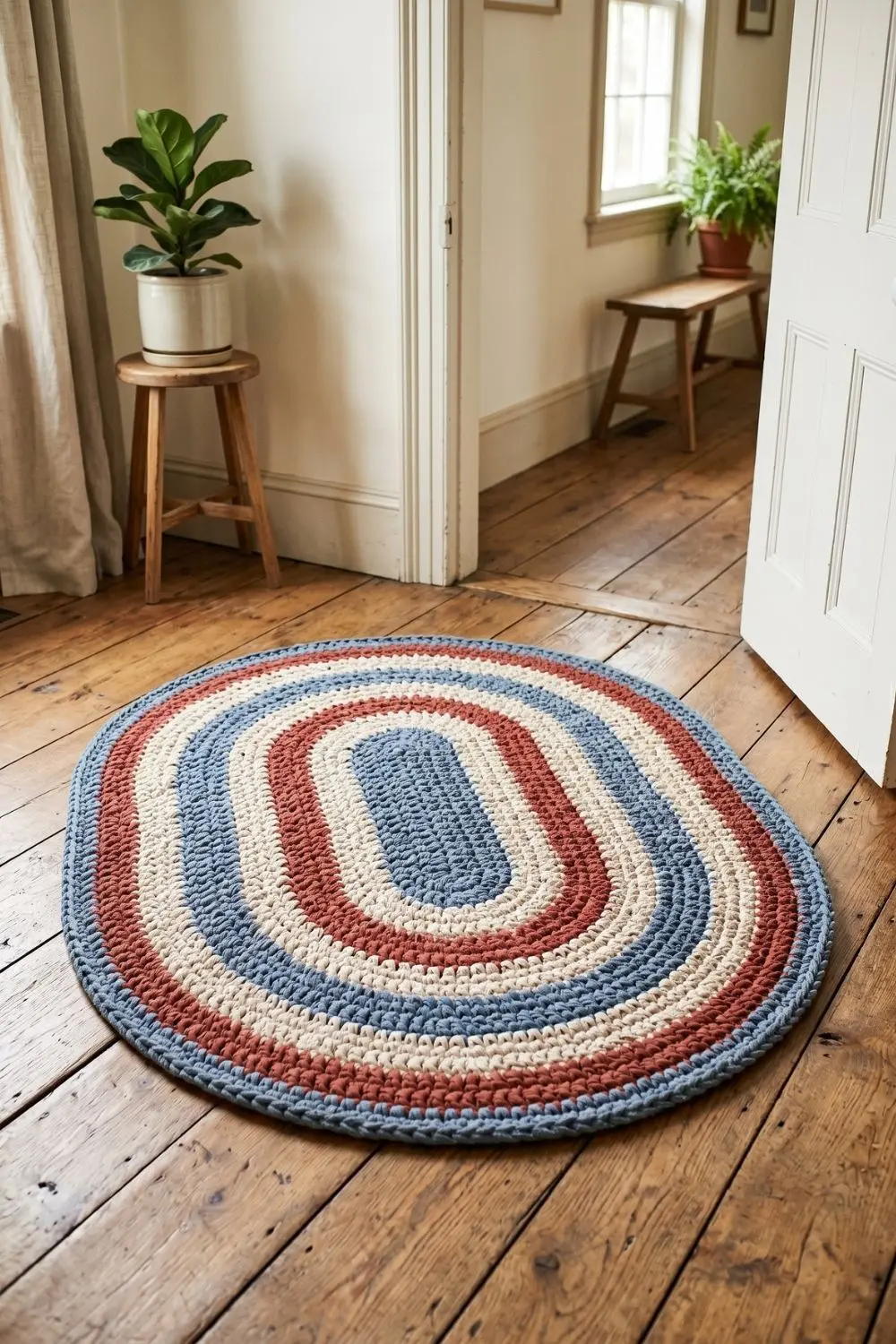
Long before rug yarn was sold by the skein, many households crocheted oval rugs from fabric scraps — old sheets, worn shirts, anything cut into long strips — wound into balls and worked the same way as conventional yarn. Each colour change in the concentric stripe pattern simply marked the start of a new bundle of fabric, which is why no two vintage rag rugs ever matched exactly. A contemporary version can swap rag strips for thick cotton rope or T-shirt yarn, keeping the banded-stripe logic while making the piece easier to machine wash. The same instinct for turning scraps into something structured and useful shows up in a smaller, wearable form in this crochet bag designs to inspire collection.
5. Rose Motif Medallion Rug
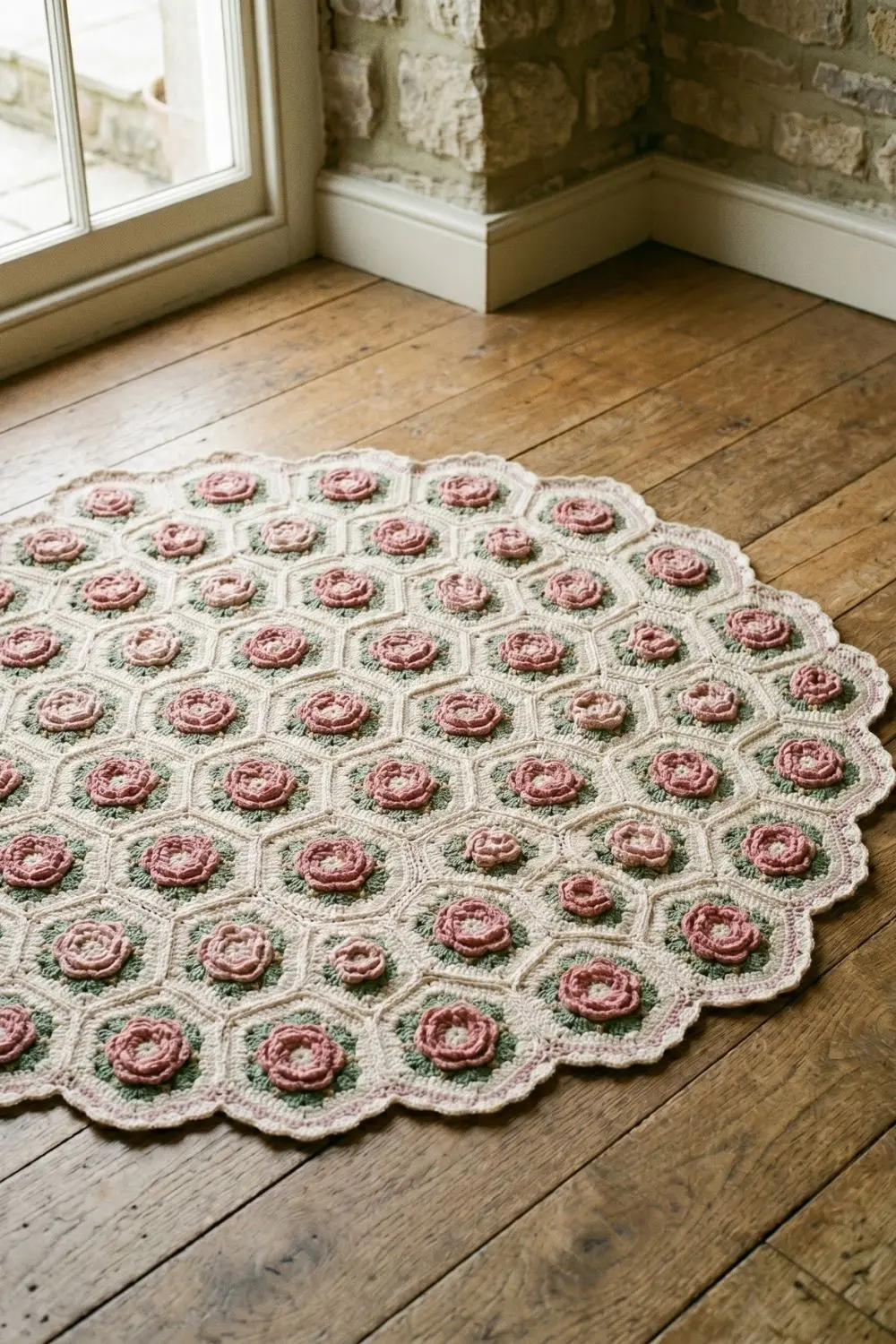
Floral motifs, crocheted as individual medallions and joined into a round or oval shape, brought a softer, more decorative note to a rug. A rose or wheel motif repeated across the surface gave the piece a sense of formality that suited a front room reserved for guests rather than a busy hallway. Joining the motifs with a flat whip stitch on the reverse, rather than a bulkier seam, keeps the surface from looking lumpy underfoot. Because the open, lace-like centres of each motif are more delicate than a solid granny square, this style tends to wear better in a quiet sitting area than at a front door.
6. Sunburst Circular Rug
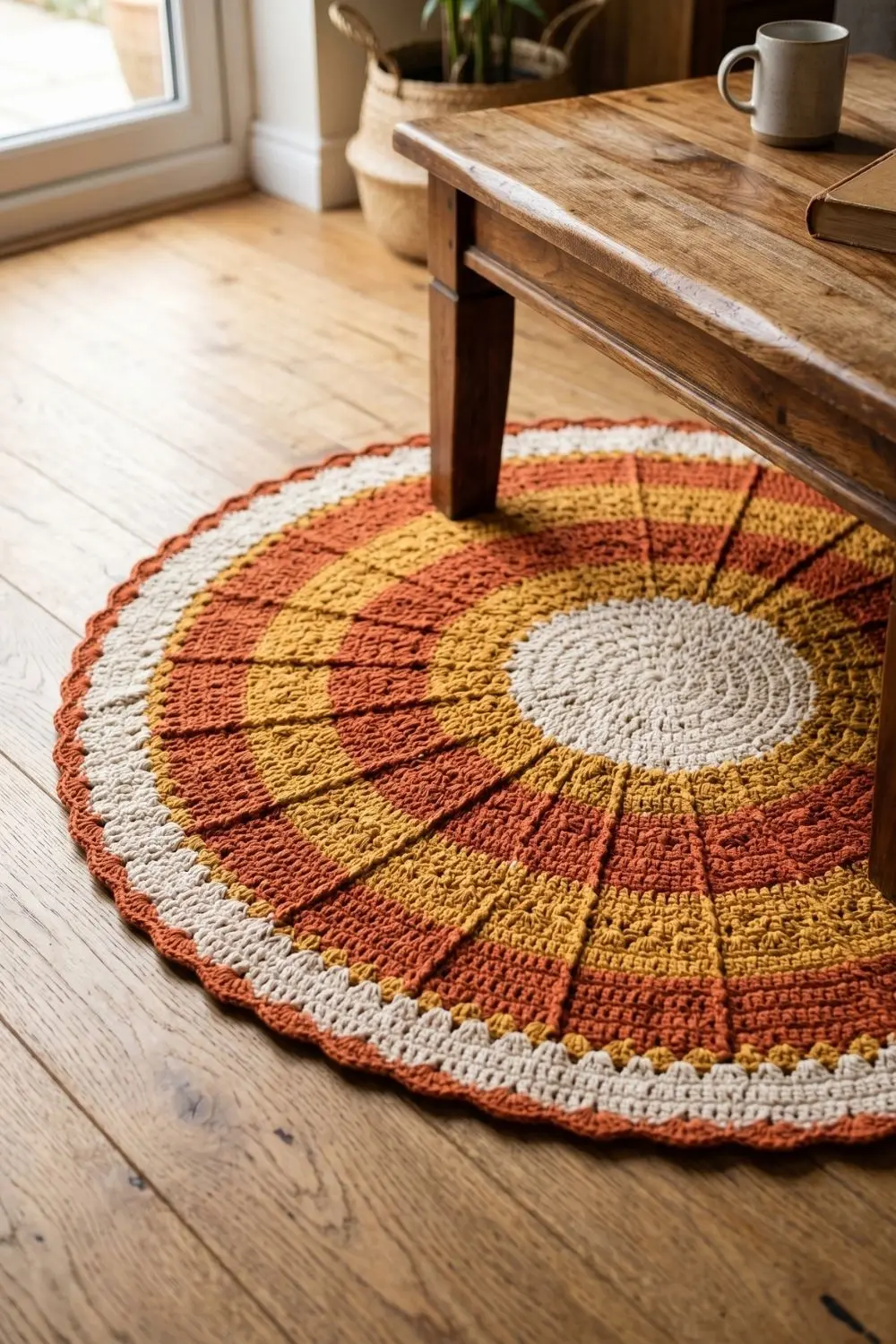
A sunburst rug works outward from a central point in expanding rounds of colour, much like an oversized granny square worked in the round rather than corner to corner. Because every round adds stitches to keep the circle flat, uneven tension can make the rug cup slightly at the centre; a light steam-block once the final round is finished usually corrects this before the piece goes on the floor. Placed under a coffee table or an armchair, the radiating rounds draw the eye toward one focal point rather than competing with the rest of the room. The structure also makes it forgiving for blending leftover yarn colours, since each round can simply use up whatever remains.
Matching a Style to the Room
Not every style suits every room. A granny square or ripple rug, with its dense, textured surface, holds up well in a living room that sees daily use. A filet lace or rose motif rug, more delicate by construction, tends to last longer in a quieter sitting room than at a busy entrance. An oval rag-style or sunburst rug sits in between — sturdy enough for moderate traffic, decorative enough to work as a deliberate focal point.
The choice of material affects how a finished rug behaves underfoot and how well it survives washing. A tightly spun cotton or recycled yarn lies flatter and holds up to foot traffic and machine washing better than a loosely spun wool, while rope or jute keeps a rustic texture but generally needs spot cleaning rather than a full wash. A thin rubber or felt pad underneath also reduces slipping on a hard floor, regardless of stitch pattern.
A Common Assumption, Checked
It is often assumed a crocheted rug is too delicate for daily life. In practice, the fibre matters more than the technique: a rug made from a sturdy cotton or recycled yarn and finished with a non-slip pad can take years of regular foot traffic, while the same stitch pattern in a delicate mohair would not.
None of these six need an exact vintage pattern to work in a current home. Pulling out one element — a colour pairing, a stitch texture, a motif shape — is usually enough to bring a sense of that older, lived-in room into a new one, without copying it exactly.
About These Designs
The pieces shown throughout this post are visual concepts gathered for inspiration purposes only. Women’s Alphabet does not sell, produce, or distribute crochet patterns or finished items. If a design appeals to you, consider saving the image and sharing it with a skilled local artisan or crochet maker — they can help you realise a similar piece with the yarn weight, colour palette, and dimensions that suit you best.