

6 Kitchen Crochet Tote Bags for Everyday Use: Styles Worth Sharing With an Artisan
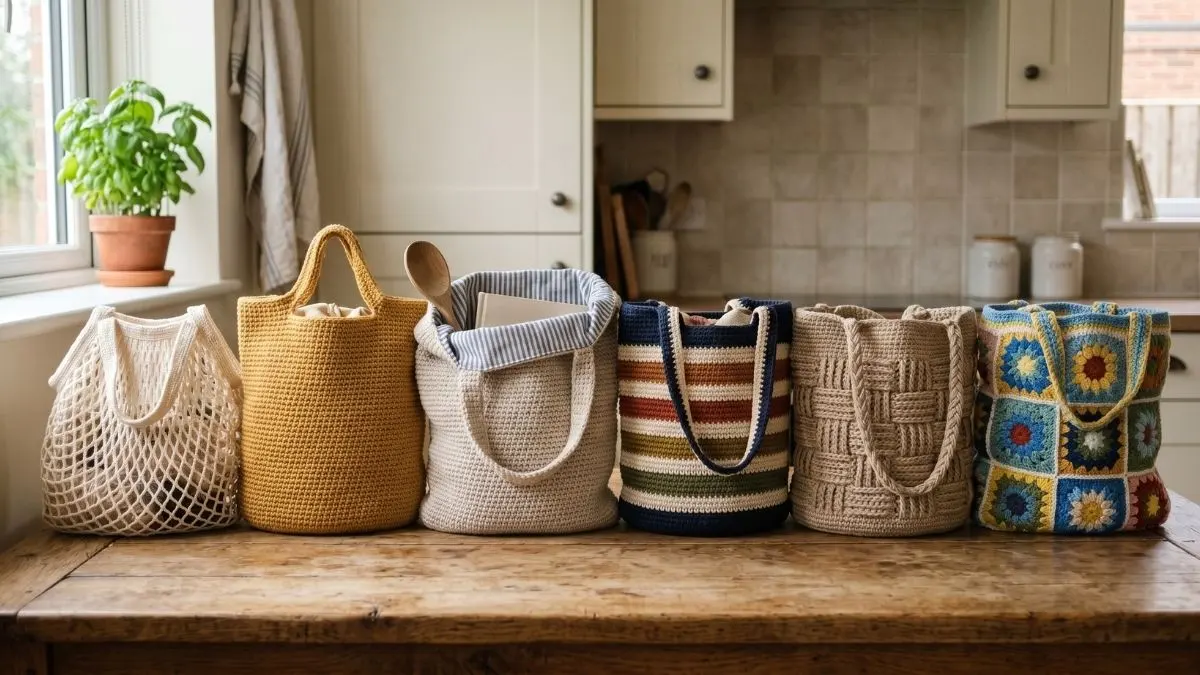
A kitchen asks a tote bag to do real work. It carries produce home from the market, holds a fresh loaf without crushing it, and sits ready by the door for the next errand. Crochet brings texture and personality to that job, and six stitch-and-yarn directions below show how the craft adapts to different kitchen tasks.
Each style here is shown as a concept rather than a step-by-step pattern, since the goal is inspiration a reader can carry to a local maker. The notes on yarn, stitch, and shape are meant to make that conversation easier, not to replace it.
Net Mesh Market Tote
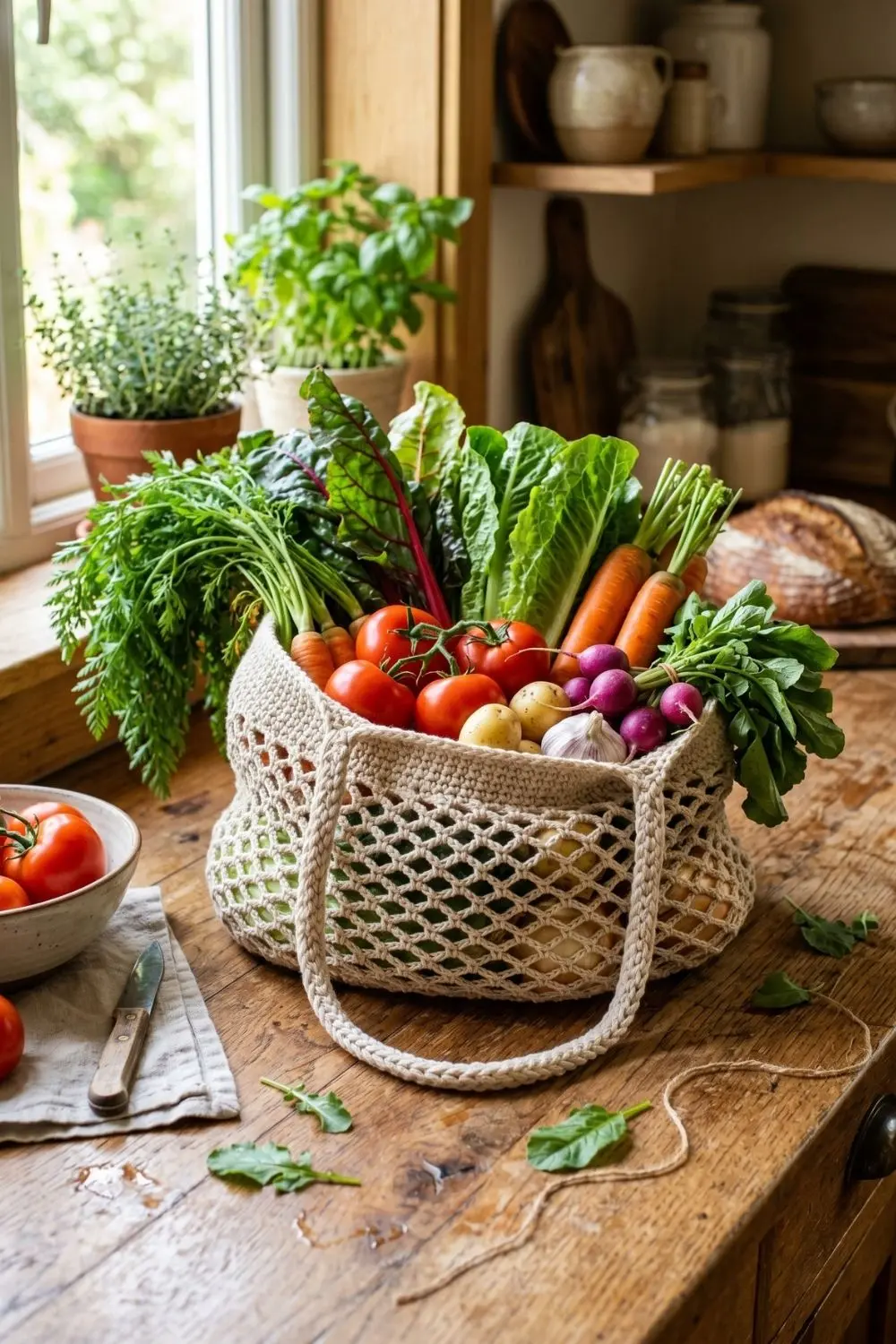
An open mesh structure is the classic shape for market produce, since gaps between stitches let dirt fall away and air move through the load. A simple chain-and-double-crochet net, worked in a sturdy standard weight cotton yarn, holds its shape through repeated stretching and refilling. The bag expands generously around bulky items such as melons or leafy greens, then folds flat into a drawer or a coat pocket once empty.
Handles cut from the same yarn, worked in a tight single crochet for extra strength, keep the load close to the body during a short walk home. A drawstring top is optional and mainly useful for stacking a few smaller bags inside one larger one.
Structured Cotton Grocery Tote
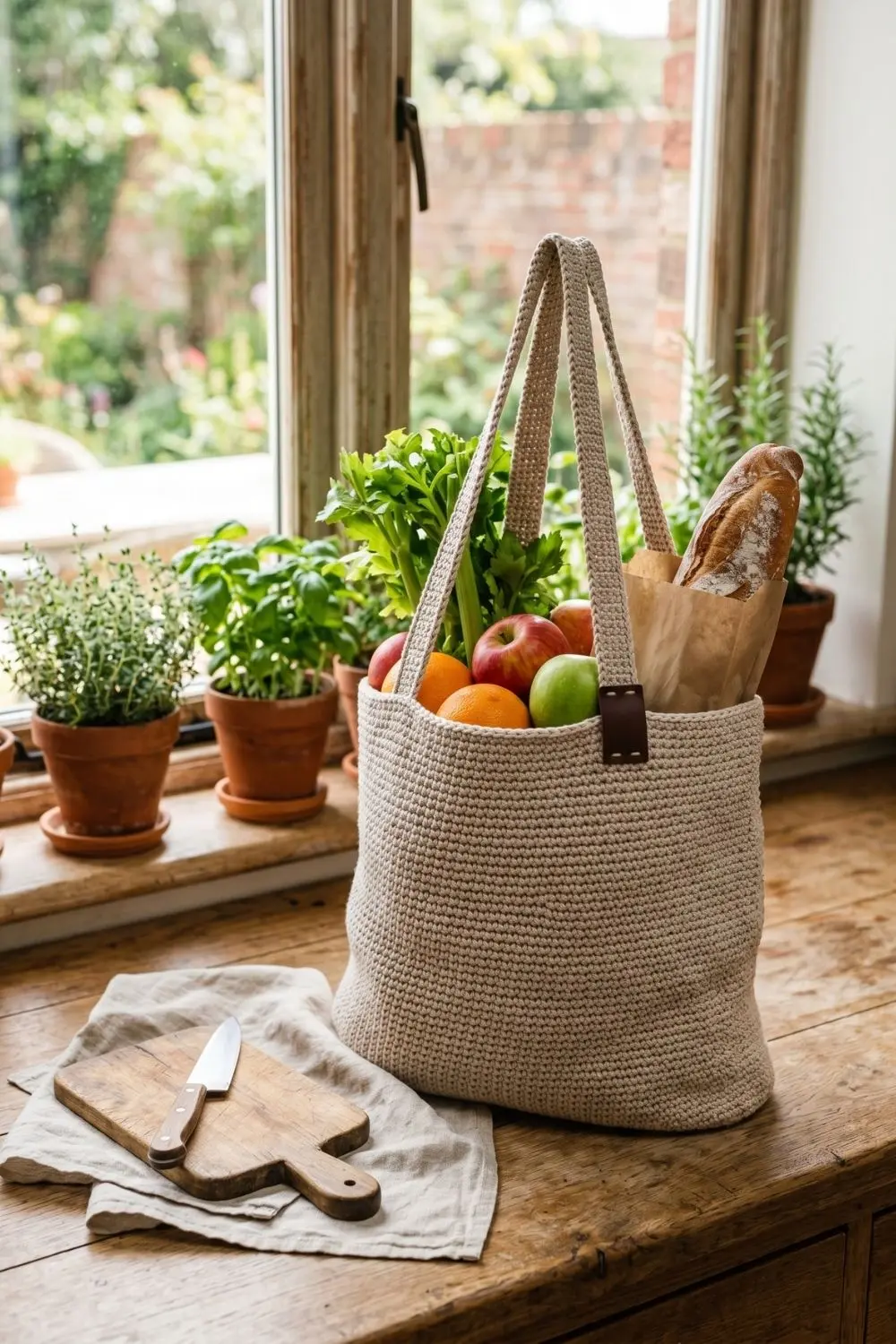
A solid single-crochet fabric, worked tightly with a smaller hook than the yarn label suggests, produces a dense tote that stands upright on a counter. This structure suits a weekly grocery run, where cans, jars, and boxed goods need a bag that will not sag under their combined weight. A flat, reinforced base, crocheted separately and seamed in, adds further support.
Two long straps, doubled or tripled for strength, sit comfortably over a shoulder when the bag is full. A neutral palette in oat, stone, or charcoal keeps this tote practical for daily use rather than occasional decoration.
Soft-Lined Bread and Pastry Tote
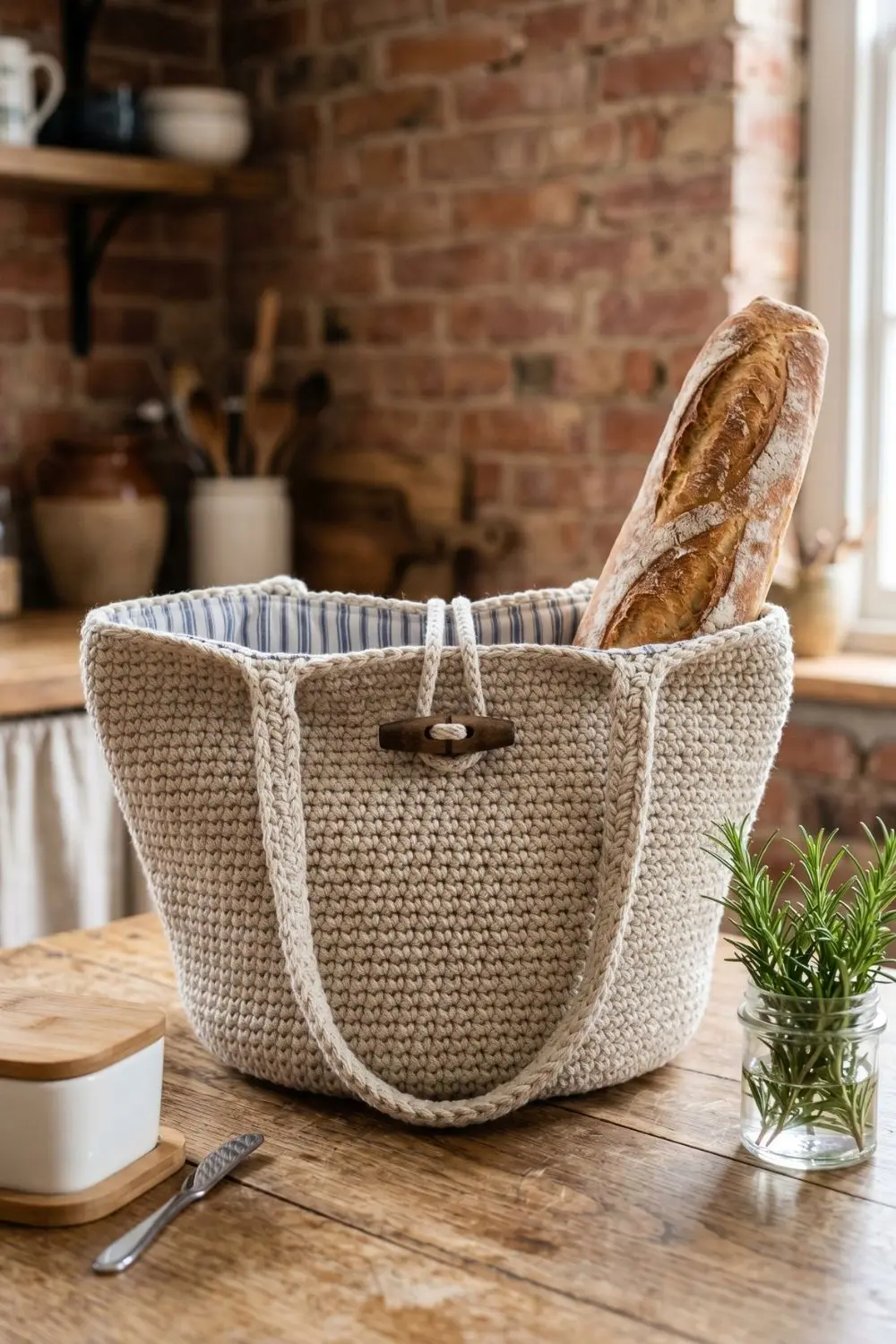
Bakery items need gentler handling than root vegetables, so this tote pairs an open, airy crochet shell with a soft cotton fabric lining sewn in by hand. The lining protects a fresh loaf or a box of pastries from snagging on stitches, while the crochet shell still lets the bread breathe rather than trapping moisture. A shallow, wide shape keeps a baguette or a flat loaf from bending during the walk home.
A single button or toggle closure at the top, rather than a drawstring, keeps the opening flat and easy to reach into with one hand.
Compact Picnic and Lunch Tote
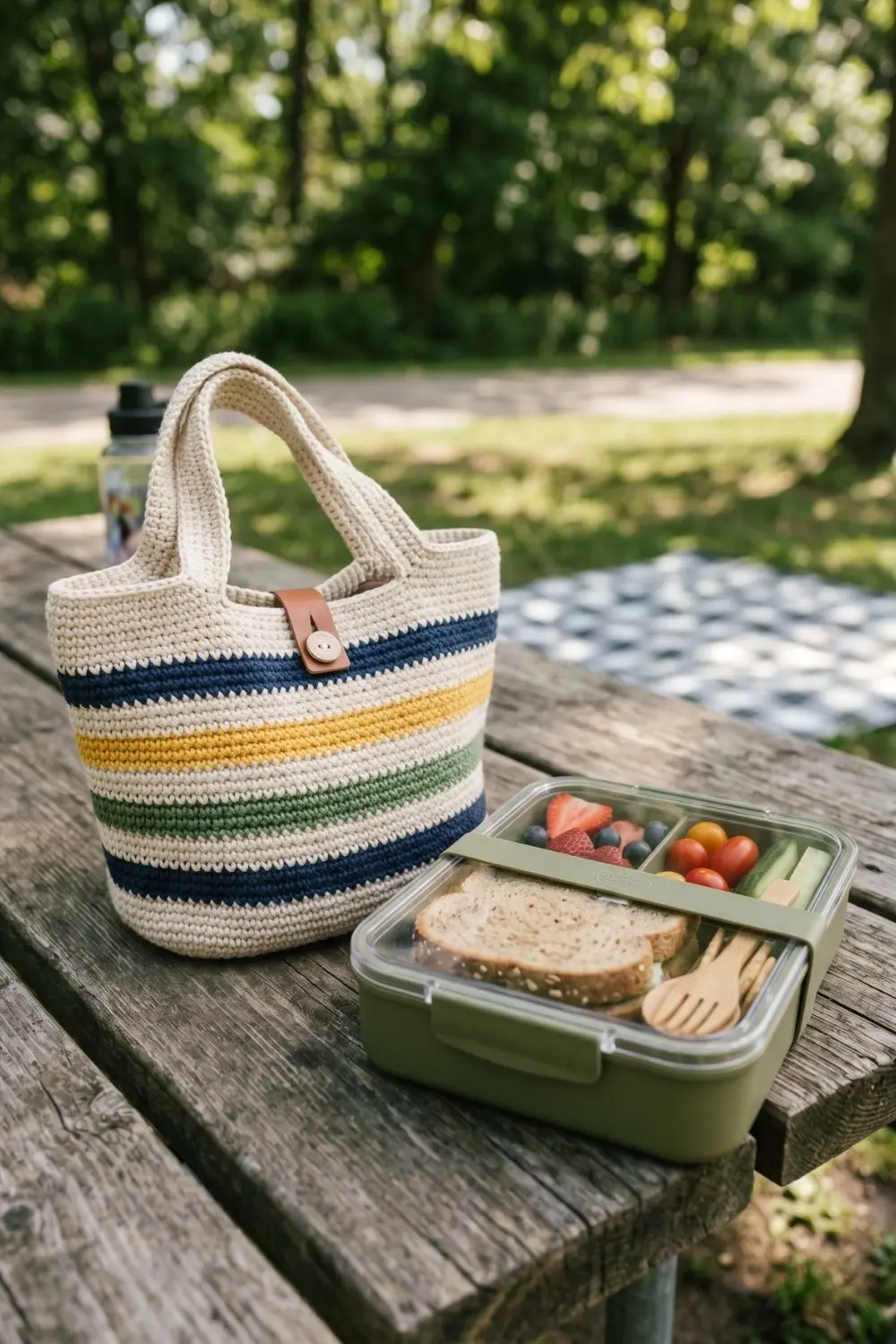
A smaller version of the grocery tote, worked in a tighter stitch, suits a packed lunch or a short picnic outing. Striped colourwork in two or three shades adds visual interest without extra bulk, since the stripes are worked directly into the body rather than added afterwards. A flat base around 20 by 15 centimetres holds a lunch box and a piece of fruit comfortably.
Short handles, sized to rest in the crook of an arm, keep this tote out of the way during a walk to a park bench or a desk at work.
Wide-Base Farmers Market Tote
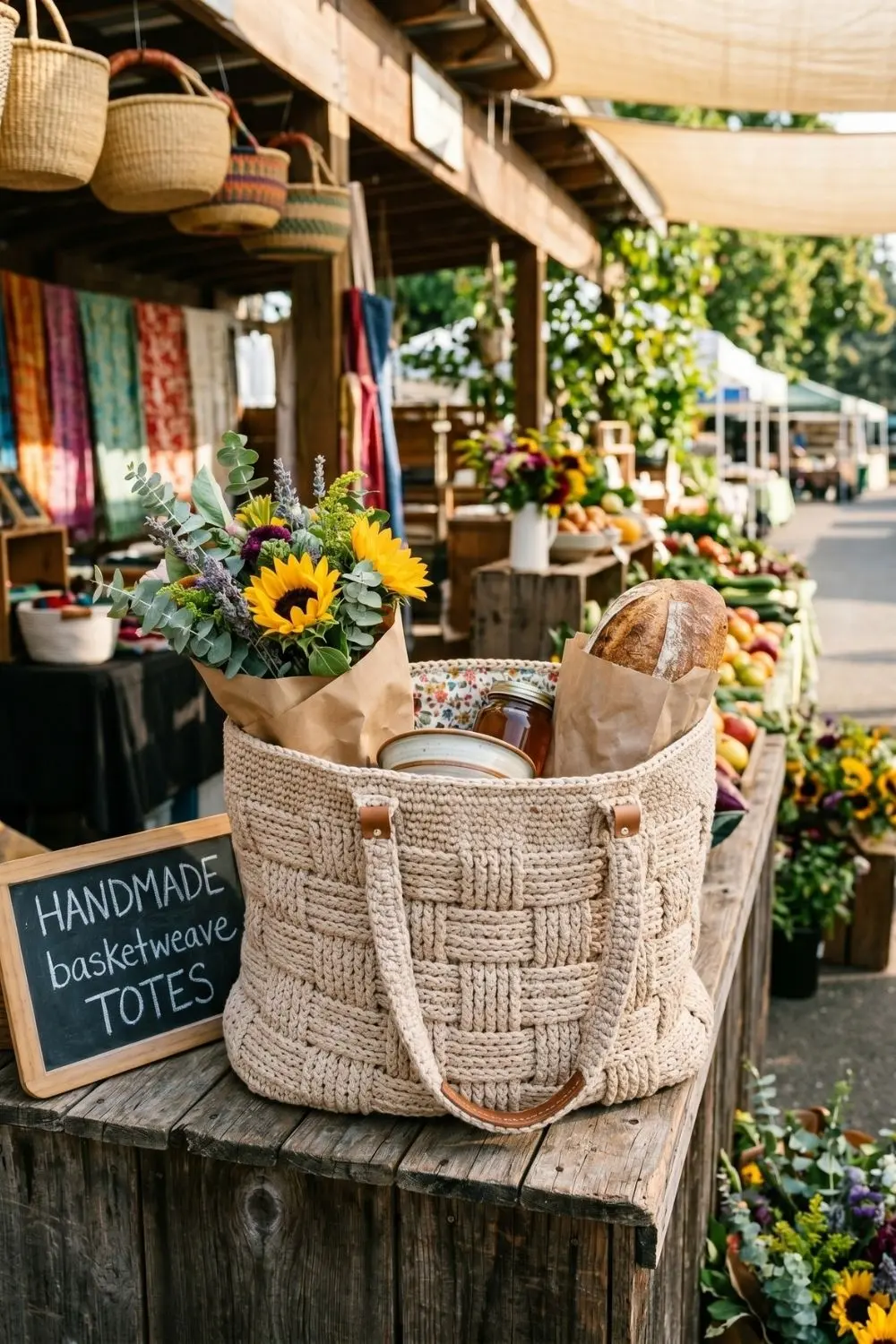
A wider, shorter silhouette than the standard grocery tote gives this style the stability to stand on its own at a market stall while it is loaded. Basket-weave stitching, worked in a thicker yarn, mimics the texture of a woven market basket while remaining flexible enough to fold for storage. The wide opening makes it simple to load awkward shapes such as bunches of herbs or a loaf of bread at the same time as produce.
Some makers, as discussed in firsthand reviews of yarn tested for crochet bag durability, favour tightly twisted cotton here specifically because it resists the pilling that comes from rubbing against a car seat or a market trolley.
Granny Square Patchwork Kitchen Tote
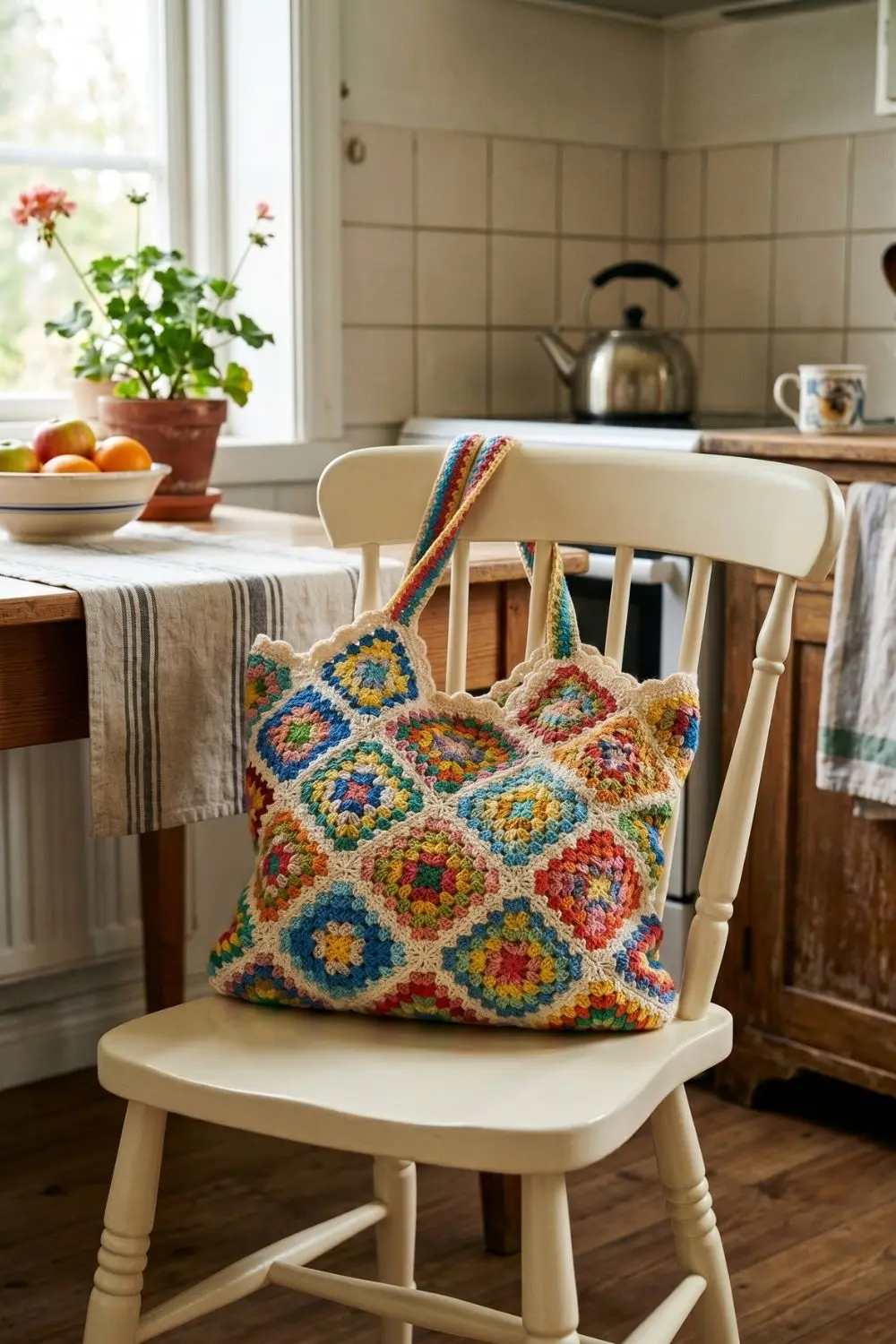
A patchwork of granny squares, joined into one panel and folded into a tote shape, brings heritage charm to an everyday kitchen errand. Mixed colours from a yarn stash work well here, since the patchwork format absorbs small differences in dye lot or fibre without looking inconsistent. A simple chain-stitch edge holds the seams flat against the inside of the bag.
This style suits a slower kitchen task such as a trip to a local bakery or a weekend visit to a farmers market, where the tote itself becomes part of the outing’s character. For more design directions in a similar spirit, readers may enjoy this crochet bag design roundup.
Bringing the Idea Home
None of these six totes needs to be reproduced exactly. A market mesh shape can borrow the wide base of the farmers tote, or a patchwork panel can wrap around a structured grocery shape instead of a folded one. The right combination usually comes down to which kitchen errand happens most often.
A clear photo of a favourite shape, taken from a few angles, gives an artisan everything needed to start a conversation about yarn, size, and price.
About These Designs
The pieces shown throughout this post are visual concepts gathered for inspiration purposes only. Women’s Alphabet does not sell, produce, or distribute crochet patterns or finished items. If a design appeals to you, consider saving the image and sharing it with a skilled local artisan or crochet maker — they can help you realise a similar piece with the yarn weight, colour palette, and dimensions that suit you best.