The first school bell may still be weeks away, but the 2026 back-to-school season has already reached the kitchen. About one-third of back-to-school shoppers had begun browsing or buying by early June—an earlier start than in any year since the National Retail Federation began asking the question in 2018. Forty-four percent had already received a school list.
That early momentum can make July feel like one long shopping checklist. Yet one of the most useful preparations costs nothing: a 15-minute kitchen reset that gives breakfast, packed lunches and the morning exit a clear route through the room.
The goal is not a deep clean or a picture-perfect pantry. It is what Women’s Alphabet calls a morning runway: a short, visible path from landing spot to breakfast lane, lunch supplies, refrigerator and sink. When each stop answers one morning question, fewer decisions are left for the busiest part of the day.
Before setting the timer: Take one empty basket, a trash bag and a damp cloth. Do not open every cupboard. Anything that needs a longer decision goes into the basket for later.
Minutes 0–3: Clear One Landing Strip
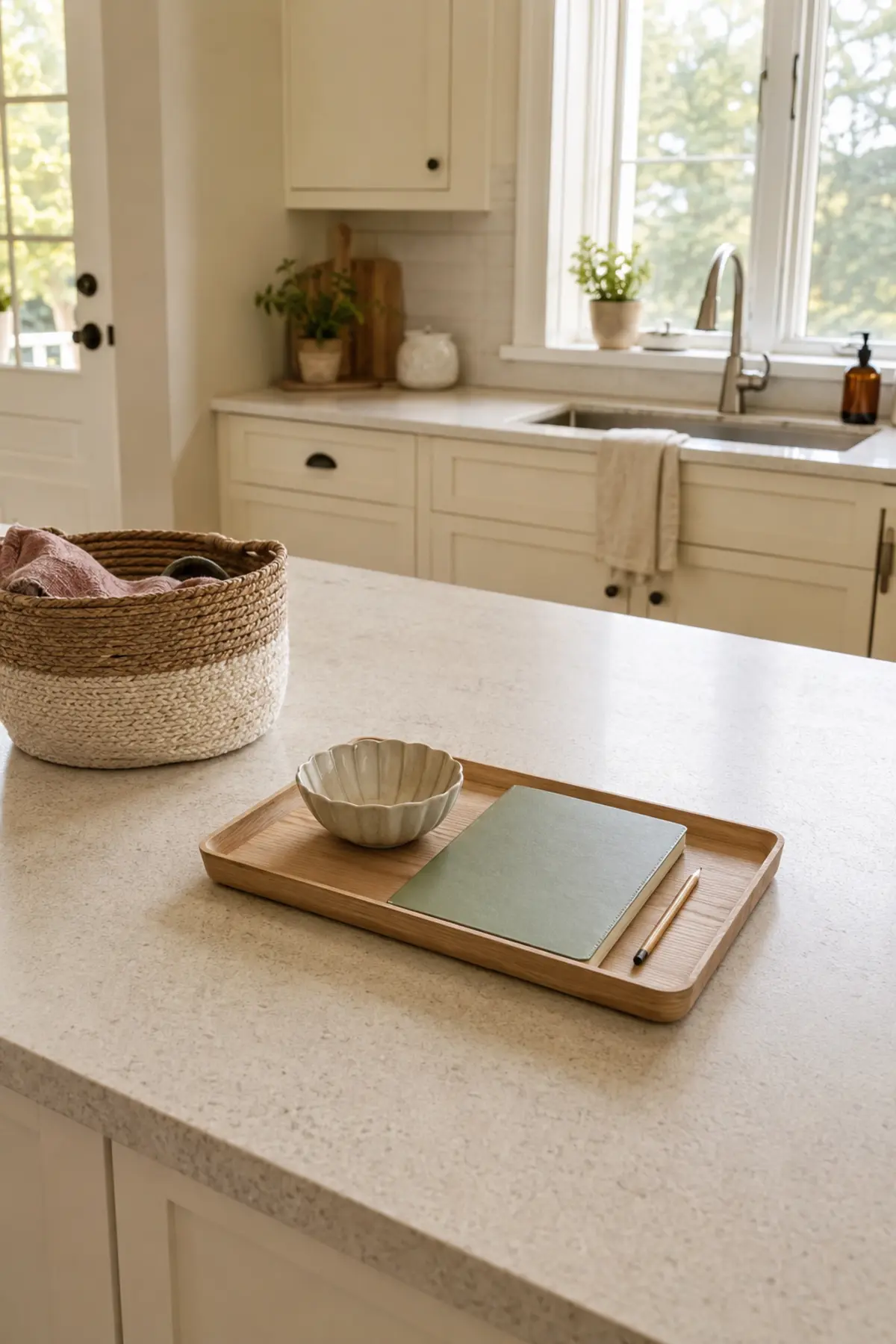
Choose one section of counter close to the usual kitchen entrance. This is the place where tomorrow’s lunch bags, a school note or a water bottle can land without competing with unopened mail, chargers and stray groceries.
Move everything unrelated into the basket. Do not pause to sort it. Wipe the cleared surface, then return only a small tray or bowl for the few items that genuinely belong there.
The useful rule is simple: only tomorrow-facing items stay. A counter can be clean and still fail in the morning if it has no available working space. This three-minute step protects that space before clutter can claim it again.
Minutes 3–6: Build a Breakfast Lane
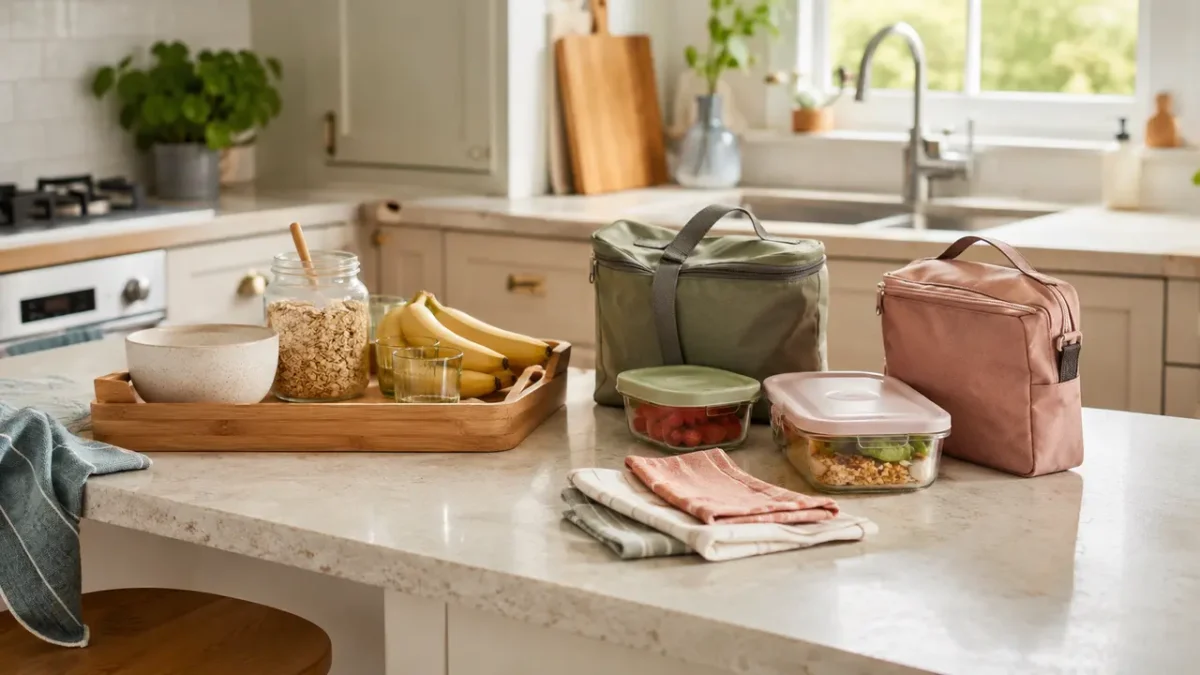
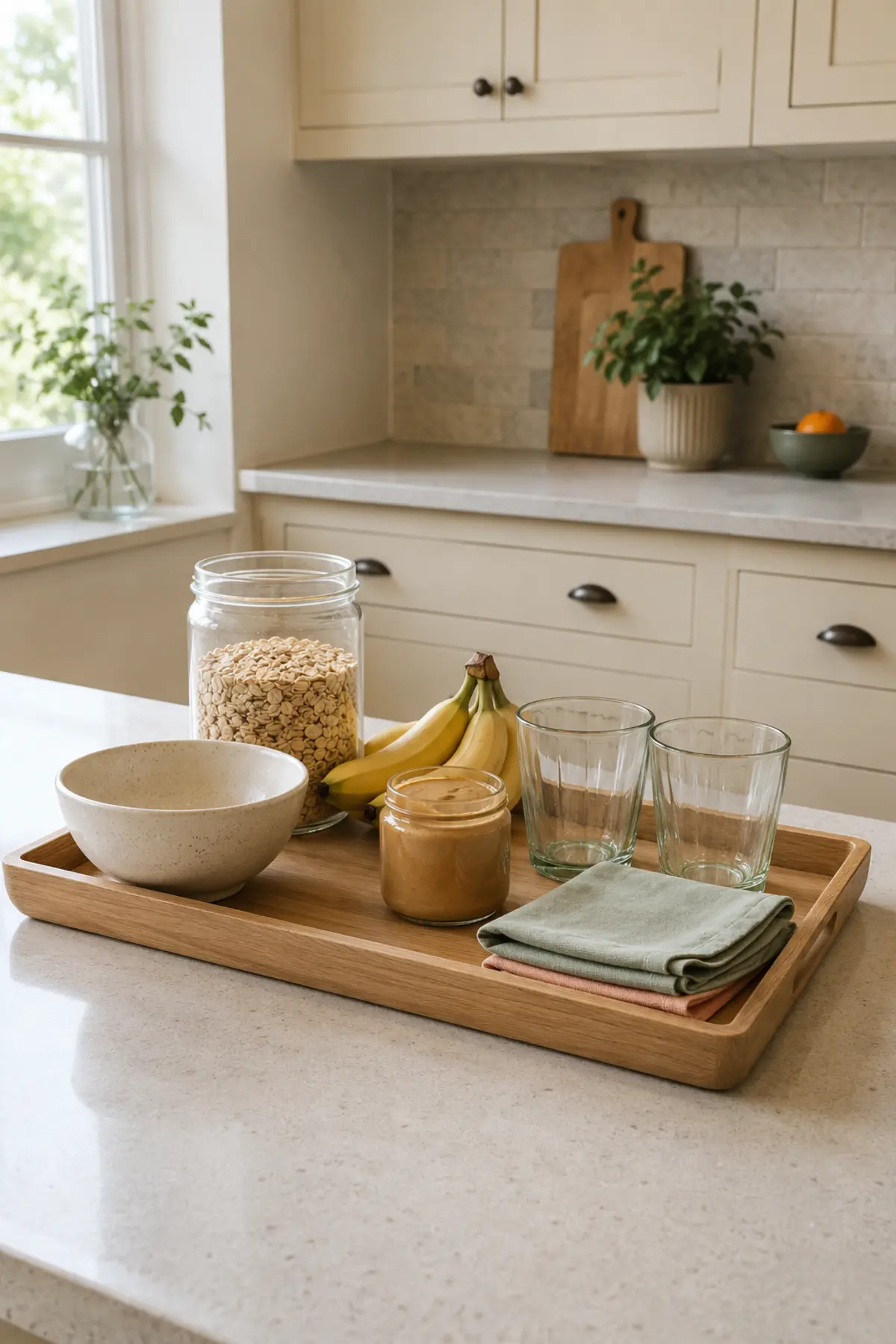
Group the everyday breakfast basics on one low tray or in one easy-to-reach cupboard section. Bowls, oats or cereal, drinking glasses and napkins should follow the order in which they are used. Keep perishable foods refrigerated.
This is less about displaying food and more about removing small searches. If the bowl is beside the oats and the glasses are within reach, the kitchen asks fewer questions before everyone is fully awake.
Choose only the items the household regularly uses. An overloaded breakfast station becomes another surface to maintain; a narrow lane stays practical. The American Academy of Pediatrics’ guidance on family routines likewise recommends putting as many things in order as possible the night before to help weekday mornings run more smoothly.
Minutes 6–9: Set Up the Lunch Launch Pad
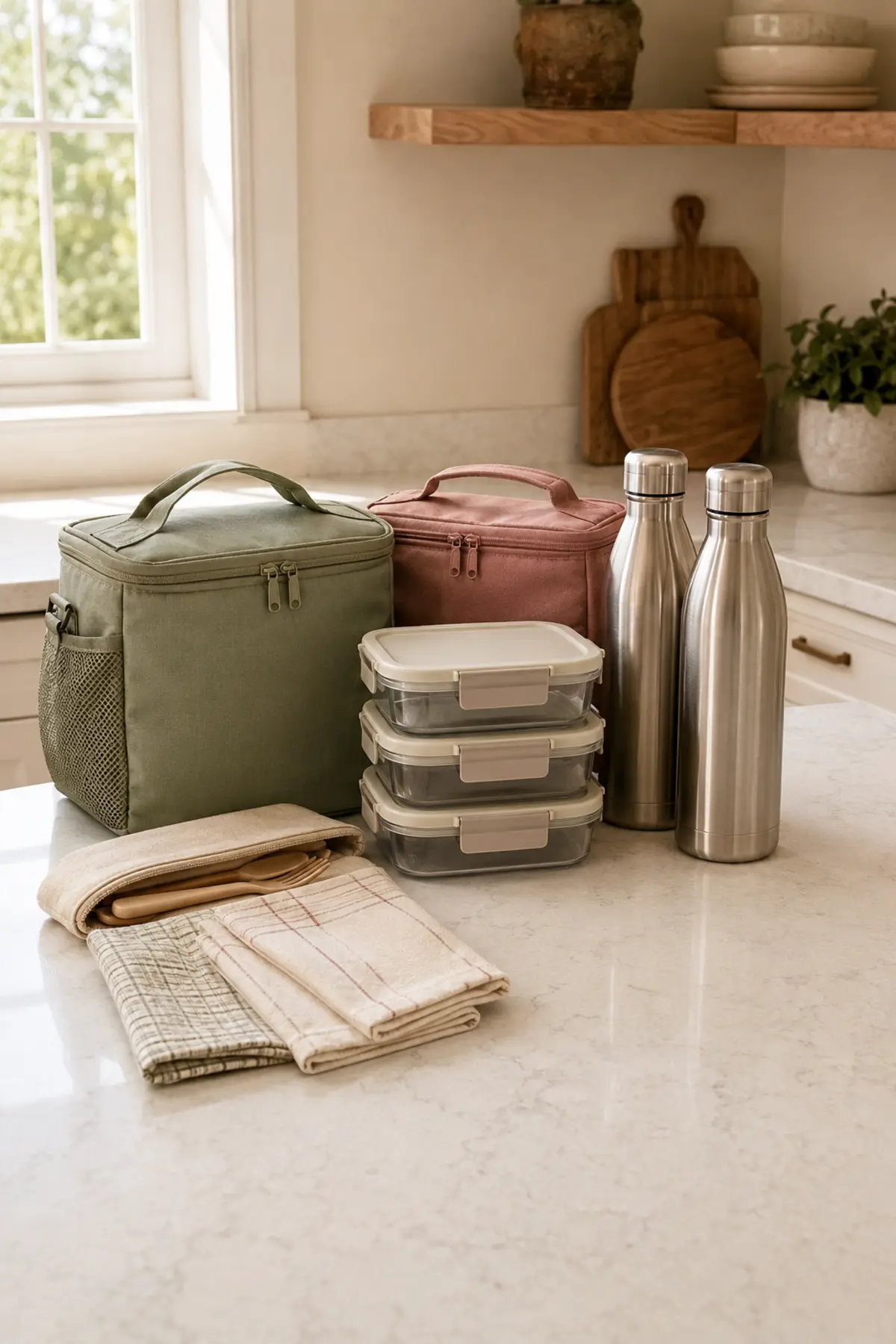
Bring lunch bags, reusable containers, water bottles, napkins and utensils into one compact zone. Match lids to containers now, place cold packs in the freezer and remove anything that no longer closes properly.
Do not leave perishable lunch food on the counter overnight. The point is to stage the equipment so the food can move safely from refrigerator to lunch bag in the morning.
For packed lunches that need to stay cold, the USDA recommends an insulated lunch bag and two cold sources. A frozen gel pack can be one; a frozen water bottle or frozen food item can serve as the second. Putting those cold sources in place during the reset prevents a last-minute search.
Minutes 9–12: Reserve a Fridge Grab Zone
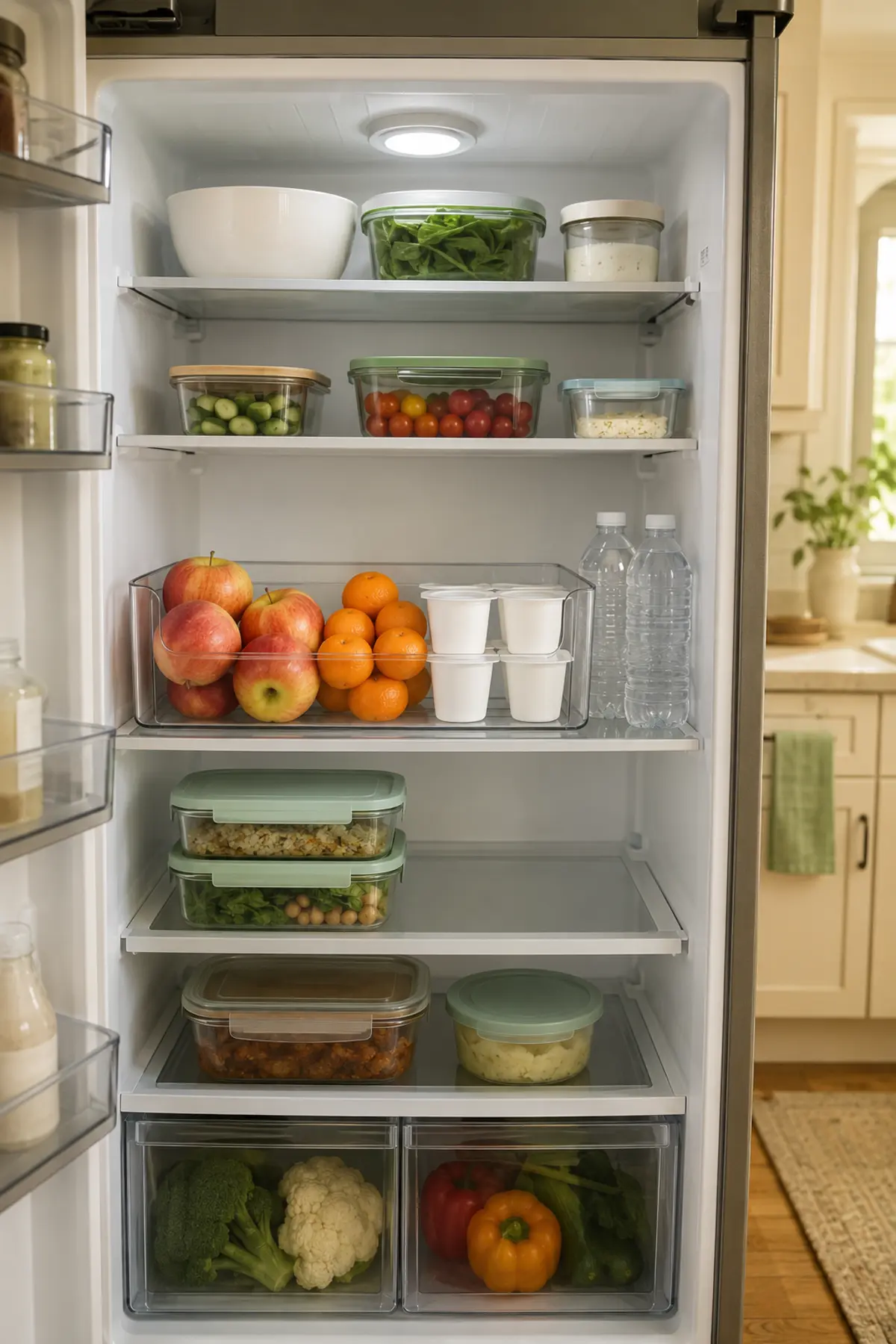
Clear one reachable refrigerator shelf or use a shallow bin at eye or waist height. This is not a full refrigerator makeover. It is a defined stop for sealed next-day items, whole fruit, chilled drinks or other household staples that already fit the family’s routine.
Keep raw foods separate and place anything prone to leaking in a secure container. A visible empty patch matters as much as the bin: it gives tomorrow’s prepared items somewhere to go instead of being hidden behind leftovers.
While the door is open, wipe one obvious spill and make a short note of what is missing. The quick fridge photo grocery trick can also prevent duplicate purchases when school-week shopping begins.
Minutes 12–15: Close the Sink Loop
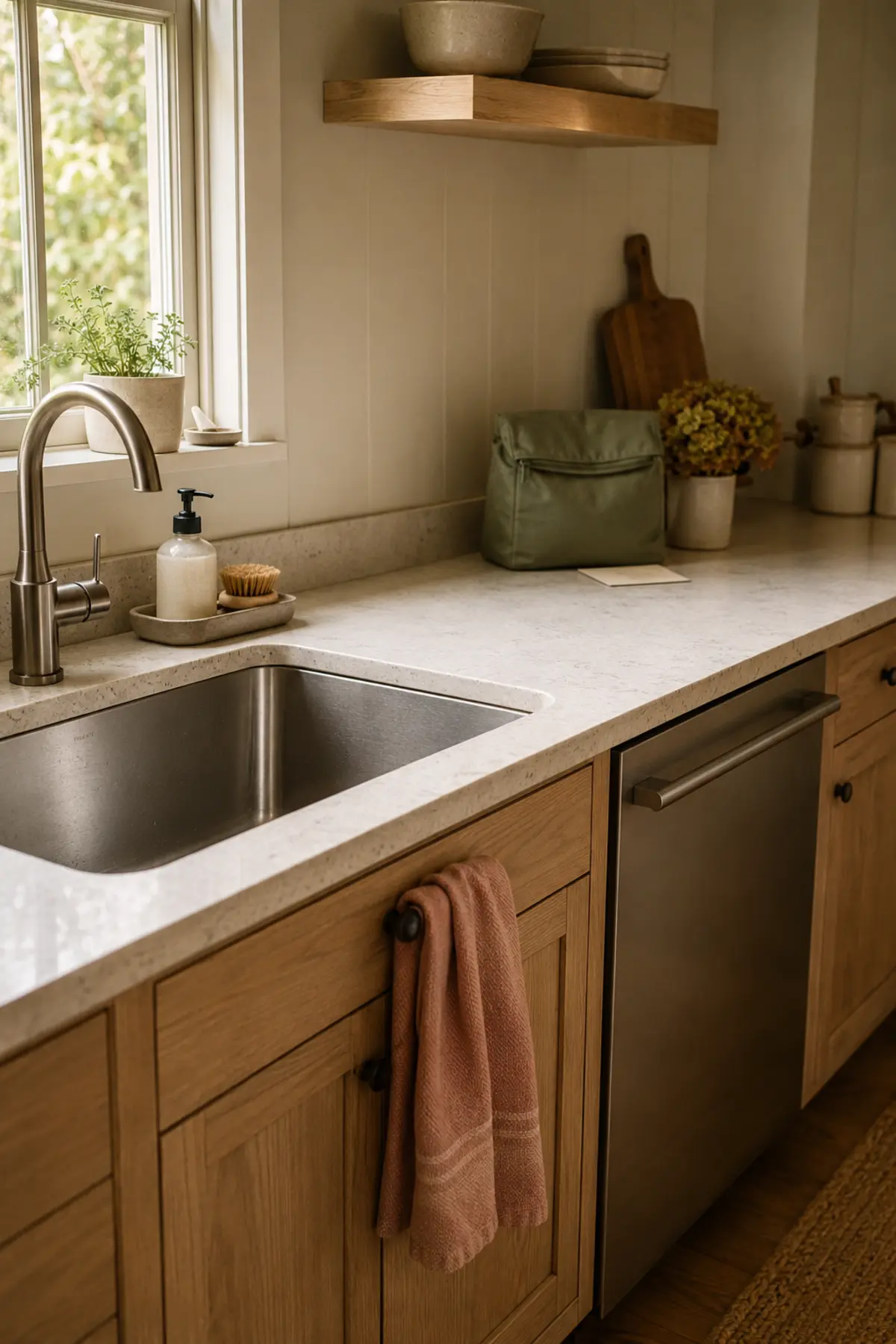
Finish where the next mess would normally begin. Put dishes into the dishwasher or washing area, clear the sink, wipe the main preparation surface and hang a clean towel. The room does not need to sparkle; it needs to be ready for the first bowl and lunch container.
Finally, place tomorrow’s lunch bag on the landing strip and write one brief note if something must be added from the refrigerator. A single cue—“add cold pack,” for example—is more useful than carrying a mental list into the night.
Why the Morning Runway Works Better Than a Bigger Organizing Project
Most rushed mornings are slowed by a chain of tiny interruptions: no clear place to set a bag, a missing lid, an ice pack still in the cupboard, or breakfast supplies spread across the room. The runway groups tasks by sequence, so each finished step points toward the next one.
It also fits summer. Families can test the arrangement before school begins, when there is still time to notice that a child cannot reach a cup, a lunch-box zip sticks or the chosen fridge shelf is too crowded. The system can then be adjusted without buying a matching set of organizers.
Myth vs. reality
Myth: A calmer school morning requires a fully organized pantry and a weekend of cleaning.
Reality: One clear counter strip, one breakfast lane, one lunch-supply zone and one available fridge shelf can remove the most common points of friction.
Try the Seven-Day Morning Runway Test
Repeat the final three-minute sink close each evening for one week. Each morning, note the first place the routine slows down. Do not reorganize the entire kitchen; change only that point before the next day.
- If breakfast stalls, remove one item from the tray or move bowls closer.
- If lunch packing stalls, match containers and lids after washing.
- If the fridge zone disappears, reserve a smaller bin rather than a whole shelf.
- If clutter returns to the landing strip, move the basket closer to the kitchen exit.
After seven days, the result should fit the household’s real movements rather than an idealized routine. That is the Women’s Alphabet difference: the reset is judged by what happens at 7 a.m., not by how the counter looks in a photograph.
Frequently Asked Questions
Does the kitchen need to be deep-cleaned first?
No. This reset targets the surfaces and supplies that affect school mornings. Save oven cleaning, cupboard editing and full pantry work for a separate session.
Should breakfast food be left on the counter overnight?
Only shelf-stable items should remain out, and they should be stored according to their packaging. Keep milk, yogurt, cut fruit and other perishables refrigerated.
What if the kitchen is very small?
Use one tray for breakfast supplies and store the lunch launch pad vertically in a cupboard or basket. The zones do not need separate counters; they need clear boundaries.
When should this reset begin?
Mid-to-late summer is useful because the household can test the layout before the first school week. It also aligns with the earlier 2026 back-to-school preparation period without turning July into a full school schedule.
A note from Women’s Alphabet
Women’s Alphabet does not sell the organizers, lunch bags or kitchen items shown here. The visuals illustrate an editorial organization concept and are provided for inspiration only; they are not product listings or purchase offers. Adapt every step to the kitchen, food-safety needs and routine of your own household.