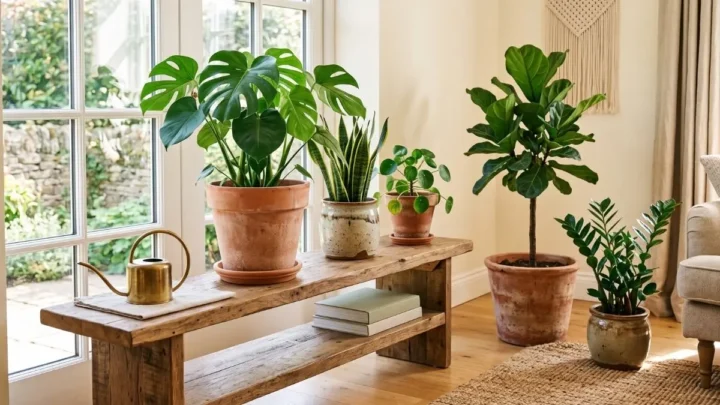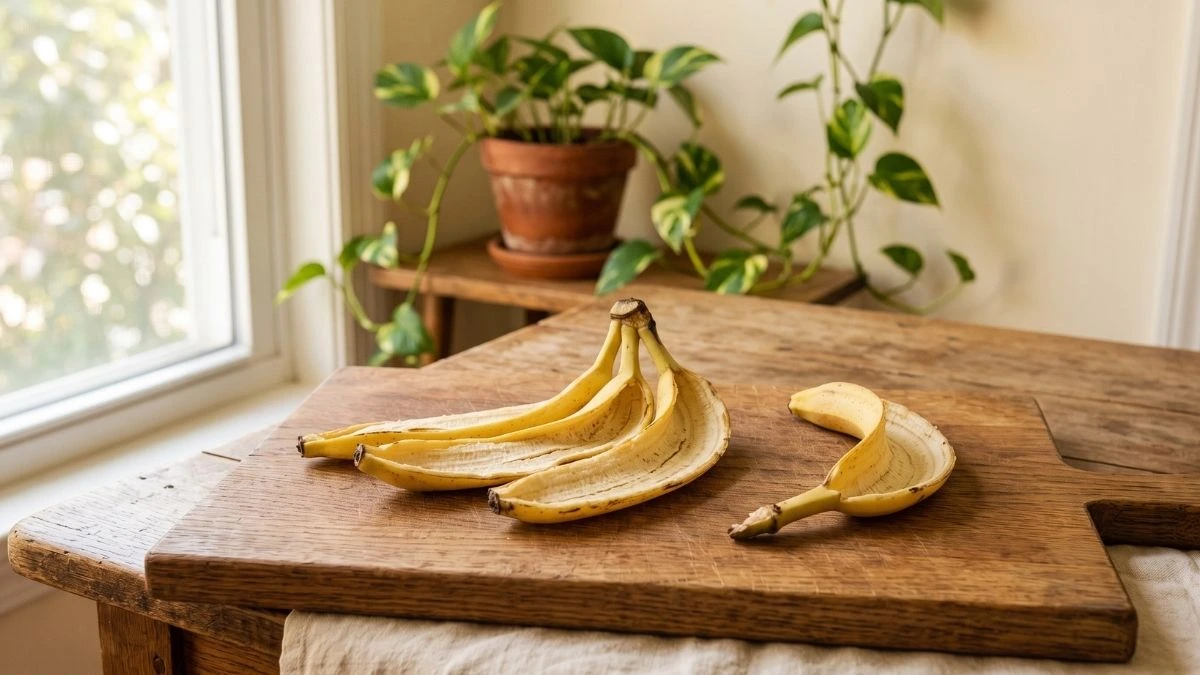
Most banana peels go straight from hand to bin without a second thought. That habit is worth reconsidering. Banana peels are rich in potassium — the same nutrient found in commercial fertilisers — along with phosphorus, calcium, and magnesium. A 2024 review covering 126 agricultural studies confirmed that peel-based treatments consistently improved plant growth compared with untreated soil. Whether it is a jar of water on the kitchen worktop or a handful of scraps buried in the garden, there are several practical uses for banana peels that take very little effort.
Brew a Peel Tea for Your Houseplants
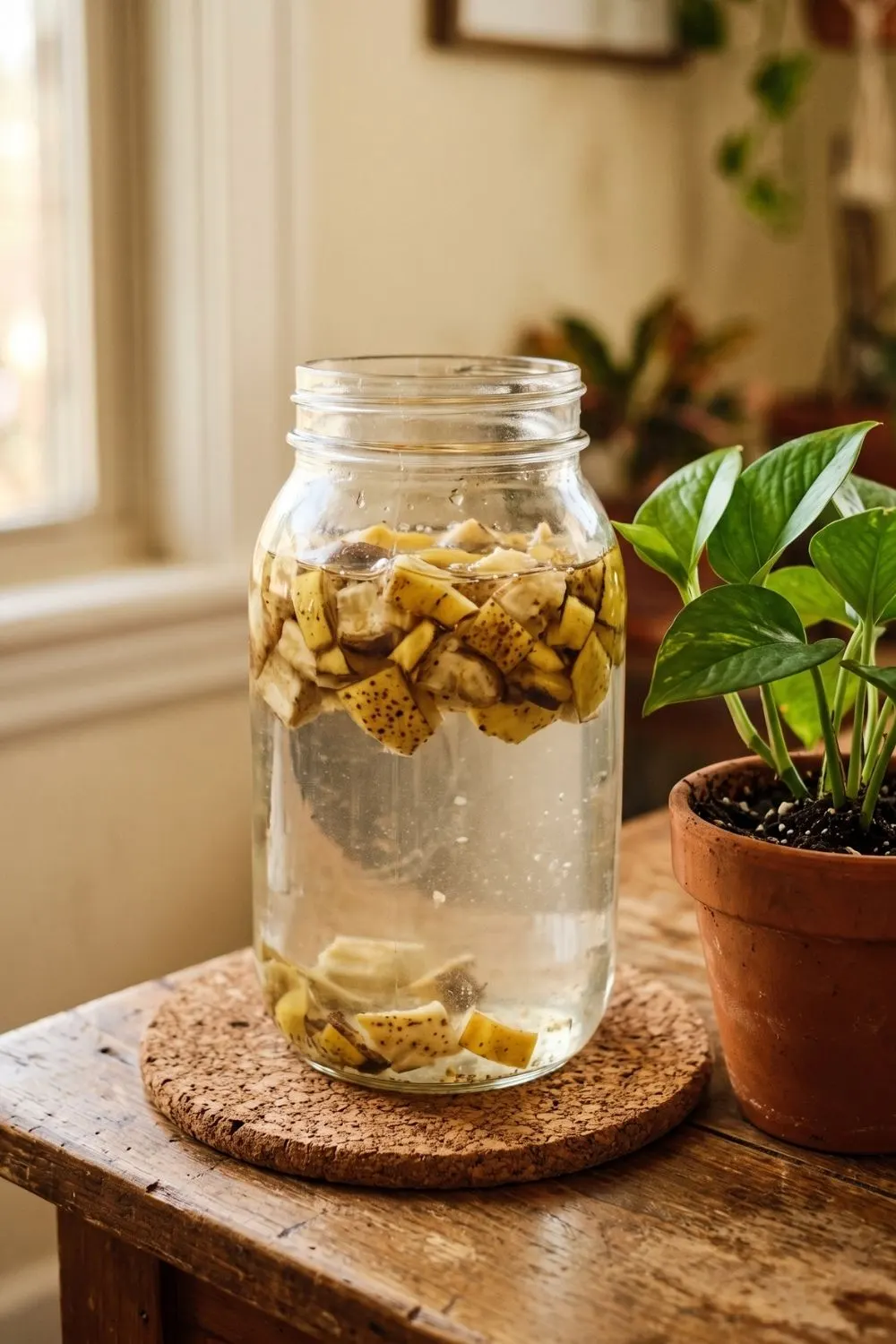
This is one of the simplest ways to put banana peels to immediate use. Chop two or three peels into small pieces, place them in a large jar or jug, and cover with two litres of cold water. Leave to steep for 48 hours on the kitchen worktop or in the refrigerator, then strain out the peel pieces and use the liquid to water houseplants as usual.
The steeping process draws potassium and other minerals out of the peel and into the water, delivering nutrients directly to the soil. This method suits houseplants particularly well — especially flowering varieties, which benefit most from a steady potassium supply. The liquid can also be diluted further and used on garden beds without any risk of burning roots.
Bury Chopped Peels Near Outdoor Plants
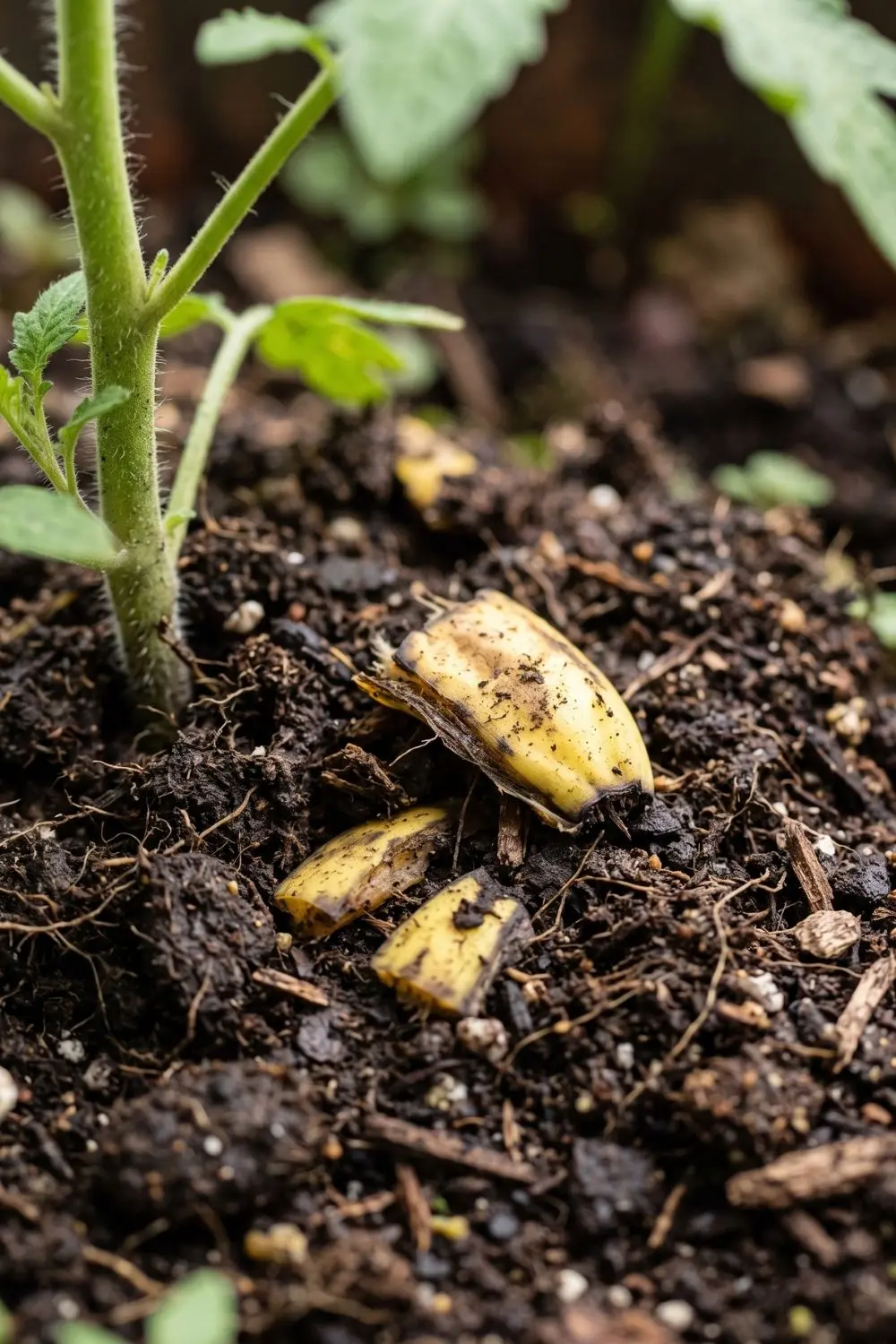
For garden plants, direct burial is a reliable method. Chop peels into small pieces — roughly two to three centimetres — and bury them five to eight centimetres beneath the soil near the base of the plant. As the peel decomposes over two to four weeks, the nutrients release gradually into the surrounding soil.
This works particularly well for plants with a high potassium requirement: tomatoes, peppers, courgettes, and roses all benefit. Banana peels also contain calcium, which helps prevent blossom end rot in fruiting plants. Chopping the pieces small is important — whole peels take considerably longer to break down and can attract slugs if left sitting on the surface.
Speed Up Your Compost Bin
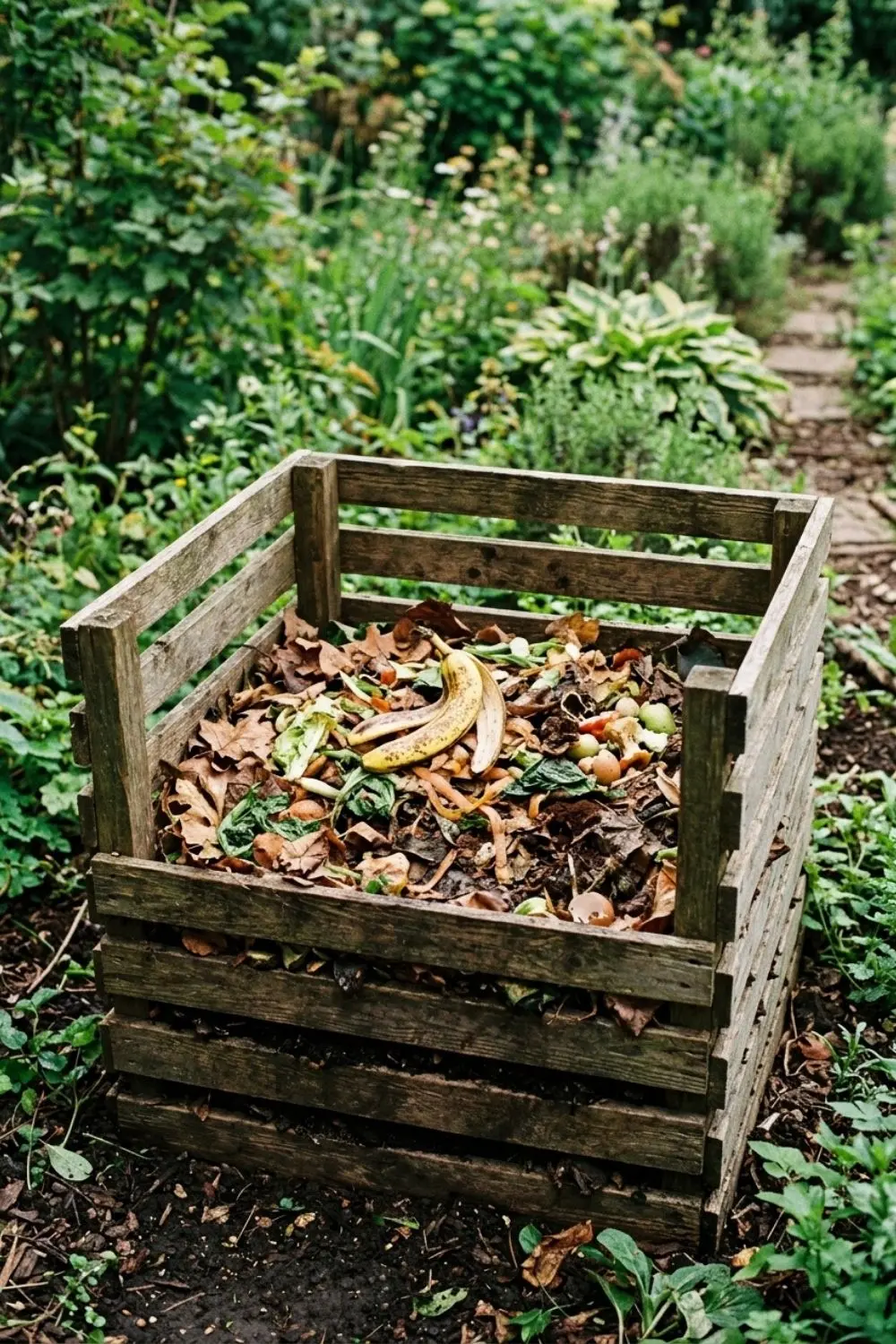
Banana peels are classed as a green material in composting terms, meaning they are nitrogen-containing and break down relatively quickly. Adding chopped peels to a compost bin increases its potassium content and speeds up decomposition when balanced with enough dry brown material — cardboard, dried leaves, or paper. Peels typically break down within two to four weeks under normal composting conditions.
A practical approach is to chop and add peels every few days rather than letting them accumulate in one large addition. Smaller, regular contributions help maintain the compost’s balance and avoid forming dense, wet pockets that slow things down.
Polish Tarnished Silverware Without Chemicals
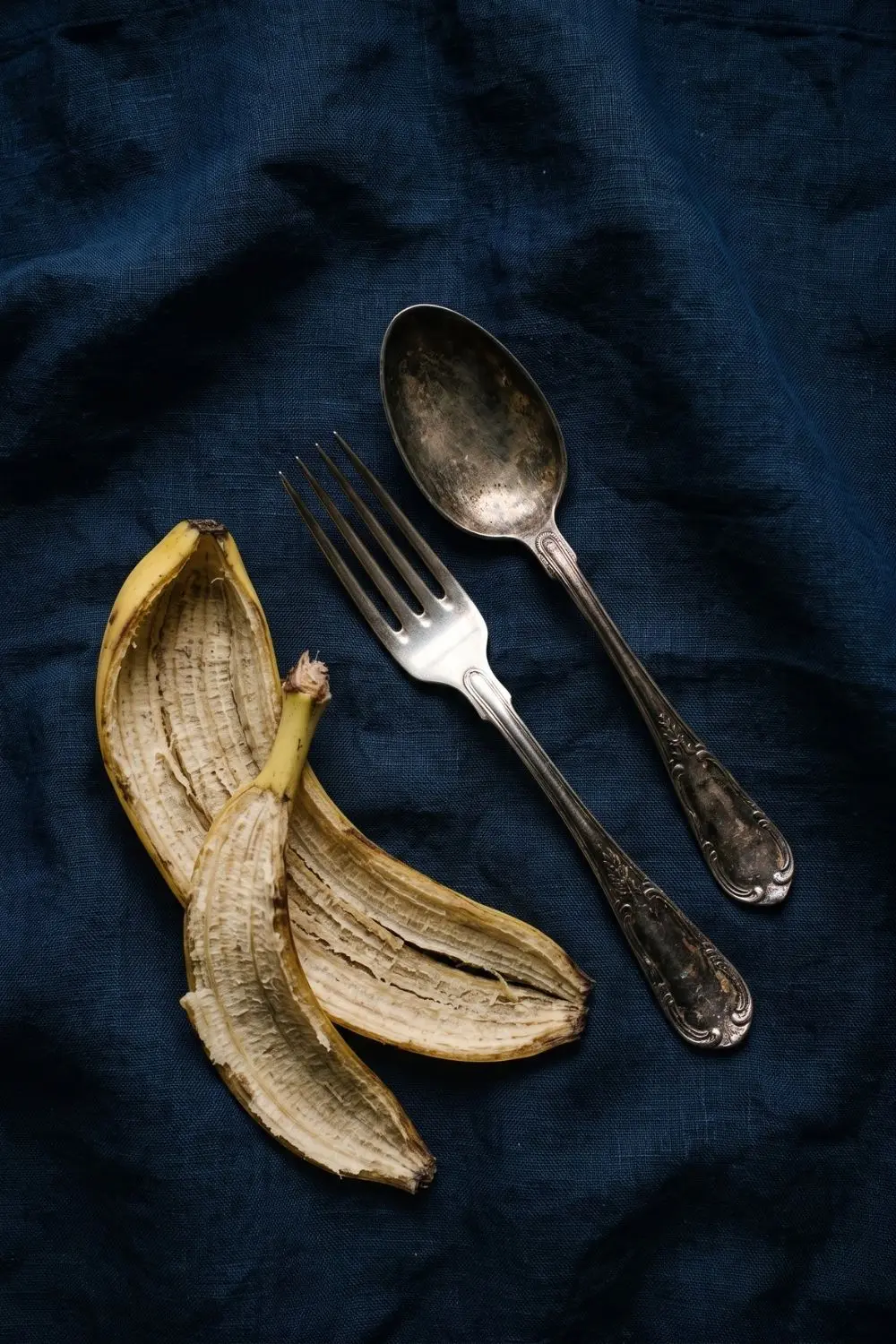
The minerals and natural oils present in banana peels interact gently with the surface of tarnished silver. To use this method, rub the inner white surface of a fresh peel over the tarnished area of a piece of silverware and leave for five to ten minutes. Buff clean with a dry soft cloth afterwards.
Results depend on the degree of tarnish — this method suits light surface discolouration rather than heavy oxidation. It is a useful first step before reaching for commercial cleaners, particularly for silverware stored in drawers that has developed a light greyish film over time.
Scatter Peels Around Rose Bushes to Deter Aphids
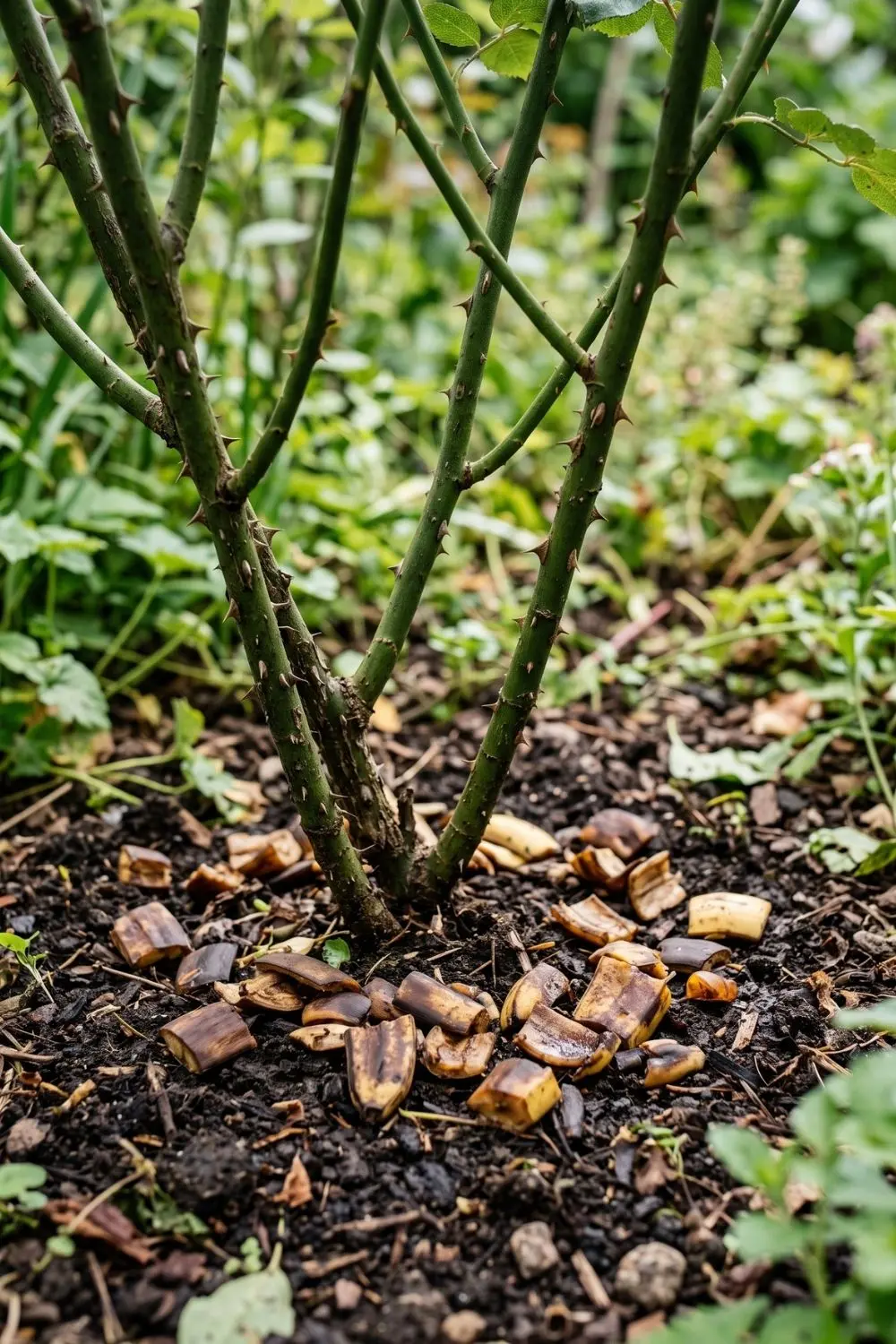
Many organic gardeners place or bury banana peel pieces at the base of rose bushes as a way of discouraging aphid infestations. Aphids are believed to dislike compounds present in banana peels, and the practice is widely used as part of a broader organic pest management approach.
The evidence for this is largely observational rather than from controlled trials, so it is best treated as a supplementary measure alongside other garden hygiene practices. That said, the method costs nothing, requires no additional products, and the peels simultaneously contribute nutrients to the soil as they decompose.
Freeze Peels to Use Throughout the Season
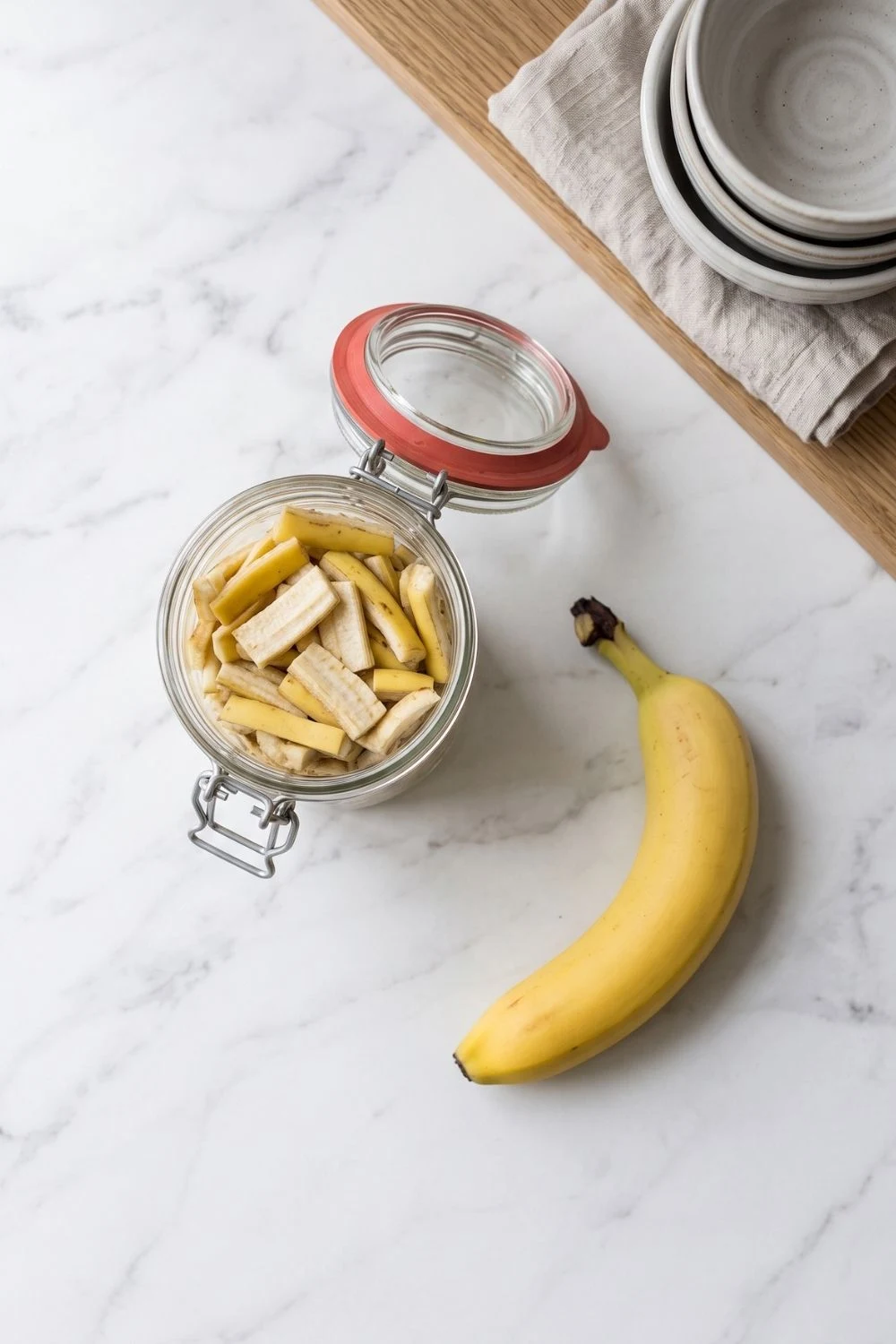
Banana peels can be stored for later use rather than composted immediately. Chop clean peels into small strips, spread on a tray lined with parchment, freeze until solid, then transfer to an airtight container. Stored this way, peels maintain their nutrient content for up to six months in the freezer.
Frozen peels can be added directly to compost tea, buried in garden soil as they thaw, or composted in batches. This is particularly useful in winter, when banana consumption continues but outdoor gardening pauses — peels can be accumulated through the colder months and used as soon as spring arrives.
Myth: Banana peel tea works as well as commercial plant fertiliser.
Reality: It is a useful potassium supplement, not a complete plant food. Banana peels contain no nitrogen, which plants also need in significant amounts. Use peel tea alongside a balanced compost or general-purpose fertiliser rather than as a replacement.
Try This for a Week
Keep a lidded jar of cold water on the kitchen worktop and add banana peel pieces each time a banana is eaten over the next seven days. At the end of the week, strain the liquid and use it to water two or three houseplants. Check back after a fortnight and note any change in appearance.