Back-to-school shopping has started early, but the organizer in the cart may be solving the wrong problem. An empty backpack is easy to stage; a real school-day bag is deeper, heavier, and less willing to sit neatly inside a shallow basket.
The timing is useful. The National Retail Federation’s July 2026 survey found that 62% of back-to-school shoppers had already begun by early July. Before buying another hook rail, cubby, or entryway bench, take five minutes to test the bag that will actually use it.
Women’s Alphabet calls this the Loaded-Bag Fit Audit: a measure-first check for the bag’s real depth, base support, reach, airflow, door clearance, and fixing requirements.
Why an Empty Backpack Gives You the Wrong Answer
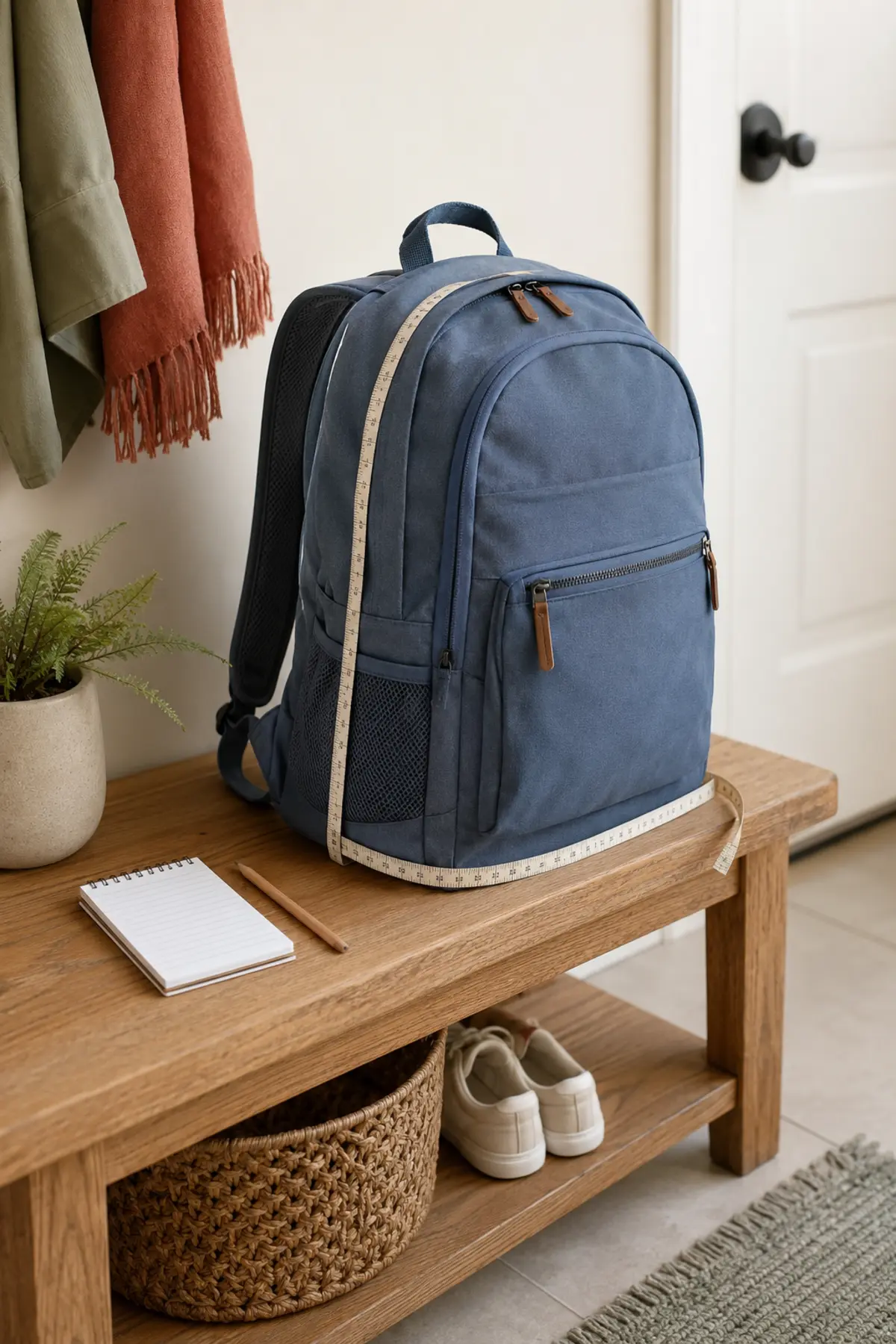
Fill the current school bag only with the ordinary items it is expected to carry. Keep food containers clean and dry for the test, and do not add artificial weight.
Measure it at its widest and deepest points, including side pockets, the lunch-box bulge, and the space needed for straps to stay out of the walkway.
A cubby that fits the empty fabric but crushes the loaded bag is too shallow. A hook that looks strong with an empty backpack may not be intended for the real load. The organizer must fit the used object, not its product photograph.
The Six Checks in the Loaded-Bag Fit Audit
- Base: Can the bottom rest fully on a shelf or floor tray when the bag is usually stored loaded?
- Depth: Do the front pocket and side bottle pockets remain inside the storage footprint?
- Door: Can the entry door open fully without touching the bag or its straps?
- Reach: Can the child park and retrieve the bag without climbing or asking for a lift?
- Air: Can a slightly damp bag dry according to its care instructions instead of being shut inside a lidded basket?
- Fixing: Is the hook, rail, shelf, or cubby installed for the actual wall type and expected load?
If one check fails, change the position before adding more containers.
1. Decide Whether the Bag Should Rest or Hang
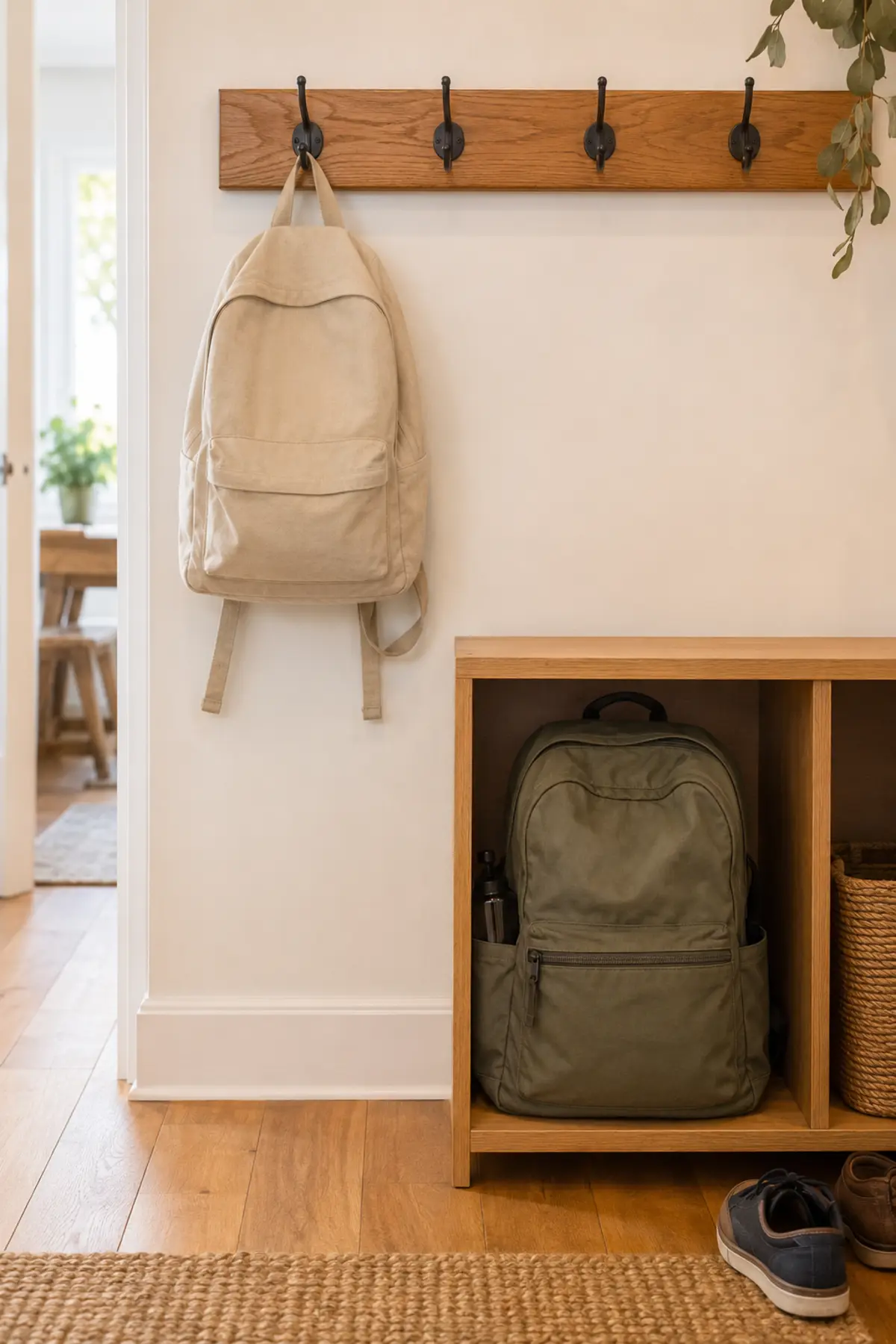
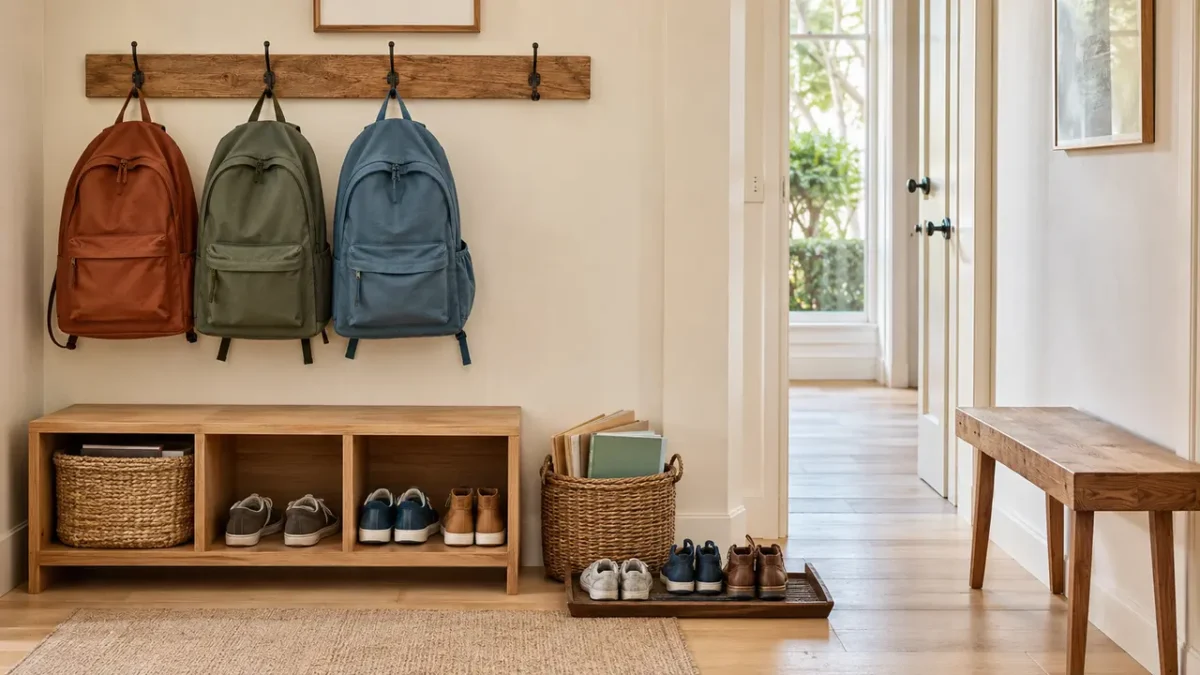
A low open shelf is often the simplest place for a bag that comes home full. The base carries the bag while the straps stay inside the cubby.
A wall hook can work for a lighter or emptied backpack when the hook, rail, fixings, and wall suit the load. Use the top grab handle if the manufacturer permits it, and never pile several loaded bags onto one decorative peg.
If a hanging bag swings into the doorway or can only be reached by climbing, a low resting place is the better fit.
2. Mark the Door Swing and the Loaded Depth
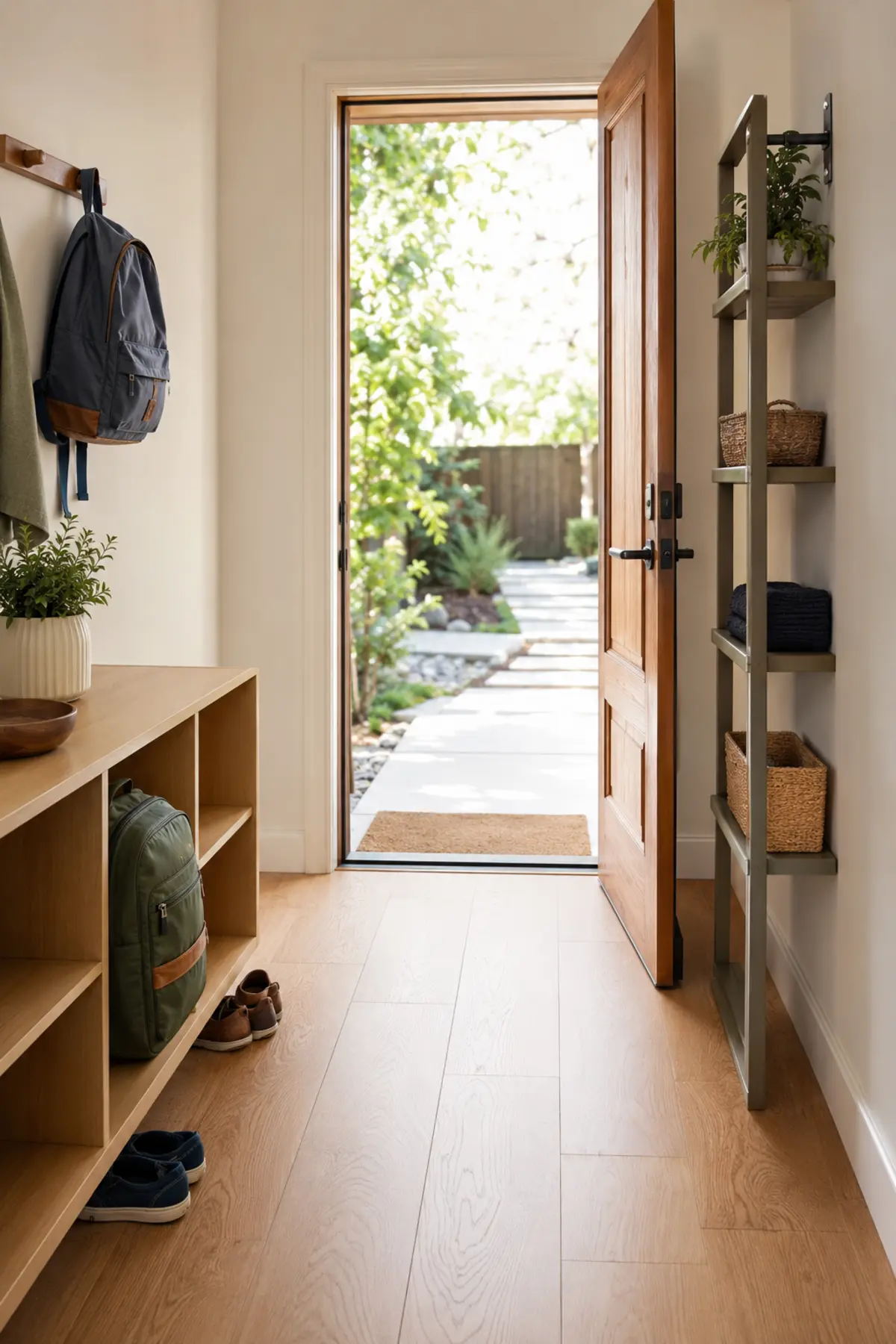
Open the entry door fully. With removable painter’s tape, mark the line needed by the door and handle, then mark the loaded bag’s depth.
The outlines should not overlap. Leave a direct walking line clear of shoes, straps, and rolling-bag handles.
The U.S. Fire Administration’s home escape guidance says doors and windows should not be blocked. The clear route therefore comes before a symmetrical photograph or an extra basket.
3. Test the Reach Without a Step Stool

The everyday position should be reachable from the floor. If the child must stretch, climb, lift a heavy lid, or move another bag first, it is not truly child-usable.
A suitable position also supports amanah: returning the bag becomes an age-appropriate responsibility, not a task stored entirely in one adult’s mind.
If the setup includes a tall or freestanding unit, follow its installation instructions and secure it appropriately. The U.S. Consumer Product Safety Commission’s Anchor It campaign advises anchoring furniture with drawers, doors, and shelves to the wall to help prevent tip-overs.
4. Give Damp Bags Air, Not a Closed Basket
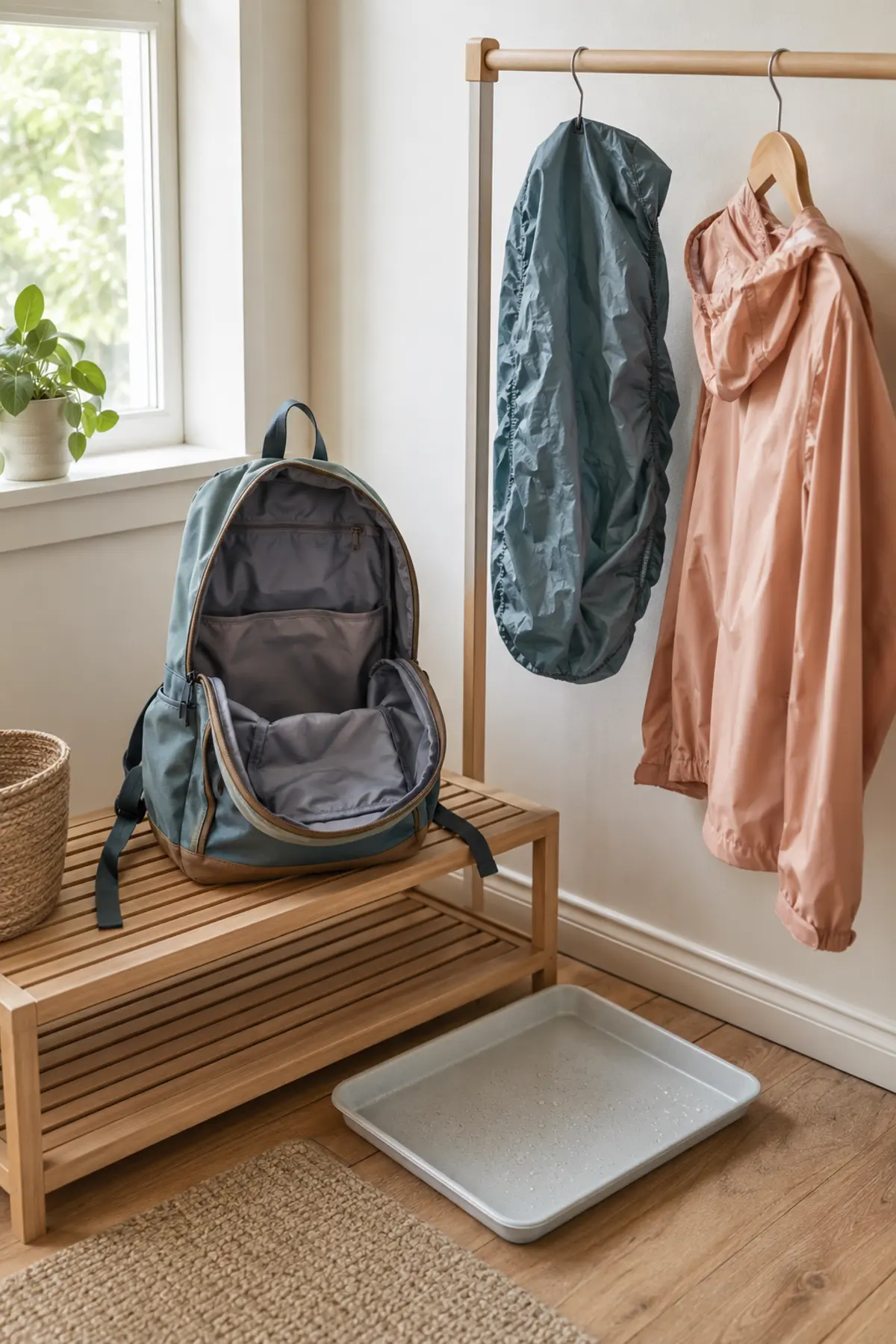
Do not shut a visibly damp backpack, rain cover, or sports layer inside a lidded basket. Empty it, follow its care label, and let it dry away from heaters or open flame.
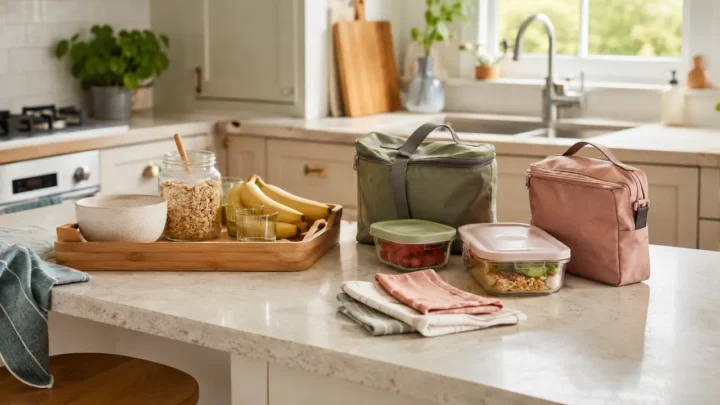
Lunch boxes, bottles, and cold packs need a different destination. Send them to a washable kitchen tray; our 15-minute summer kitchen reset gives lunch equipment a short route without turning the entryway into food storage.
5. Match the Parking Type to the Bag
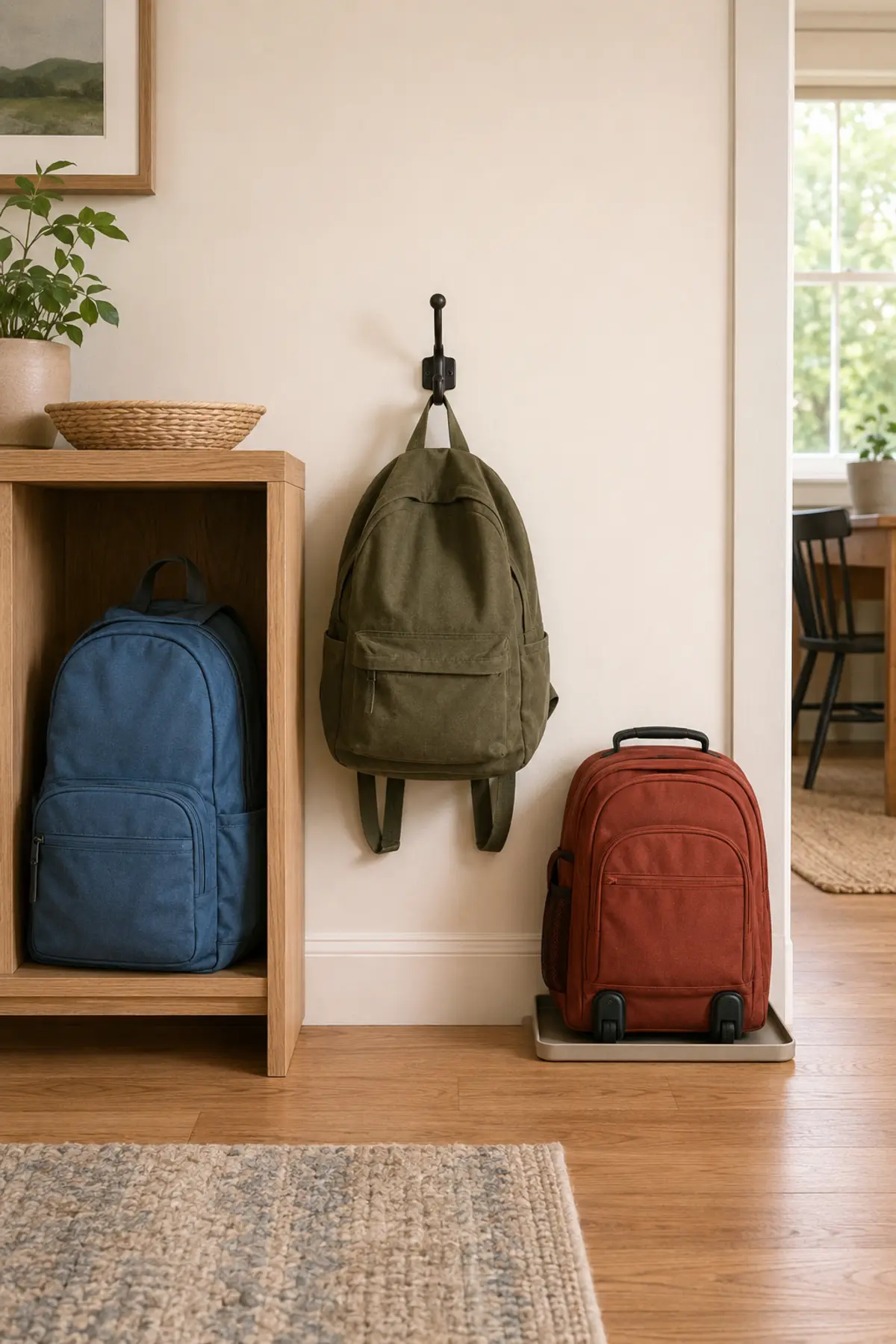
One organizer does not suit every school bag. Match the parking method to the shape the family actually uses:
- Structured backpack: Use an open shelf or cubby deep enough to support the whole base without crushing the front pocket.
- Soft, light backpack: A suitable wide hook may work, provided the straps stay inside the storage footprint and the fixing is rated for the load.
- Rolling school bag: Keep it at floor level on a washable wheel tray, with the handle retracted so it does not enter the walking path.
- Several siblings: Measure side-by-side bays. Do not stack a smaller child’s bag behind or beneath a heavier one.
- Separate sports kit: Give washable gear its own ventilated floor basket instead of forcing it into the school-bag slot.
The bag may need a deeper shelf and less surrounding decor—not a larger piece of furniture.
6. Add a Weekly Load Reset
Even a well-fitted shelf fails when the backpack fills with old worksheets, wrappers, and items no longer needed. Empty every compartment after the final school day of the week and return only what belongs.
The American Academy of Pediatrics’ backpack safety guidance recommends a weekly cleanout, removing unnecessary items, and keeping the backpack at no more than 15% of the child’s body weight.
Use only a temporary paper slot during this reset. Finished work should move to its file or recycling route, not remain in the entryway.
Use Three Ordinary Arrivals as the Final Check
Do not judge the setup from one staged afternoon. Watch three ordinary school arrivals.
If the bag still lands on the floor, look for friction: a shallow shelf, high hook, blocked door swing, or unnecessary lid.
If the bag fits but the morning still breaks elsewhere, use our one-week school-morning trial to examine time, choices, responsibility, and schedule margin. That is a different problem from physical storage, and it deserves a different fix.
The best organizer safely fits the loaded bag, protects the exit, and allows a child to practice responsibility without filling the home with more things. Good order should support prayer, nourishment, safety, and gentle family conduct—not compete with them.