Two-tone makeup is one of 2026’s most discussed eye trends — but discussion is not the same as a finished technique. The version worth learning does not divide the face into two competing halves; it uses two eye colors with enough repetition and restraint to look intentional.
The wider trend is real, but the label needs some honesty. Allure’s 2026 makeup forecast describes a clear return to colorful lids and says “intentional” is one of the year’s defining ideas. That combination—more color, but with control—is the useful part.
Likewise, Vogue’s March 2026 eye-makeup report points to blue shadow, colored liner and softer diffused finishes entering everyday routines. A January report on mismatched eye color also documented viewers trying red-and-yellow variations on social media. Two-tone makeup is therefore best understood as a rising method inside 2026’s broader color shift, not a rigid new uniform.
The Polished Version Is Not a Split-Face Look
The dramatic online version may place an unrelated bright shade on each eye. That can photograph clearly, but it often reads harsher in ordinary light.
A balanced two-tone look keeps the complexion, brows and lips quiet, then lets the eyes carry one controlled contrast. The colors can differ, but the shape, finish or liner should repeat. That repeated element tells the eye that the difference was chosen.
In other words, the goal is not perfect symmetry. It is visual agreement.
The WA 70/30 + One-Anchor Rule
Women’s Alphabet’s practical formula is simple: let one shade do about 70 percent of the work and use the second for the remaining 30 percent. This is an editorial proportion, not a technical law, but it prevents two pigments from competing at equal volume.
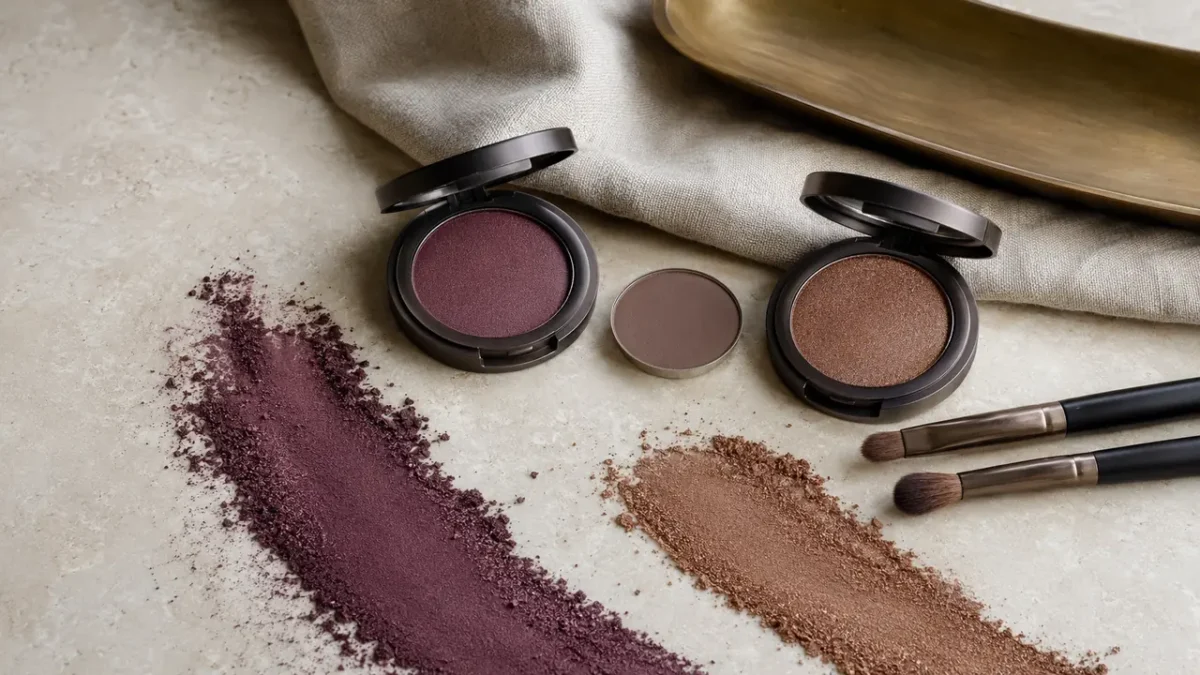
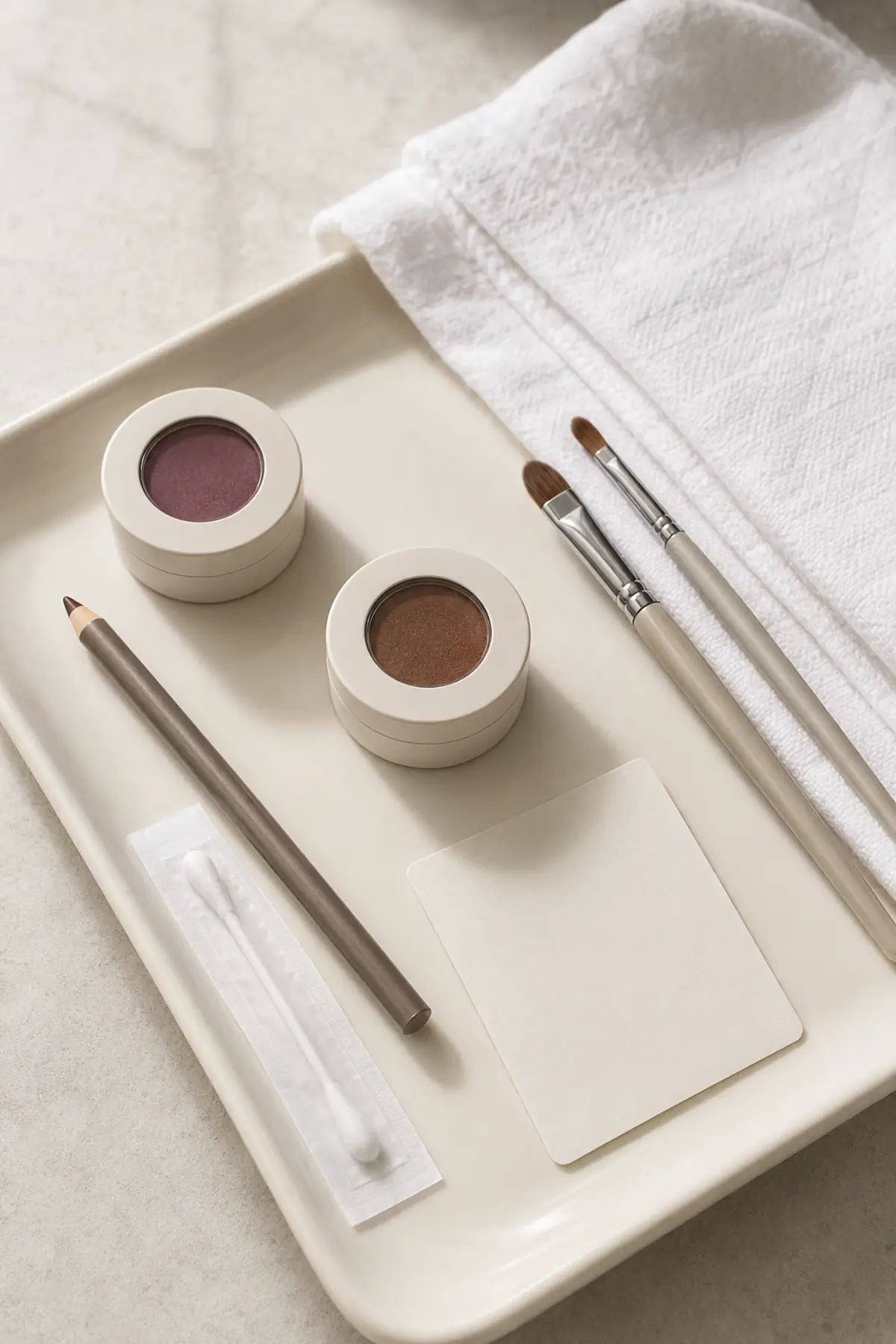
The larger share might be a sheer plum wash across both lids. The smaller share might be bronze at the outer corner, along the lower lash line or on one lid in a lighter veil.
Then add one quiet anchor that appears on both eyes: the same taupe liner, the same soft mascara color or the same satin finish. The anchor is what makes two shades read as one look. And as with any expressive technique, where and for whom it is worn matters as much as the palette — a point we return to later in this guide.
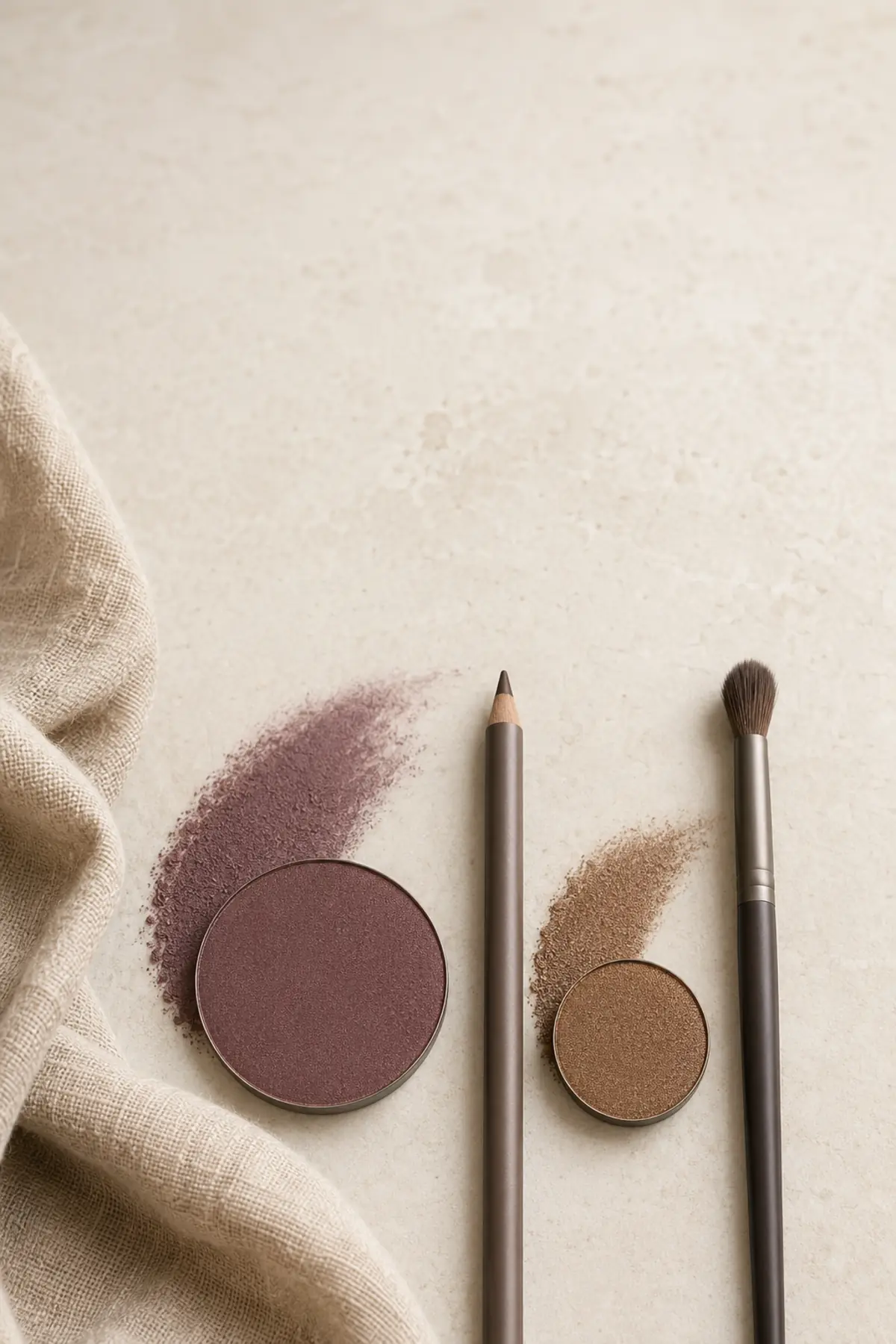
Choose Pairs That Share One Quality
Two colors do not have to match, but they should share at least one quiet property: similar depth, a muted finish or an earthy undertone. That common ground is more reliable than choosing two shades simply because both are fashionable.
Test the pair in daylight and in the indoor light where you will actually wear it. A combination that looks soft beside a bright window may become much deeper under warm evening bulbs.
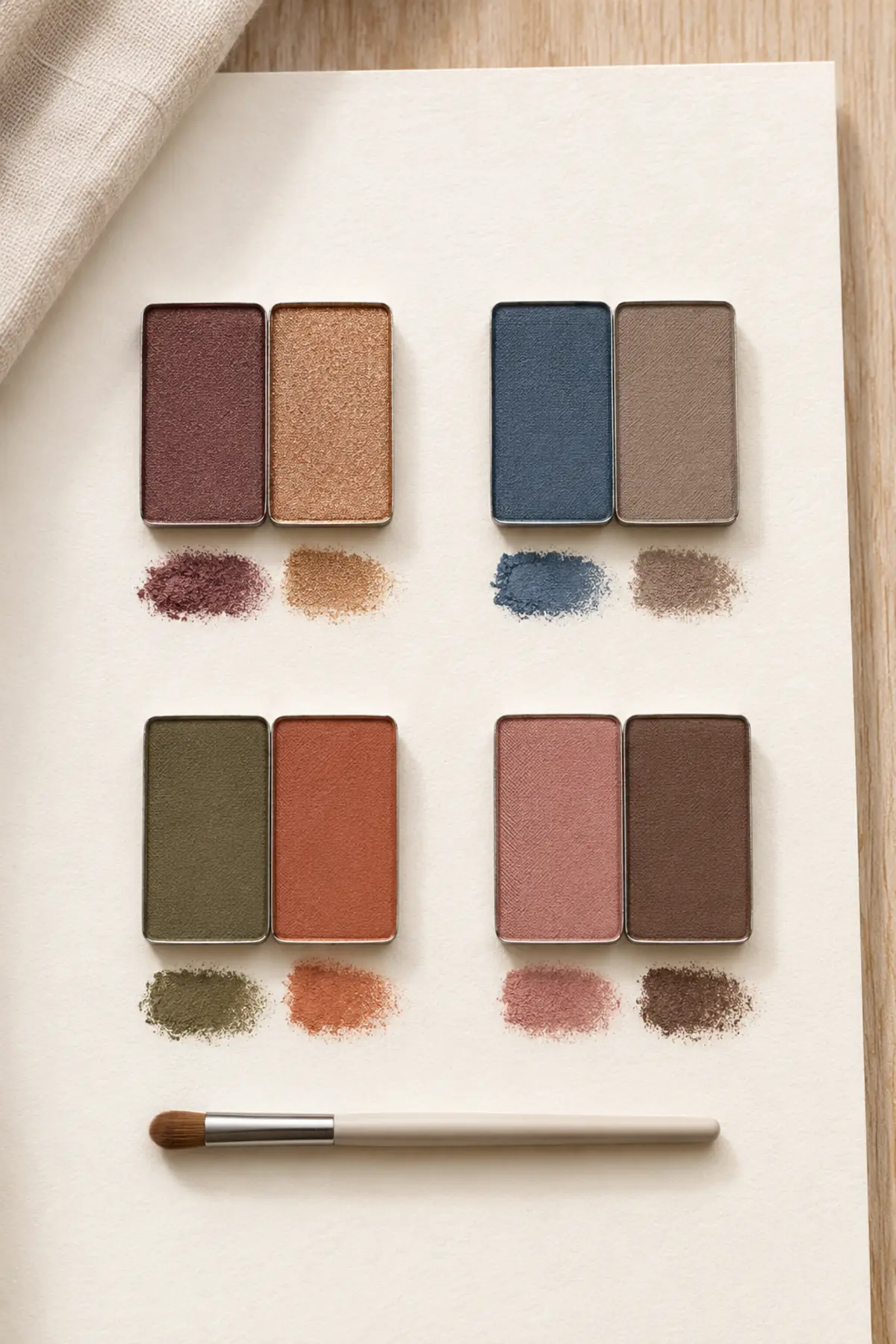
Plum + soft bronze
Plum supplies the depth; bronze adds warmth without introducing another loud color. Keep the bronze fine rather than glitter-heavy for the most composed finish.
Denim blue + matte taupe
Denim blue feels current in 2026, while taupe gives it a familiar frame. Use taupe over the larger area and keep blue to a soft line or outer-corner haze.
Olive + terracotta
Both shades belong to an earthy family, so the contrast comes from hue rather than brightness. A muted finish keeps the pairing warm and calm.
Dusty rose + cocoa
This is the easiest entry point for anyone who rarely wears visible color. Rose brings softness; cocoa supplies enough structure to stop the result from looking washed out.
Three Placements That Read as Deliberate
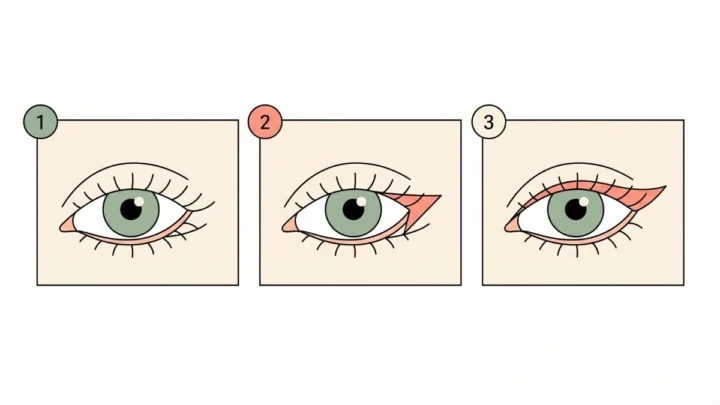
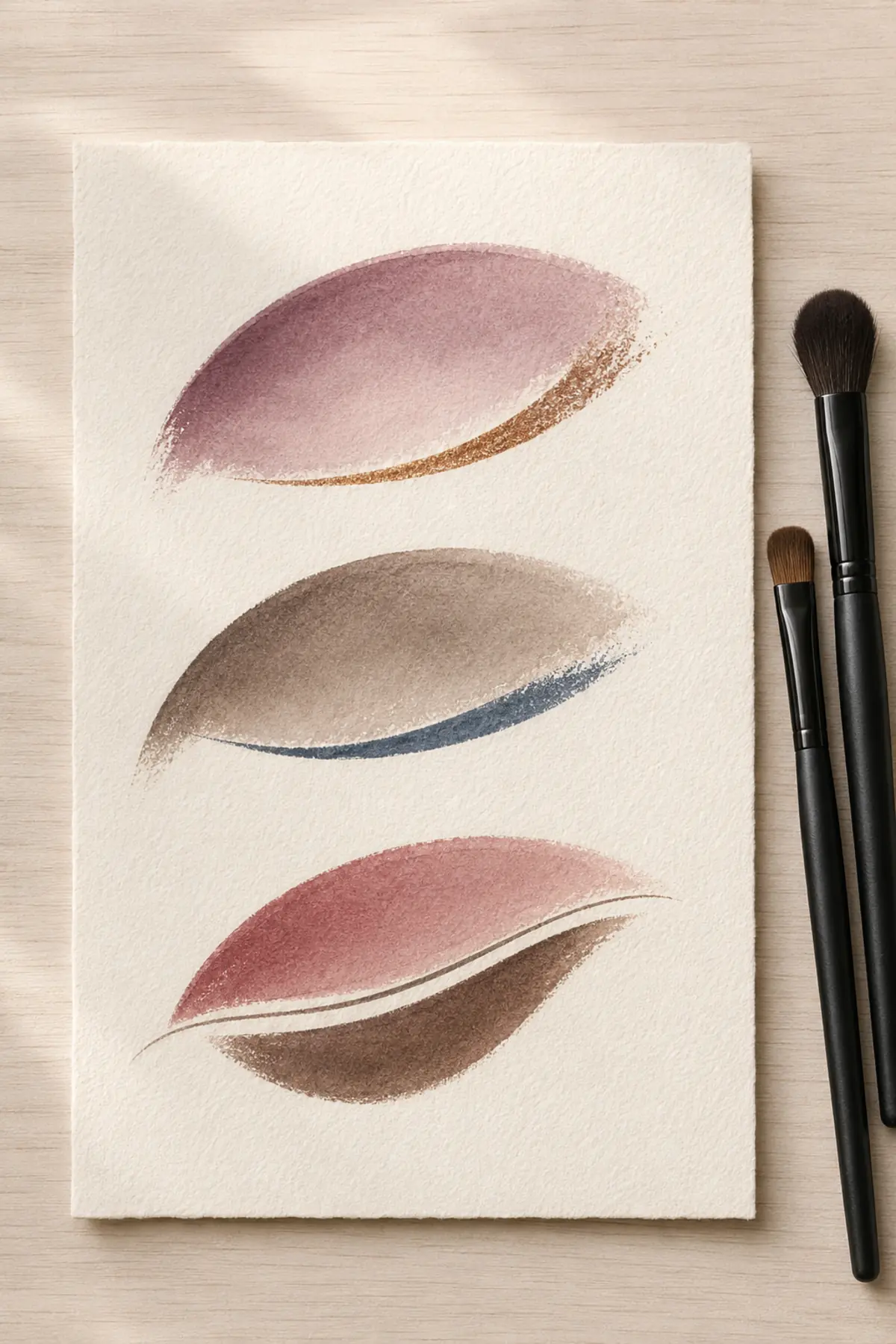
One wash, one outer accent: Apply the dominant color in the same soft shape on both lids, then place the second shade only at the outer third. This is the least risky version because the overall silhouette stays consistent.
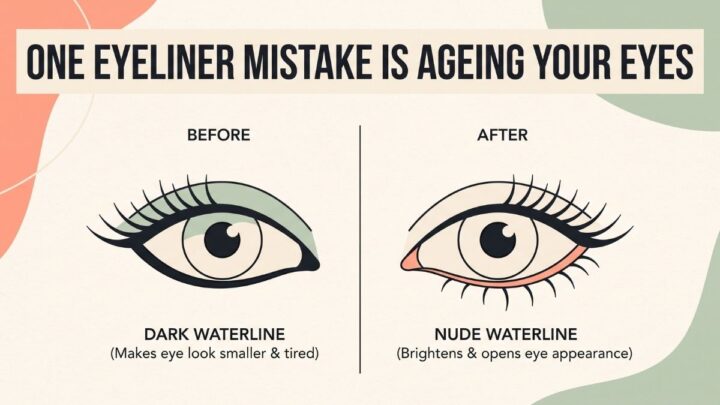
Neutral above, color below: Keep taupe or cocoa on the upper lid and use the accent shade as a thin lower-lash detail. If you already use a reverse-wing placement for downturned eyes, the color can follow that established angle instead of introducing a second shape.
Different sheer washes, one liner: Place one muted color on each lid, but repeat the same slim taupe line and the same finish on both. Sheerness matters here; two opaque blocks are much harder to balance.
Keep This Expressive Look Close to Home
Color technique is not separate from context. For a Muslim woman, enjoying beauty does not require turning it into a public display or making strangers its intended audience.
For married Muslim readers, a playful two-tone look is best kept for one’s husband at home. It can be a thoughtful detail that brings warmth to married life while remaining within the privacy in which adornment can be enjoyed most comfortably.
A private women-only gathering is another suitable setting. For readers who are not married, that offers a way to explore the technique without treating public visibility as the trend’s measure of value. The look does not become more beautiful because more people see it.
Use the 10-Second Balance Check
Before calling the look finished, step back from the mirror and ask three questions. Which color is clearly dominant? What repeated element connects both eyes? Is any other feature competing for attention?
If both colors seem equally loud, soften one with a clean brush. If the eyes feel disconnected, repeat the same thin liner or finish. If the look still feels crowded, remove one supporting detail rather than adding another product.
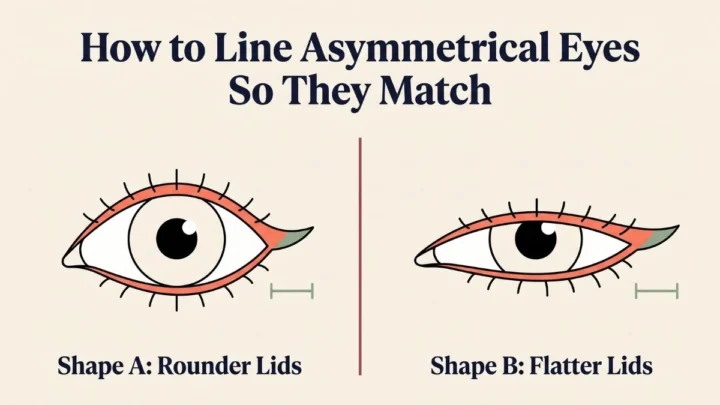
Natural differences in lid space can also change how much color is visible. Our guide to lining asymmetrical eyes so they match explains why equal visual weight matters more than copying the same physical width on both sides.
A Short Eye-Makeup Safety Note
More color should not mean improvised products. The FDA’s eye-cosmetic safety guidance notes that not every color additive allowed in cosmetics generally is approved for the eye area. Use pigments labeled for their intended placement, keep applicators clean and never share eye products.
Apply makeup while stationary rather than in a moving vehicle, and stop using any product that causes irritation. Those habits matter more than whether the formula is cream, powder or pencil.
The Finished Look Should Feel Quietly Connected
Two-tone makeup works in 2026 because color is returning, but polish still depends on editing. One dominant shade, one smaller accent and one shared anchor are enough.
Choose a pair with common ground, keep the rest of the makeup restrained and wear the expressive version in an appropriate private setting—especially as a thoughtful look for your husband at home. The result can feel current without allowing the trend to set the terms.