

The Viral “Toothpick” Hack to Stop Cut Lemons from Drying Out
Have you ever needed just a single splash of citrus for a recipe, only to find yourself staring at the remaining half of a lemon, wondering how to store it? It is a universal kitchen dilemma. You wrap it in plastic film, toss it in the refrigerator drawer, and a few days later, you pull out a sad, dehydrated, rock-hard shell that is destined for the compost bin. Bottled juice simply does not deliver the same vibrant, zesty flavor as fresh citrus, so keeping those leftover halves fresh is absolutely essential for anyone who loves cooking, baking, or mixing fresh beverages.
Recently, a brilliantly simple solution has been making waves across food blogs, social media platforms, and culinary communities. It requires zero specialized equipment, uses no single-use plastics, and relies entirely on an item you likely already have tucked away in your pantry: a plain wooden toothpick. Whether you have already sliced into the fruit or you just need a few drops without breaking out the cutting board, the toothpick hack is a game-changing technique for food preservation.
This comprehensive guide explores the science behind why citrus fruits dry out so quickly, the two primary variations of the toothpick trick, real feedback from online culinary communities, and the essential food safety standards that make this method so remarkably effective.
The Science of Spoilage: Why Refrigerators Dehydrate Fresh Produce
To fully understand why the toothpick method is so highly praised by home cooks, it is helpful to look at the environment inside a standard refrigerator. Refrigerators are designed to keep food cold by constantly circulating chilled air. While necessary for food safety, this process naturally removes humidity from the environment, resulting in an aggressively dry atmosphere.
When a lemon is whole, its thick, porous rind acts as a robust, natural barrier against this dry air. The rind is packed with complex essential oils and a spongy white pith (known as the albedo) that together protect the delicate, juicy vesicles inside from structural collapse.
However, the moment a knife slices through that protective skin, the fruit’s internal defense system is entirely compromised. The exposed flesh is suddenly vulnerable to the dry, circulating air of the fridge. Moisture evaporates rapidly. Furthermore, the exposed surface is now susceptible to rapid oxidation and can easily absorb ambient odors from other leftovers. There is nothing worse than squeezing what you think is fresh citrus over a delicate piece of fish, only to realize it has absorbed the strong aroma of yesterday’s garlic pasta.
Traditional storage methods often involve tightly wrapping the exposed end in plastic cling film. While this seems logical, it can actually cause more harm than good. Plastic traps moisture directly against the cut surface, generating a micro-environment where mold and bacteria can thrive rapidly. This is exactly where the simple wooden toothpick steps in to offer a far superior, breathable, and eco-friendly alternative.
Method 1: The “Reassemble” Toothpick Trick (For Cut Lemons)
If a recipe calls for a specific measurement, such as a quarter cup of juice, or a few distinct wedges for a dinner party, slicing the fruit open is unavoidable. For these situations, the “reassemble” method, an ingenious trick shared by Cook’s Illustrated and quickly adopted by home chefs everywhere, is the perfect solution.
Here is the step-by-step process for executing this preservation method flawlessly:
- Slice with Strategy: Instead of cutting the fruit haphazardly, slice it cleanly in half or into distinct wedges, keeping the pieces as intact and uniform as possible.
- Extract What You Need: Squeeze or use the required portion for your immediate recipe.
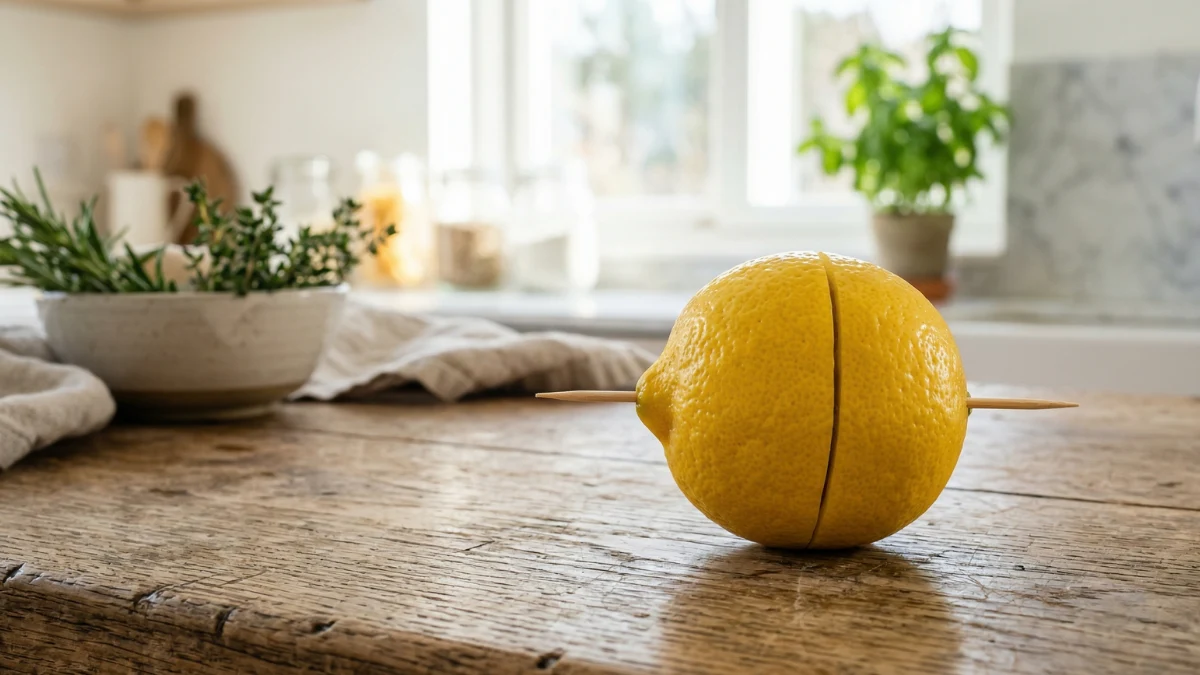
- Rebuild the Fruit: Take the unused half or the remaining wedges and fit them back together exactly as they were before slicing, much like piecing together a simple 3D puzzle.
- Secure the Structure: Take one or two standard wooden toothpicks and drive them straight through the rind, pinning the loose pieces together securely.
- Store Smartly: Place the reassembled fruit in the crisper drawer of the refrigerator.
Why It Works: By placing the cut sides perfectly flush against one another, you essentially eliminate direct exposure to the dry refrigerator air. The fruit’s own rind is reinstated as the primary protective barrier. Because the organic material allows for a tiny amount of natural breathability, it prevents the suffocating condensation buildup associated with plastic wrap, while still retaining the internal moisture. Users consistently report that lemons stored this way remain plump, juicy, and ready to use for several days longer than their plastic-wrapped counterparts.
Method 2: The Viral “Poke and Squeeze” Technique (The No-Cut Approach)
Sometimes, a recipe, a salad dressing, or a cup of afternoon tea requires nothing more than a few drops of fresh juice. Slicing an entire fruit open for a mere teaspoon of liquid feels wasteful and starts the dehydration clock unnecessarily. This exact scenario birthed a viral trend across TikTok and Reddit, commonly referred to as the “poke and squeeze” method.
This approach bypasses the kitchen knife entirely:
- The Roll: Before doing anything else, place the whole lemon on a hard countertop. Press down firmly with the heel of your hand and roll it back and forth a few times. This internal pressure bursts the tiny juice-filled membranes inside the fruit, making the liquid flow much more easily.
- The Puncture: Identify the non-stem end of the fruit (often called the blossom end). Take a sturdy wooden toothpick, a metal skewer, or even a clean chopstick, and poke a hole directly into this end, pushing it deep into the center.
- The Squeeze: Remove the toothpick and squeeze the fruit firmly over your bowl, pan, or teacup. A perfect, completely seedless stream of juice will flow out of the punctured hole.
- The Seal: Once you have extracted the desired amount, you can simply re-insert the toothpick into the hole to act as a physical plug, and place the whole fruit back into the refrigerator.
Why It Works: Because the structural integrity of the fruit remains almost entirely intact, the dehydration process is halted before it even begins. The tiny puncture wound is so small that minimal air exchange occurs, preserving the interior perfectly.
What the Community is Saying: Real Reddit Experiences
When evaluating any kitchen tip, turning to community forums offers unfiltered, practical feedback. The toothpick hacks have been extensively tested by home cooks online, and the consensus is overwhelmingly positive, albeit with some highly entertaining side effects.
In discussions surrounding the “poke and squeeze” method, many users highlight its sheer convenience and entirely mess-free nature. One Reddit user shared a particularly funny anecdote about bringing a punctured lemon to their workplace to use for their daily tea. Because the fruit remains entirely whole, it looks completely untouched to the untrained eye. The user recounted hearing a confused coworker shouting from the breakroom, “Why is this lemon empty?!” after trying to slice into the perfectly intact, yet thoroughly juiced, shell. It is a brilliant testament to how well the structure holds up even when the liquid is gone.
Food enthusiasts on these platforms also point out a practical division between the two methods. The community suggests using the reassembly trick for intense cooking and baking sessions that demand larger volumes of liquid, while reserving the puncture trick for daily habits, such as adding a splash of citrus to water bottles or finishing a plated dish with a light mist of acid.
Food Safety and Storage Standards
From an authoritative food safety perspective, proper storage of cut produce is a serious consideration. According to established culinary guidelines, any time the protective skin of a fruit or vegetable is breached, the exposed flesh becomes a potential breeding ground for bacteria if not handled correctly.
The reassembly technique aligns perfectly with food safety best practices. By covering the exposed flesh with its own natural, highly acidic rind, you significantly reduce the surface area available for airborne bacteria to settle upon. Furthermore, this method prevents the flesh from coming into direct contact with the refrigerator shelf or other stored items, eliminating the risk of dangerous cross-contamination.
It is highly recommended to wash the exterior of the fruit thoroughly before applying either of these methods. Even if you are not eating the peel, a knife or a toothpick passing through an unwashed rind can drag surface bacteria directly into the edible flesh inside. Always wash produce under cold, running water before executing these preservation techniques.
Sustainable Alternatives to Single-Use Plastics
Beyond the obvious practical benefits of extending the shelf life of your groceries, these methods offer a significant step toward a more sustainable, environmentally friendly kitchen. The culinary world has heavily relied on cling film and plastic sandwich bags for decades, contributing heavily to unnecessary household waste.
While the market has responded with reusable silicone produce huggers and beeswax wraps—both of which are excellent, highly recommended tools for reducing waste—they require an upfront financial investment and must be washed meticulously between uses. The humble wooden toothpick provides an accessible, completely cost-free, and fully compostable alternative. Once the fruit is finally used up, the toothpick and the rind can both go directly into the compost bin, leaving absolutely zero footprint behind.
Final Thoughts on Optimizing Your Kitchen Routine
Managing kitchen waste and keeping delicate ingredients fresh does not always require expensive gadgets or complicated, time-consuming systems. Sometimes, the most brilliant solutions are the simplest ones hiding right in plain sight. By understanding the fundamental properties of the ingredients we work with daily, we can devise smarter, more efficient ways to extend their usability and maximize their value.
Whether you choose to piece your citrus back together like a puzzle or adopt the puncture-and-pour technique for your daily cooking routine, you will save money, reduce plastic waste, and ensure that every last drop of flavor is fully utilized to its highest potential. Next time you reach for that bright yellow fruit, skip the single-use plastic wrap and reach into the pantry instead. Your ingredients, your wallet, and your future culinary endeavors will undoubtedly benefit from this incredibly practical approach.