

5 Reasons the “Lint Roller” Trick is a Game-Changer for Dusting Lampshades and Curtains
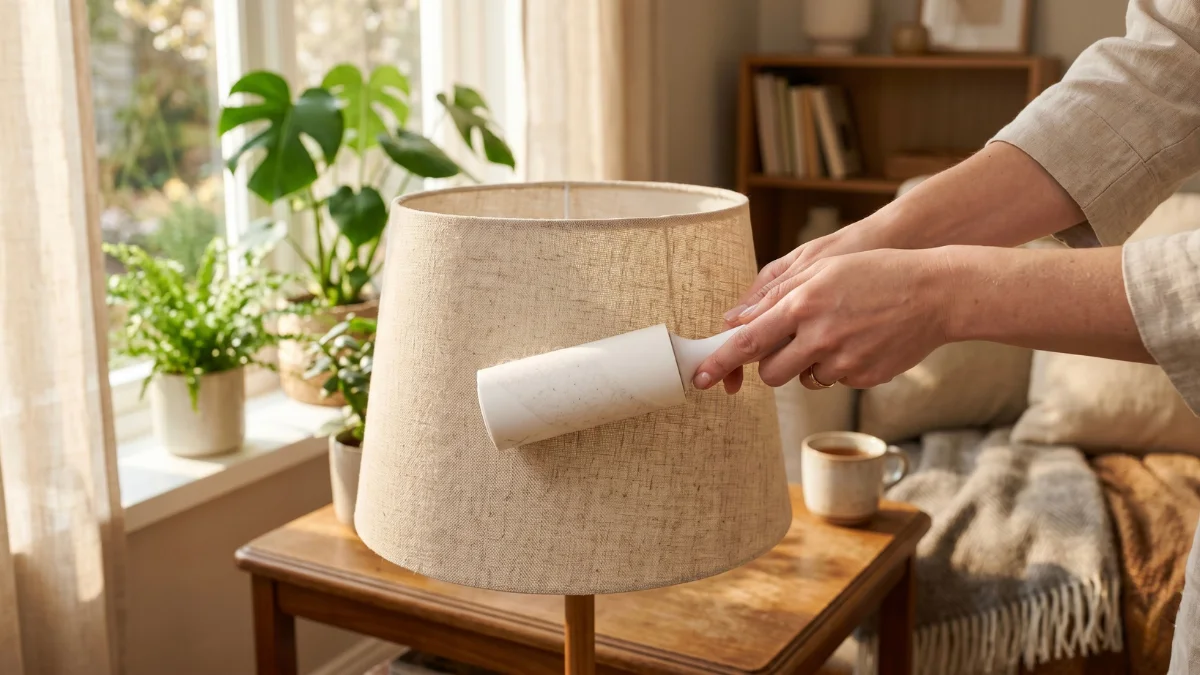
For years, the standard approach to cleaning lampshades and heavy curtains involved balancing on step stools with a feather duster, only to watch a cloud of grey particles float right back down onto the furniture. It is frustrating, inefficient, and counterproductive when you are trying to keep a home genuinely clean.
Recently, however, a surprisingly simple tool has taken the home maintenance world by storm. It is highly likely that you already have one sitting in a drawer right now. The humble lint roller, traditionally reserved for removing fuzz from winter coats and pet hair from black trousers, has proven to be the ultimate secret weapon for home interiors. According to recent discussions across home care communities and cleaning professionals in 2026, this smart hack is entirely shifting how we approach fabric maintenance.
If you want to keep your living space looking spotless without spending hours scrubbing or risking damage to expensive textiles, here are five reasons why this technique is an absolute must-try.
1. It Lifts and Traps Dust Instead of Spreading It
The fundamental flaw with traditional dusting tools—like microfiber wands or classic feather dusters—is that they often rely on static electricity or simple sweeping motions. While they do pick up a good amount of surface dirt, a significant portion gets pushed around or launched directly into the air you breathe. This merely relocates the problem rather than solving it, often triggering sneezing fits.
A lint roller operates on a completely different mechanical principle: physical adhesion. When you glide the sticky paper over a fabric lampshade or a linen curtain panel, the adhesive grabs onto dust mites, pollen, and microscopic debris, locking them securely onto the sheet. Once the sheet loses its tackiness, you simply peel it off and throw the mess straight into the bin.
This method is incredibly helpful for allergy sufferers and those looking to improve indoor air quality. In online forums like Reddit’s r/CleaningTips, users frequently share their satisfying “before and after” photos of the roller sheets turning completely grey after just one pass over a seemingly clean lampshade. It provides immediate visual proof that the dirt is actually leaving the house, rather than just floating to another corner of the room.
2. Zero Risk of Water Damage to Delicate Materials
Water and structured fabric items are generally a disastrous combination. Many high-quality lampshades are constructed using special glues to bind the silk, linen, or cotton to the inner metal wireframe. When people attempt to clean these shades with a damp cloth or a wet sponge, the moisture seeps deep into the seams. Over time, this causes the adhesive to dissolve, the fabric to warp or yellow, and the metal frame to develop unsightly rust spots that bleed through the material, permanently ruining the piece.
By utilizing a dry-cleaning method like the lint roller, you completely bypass these risks. There is no moisture involved, meaning the structural integrity of the lampshade remains perfectly intact. This is especially crucial for tailored or bespoke pieces, such as vintage silk shades or custom-designed lighting fixtures. You can easily maintain their pristine condition without ever worrying about water rings or fabric shrinkage.
Note: If you are dealing with a fragile paper or parchment lampshade, proceed with caution. Choose a roller with a less aggressive adhesive (or lightly press a fresh sheet against your clothing first to reduce the stickiness) to ensure you do not accidentally tear the delicate paper surface.
3. The Ultimate Solution for Embedded Pet Hair
Anyone sharing a home with cats or dogs understands the relentless battle against pet hair. Fluffy companions love to brush up against floor lamps and sleep right against the bottom hems of floor-to-length curtains. Pet hair has a tendency to weave itself directly into the fibers of these fabrics. Short, stiff dog hairs act like tiny needles weaving into the weave, while fine cat hair forms stubborn, fuzzy layers.
Vacuum cleaners, even those equipped with specialized upholstery attachments, can sometimes be too aggressive. They might suck the fabric into the nozzle, causing wrinkles, stretching, or even tearing the fragile material of a lampshade. Furthermore, hauling a heavy vacuum cleaner up to reach the top of window treatments is an exhausting and cumbersome task.
The adhesive on a standard lint roller is perfectly formulated to pull out deeply embedded hairs that a vacuum brush might glide right over. With just a few gentle, downward strokes, you can entirely strip away a layer of pet hair, restoring the fabric’s original texture and color instantly. It is a quiet, lightweight, and highly effective approach that requires zero heavy lifting.
4. Prolongs the Lifespan of Heavy Drapery
Taking down heavy living room curtains or bedroom drapes to wash them is arguably one of the most labor-intensive household chores. The process involves removing heavy rods, unhooking dozens of metal pins, running multiple washing machine cycles, and then dealing with the nightmare of ironing massive panels of fabric. Furthermore, frequent machine washing can severely degrade the textile quality, leading to faded colors, weakened threads, and unwanted shrinkage.
According to home care experts, heavy drapery acts as a giant filter for the room, catching airborne dust before it settles. To build a more sustainable home maintenance routine, professionals recommend spot cleaning and regular dry dusting to extend the time between deep washes. Running a lint roller over your curtains—paying special attention to the top pleats where dust settles, and the bottom hems where floor debris gathers—takes only a few minutes.
By actively preventing dust from settling deeply into the fabric weave, your curtains will look fresh and vibrant for much longer. This proactive approach saves an immense amount of time and physical effort while protecting your expensive window treatments from premature wear and tear.
5. The Ultimate Time-Saving Trick for Quick Touch-Ups
Life is busy, and sometimes you just need the house to look presentable in under ten minutes before guests arrive. Dragging out cleaning appliances, dealing with tangled cords, and mixing specialized fabric sprays is not always feasible.
This is where the lint roller truly shines as a hero of efficiency. It is completely silent, requires no preparation, and delivers instant results. You can easily keep a spare roller tucked away in a living room drawer or a hallway cabinet. When you notice a dusty lampshade glowing visibly in the evening light, you can swipe the roller across the surface a few times and resolve the issue in seconds. For deeper stains that the sticky sheet cannot pick up, experts often recommend following up with a slightly damp melamine sponge, but for daily dust, the roller is unbeatable.
For the best results, follow this simple technique:
- Support the Frame: When rolling a lampshade, always place one hand gently inside the shade to support the frame. This prevents the lamp from tipping over and ensures you apply even pressure.
- Top-to-Bottom Strokes: Start at the top edge and roll downwards in straight, overlapping lines. This systematic approach guarantees you do not miss any spots.
- Peel Frequently: Pay attention to the stickiness. As soon as the sheet is coated in a layer of grey fuzz, peel it away to reveal a fresh layer. Continuing to use a dirty sheet will just deposit the trapped dirt back onto the fabric.
- Secure the Curtains: When treating curtains, hold the bottom hem taut with one hand while rolling downwards with the other to avoid bunching the fabric.
Frequently Asked Questions About Fabric Dusting
To ensure you get the most out of this helpful trick, here are a few common questions from the community:
Can I use a lint roller on velvet curtains? Yes, but with care. Velvet has a distinct pile (the direction the fibers lie). Always roll downwards, following the natural direction of the pile, to avoid crushing the fabric or leaving awkward lines.
How often should I perform this routine? For homes without pets, a quick roll every two weeks is sufficient to prevent heavy buildup. If you have multiple pets, incorporating this into your weekly tidying schedule will yield the best results and keep allergens at bay.
Will the adhesive leave a sticky residue? Standard clothing lint rollers are designed to release without transferring their adhesive. However, avoid using industrial-strength or extra-sticky tape (like duct tape) on delicate items, as those can indeed leave a residue that will attract even more dirt in the future.
Final Thoughts: A Smarter Way to Clean
The internet is filled with home hacks, some of which are overly complicated or frankly ineffective. However, the consensus on this particular method is overwhelmingly positive. From professional housekeepers sharing their daily toolkits to everyday individuals posting their cleaning victories on social media, the evidence is clear. The absence of harsh chemicals, the protection of fragile materials, and the immediate visual satisfaction make this trick an undeniable winner.
Instead of relying on damp cloths that risk leaving watermarks, or feather dusters that merely redistribute allergens around the room, this simple tool offers a straightforward and highly effective solution. It is exactly the kind of practical, low-effort, high-reward strategy that transforms a tedious chore into a highly satisfying task. Next time you are walking down the laundry aisle at the supermarket, do not just buy one for your wardrobe. Grab an extra roller specifically for your living room, and watch how easily it transforms the way you care for your home’s most delicate fabrics.