A lace tablecloth can make a spring table look soft, thoughtful, and quietly special.
It can also make the whole setting look dated in less than a minute.
The difference is rarely the lace itself. It is what sits beneath it, what rises above it, and how much breathing room the table is allowed to keep.
That is why the freshest spring table setting this season starts with a simple rule: treat lace as texture, not decoration. Let it soften the table, then balance it with fresh florals, gentle colour, and clean practical details that make the table feel lived in rather than staged.
Lace is not appearing out of nowhere. Pinterest’s 2026 Laced Up trend points to renewed interest in lace details, including doilies and delicate stitched textures. At the same time, recent tablescaping trend coverage is moving away from one stiff centrepiece and toward more personal, mixed, natural-looking tables.
For Women’s Alphabet, that makes the lace tablecloth worth revisiting. Not as a formal heirloom display, but as a soft base for a fresh spring table that feels useful, modest, pretty, and calm.
Start with the Shadow Layer
The simplest way to make lace look current is to stop placing it directly over a white surface.
White lace over white cloth often disappears. Then the table needs more plates, more flowers, and more decoration just to feel finished.
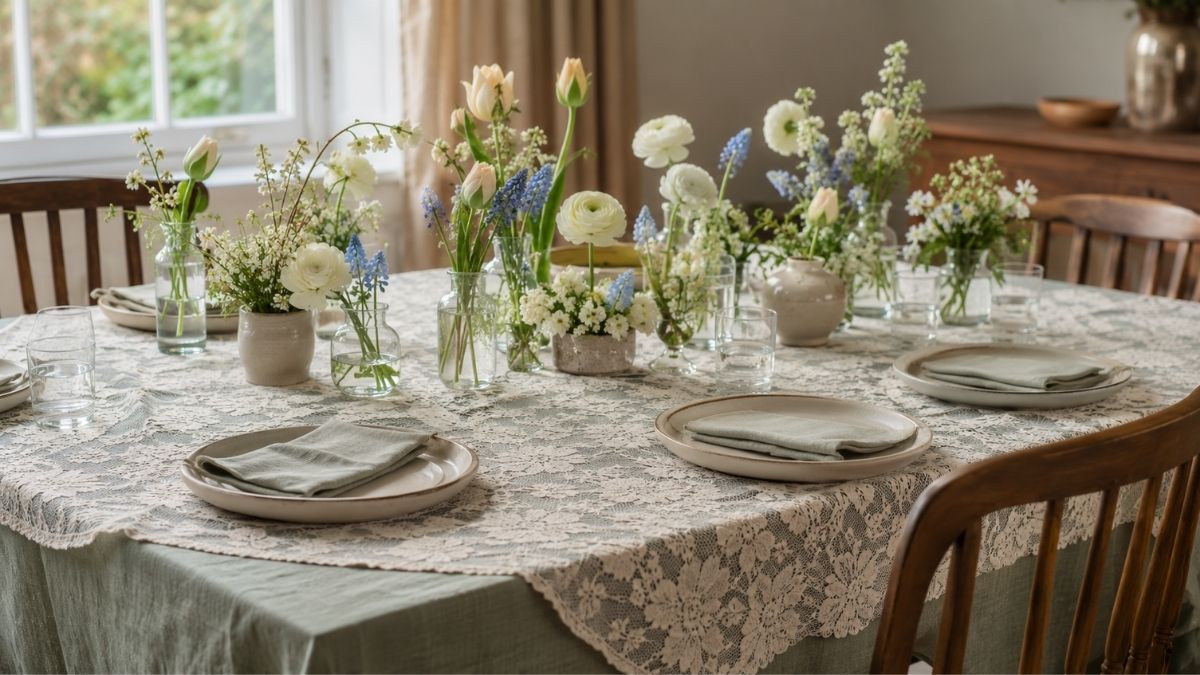
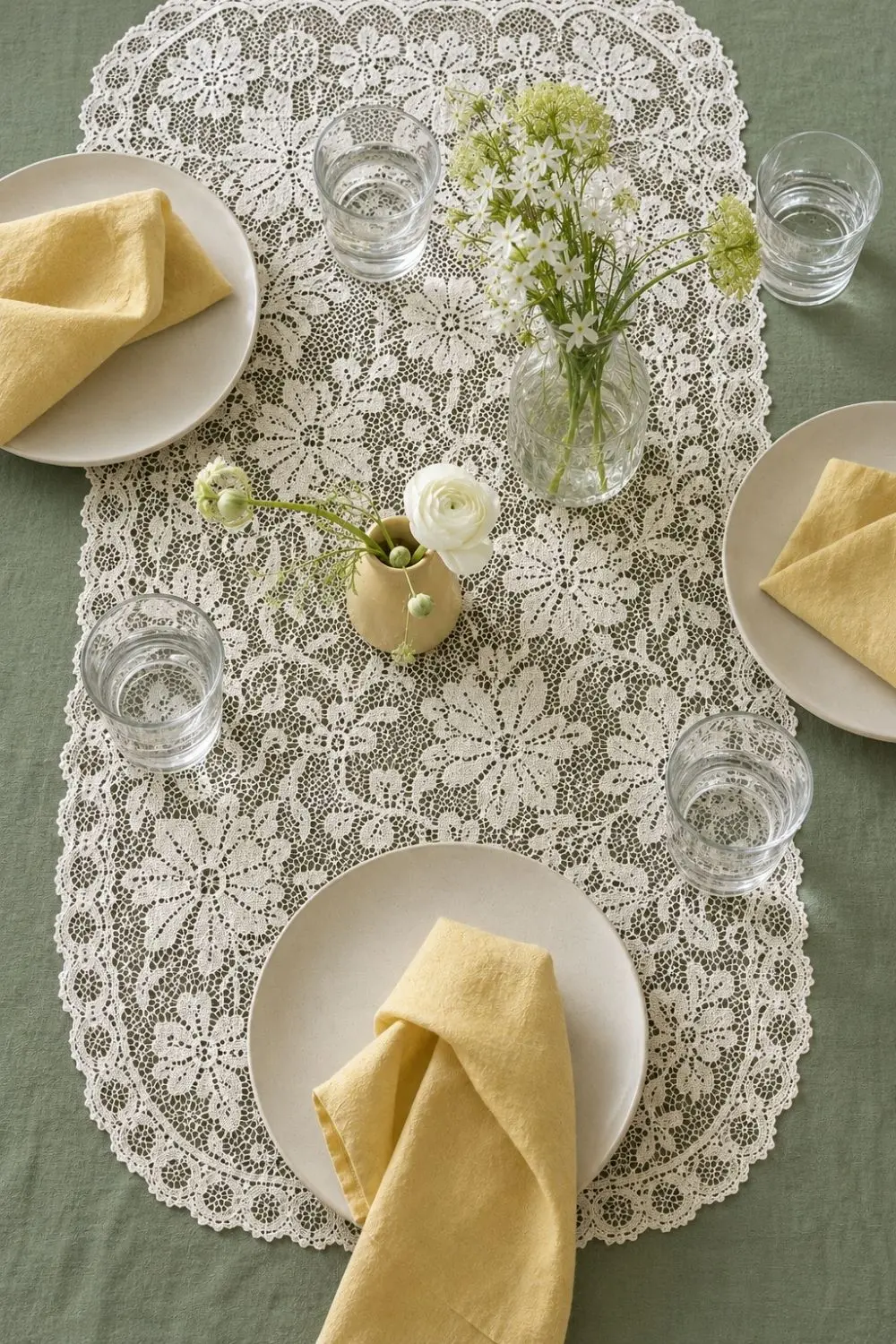
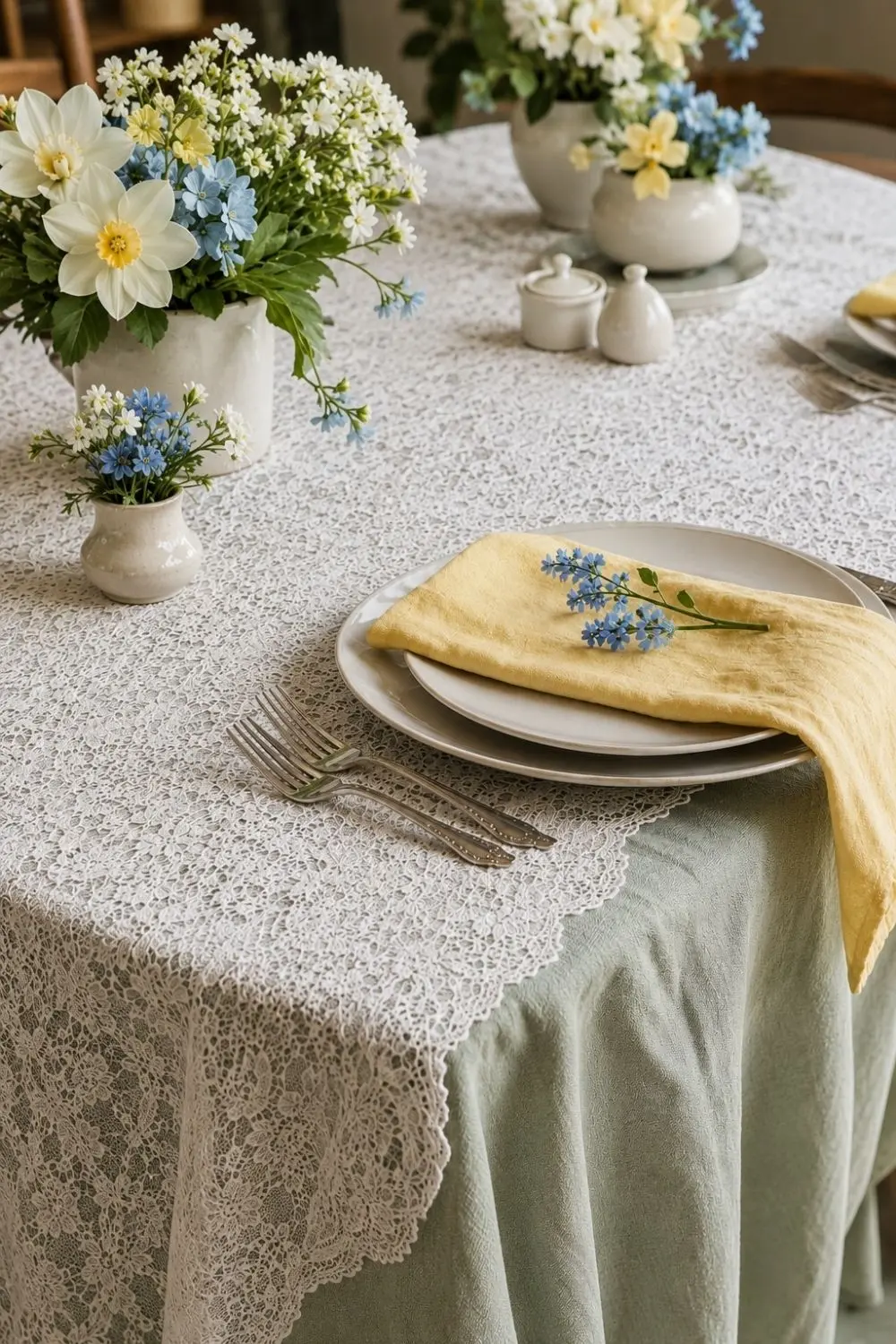
Instead, place ivory or cream lace over a quiet colour. Soft sage, mist blue, oatmeal, pale butter yellow, or faded rose can sit underneath the lace and let the pattern show through.
This lower cloth is the shadow layer. It gives the lace shape without making the table loud.
If you want a more detailed method, our guide to layering lace over a solid colour explains how the base colour changes the whole table mood.
Keep the Flowers Low Enough to Talk Over
A tall arrangement can look impressive in a photo, but it often gets in the way at a real table.
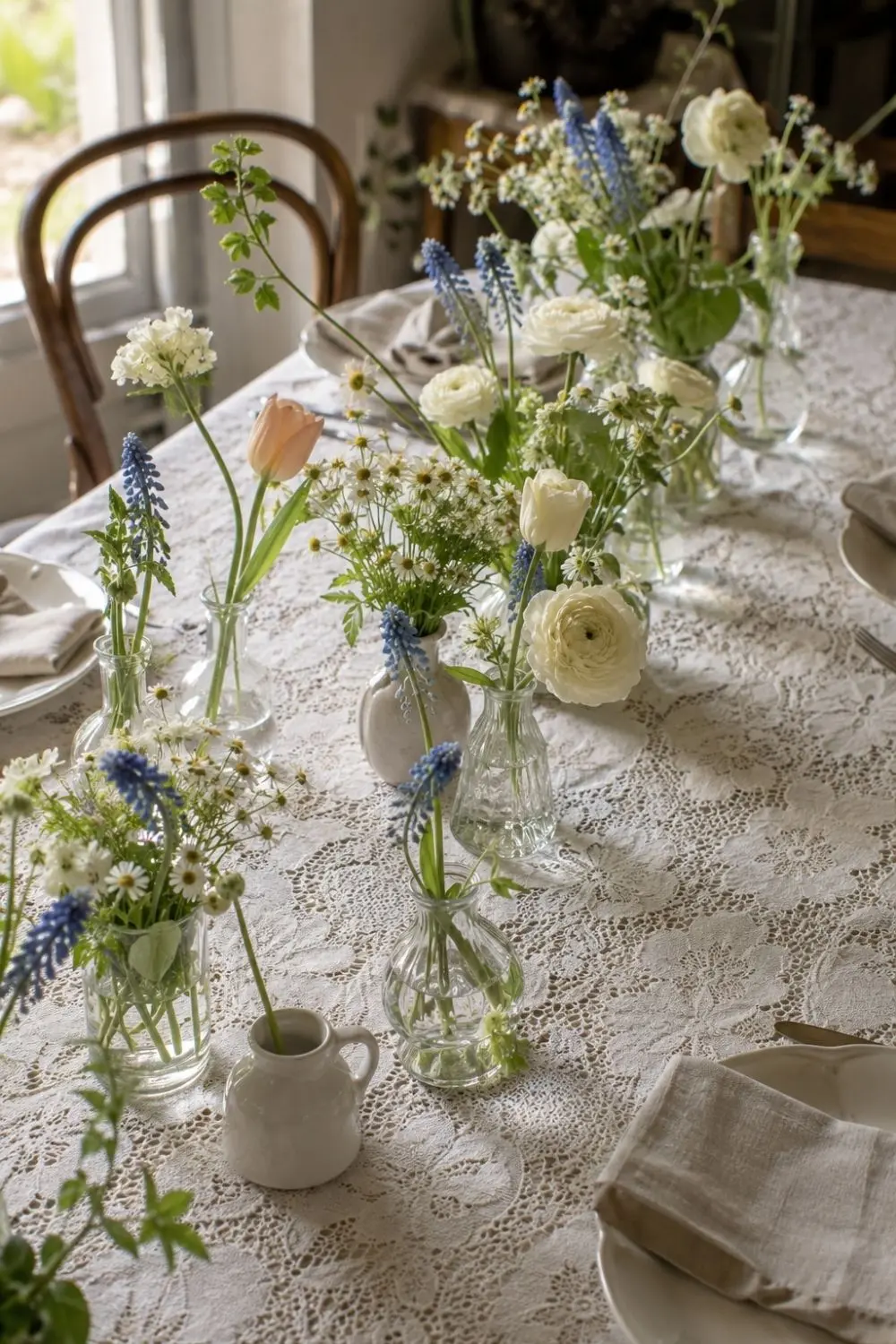
For lace, smaller vessels usually work better. Use bud vases, tiny pitchers, small ceramic cups, or narrow glass bottles. Place them in a loose line down the centre of the table.
This gives you a floral line instead of one heavy centrepiece.
Try tulips, ranunculus, muscari, chamomile, hellebores, anemones, or flowering herbs. Keep the stems slightly uneven. A little irregularity makes the table feel more natural and less like a shop display.
The lace should still be visible between the vessels. That open space is what keeps the table fresh.
Use One Fresh Colour That Is Not Too Obvious
Pink flowers on white lace are lovely, but they are also expected.
One less obvious colour makes the table feel more edited. Butter yellow napkins with blue muscari, soft sage plates with cream flowers, pale lilac blooms with clear glassware, or a faded rose undercloth beneath ivory lace can all work.
The colour should look as if it belongs to spring, not to party decor.
This is where older and newer pieces can sit together. A vintage plate, a plain ceramic bowl, a clear tumbler, and a simple linen napkin can all share the same table. The lace gives softness; the mixed pieces keep it relaxed.
For a warmer lace direction, our cozy farmhouse lace tablecloth ideas show how the same textile can move in a more rustic direction.
Make a Clean Zone Around Food
Fresh flowers are beautiful near a spring table, but they should not be treated casually around food.
Decorative florist flowers belong in vessels. Flowers placed on food need to be clearly food-safe and suitable for eating.
That distinction matters. Edible flowers are treated as produce, and official edible flower food safety guidance points to issues such as clean handling, safe water, avoiding contamination, and choosing edible flowers wisely.
For a home table, the easiest rule is simple: flowers in vases are decor; flowers on food must be food-safe.
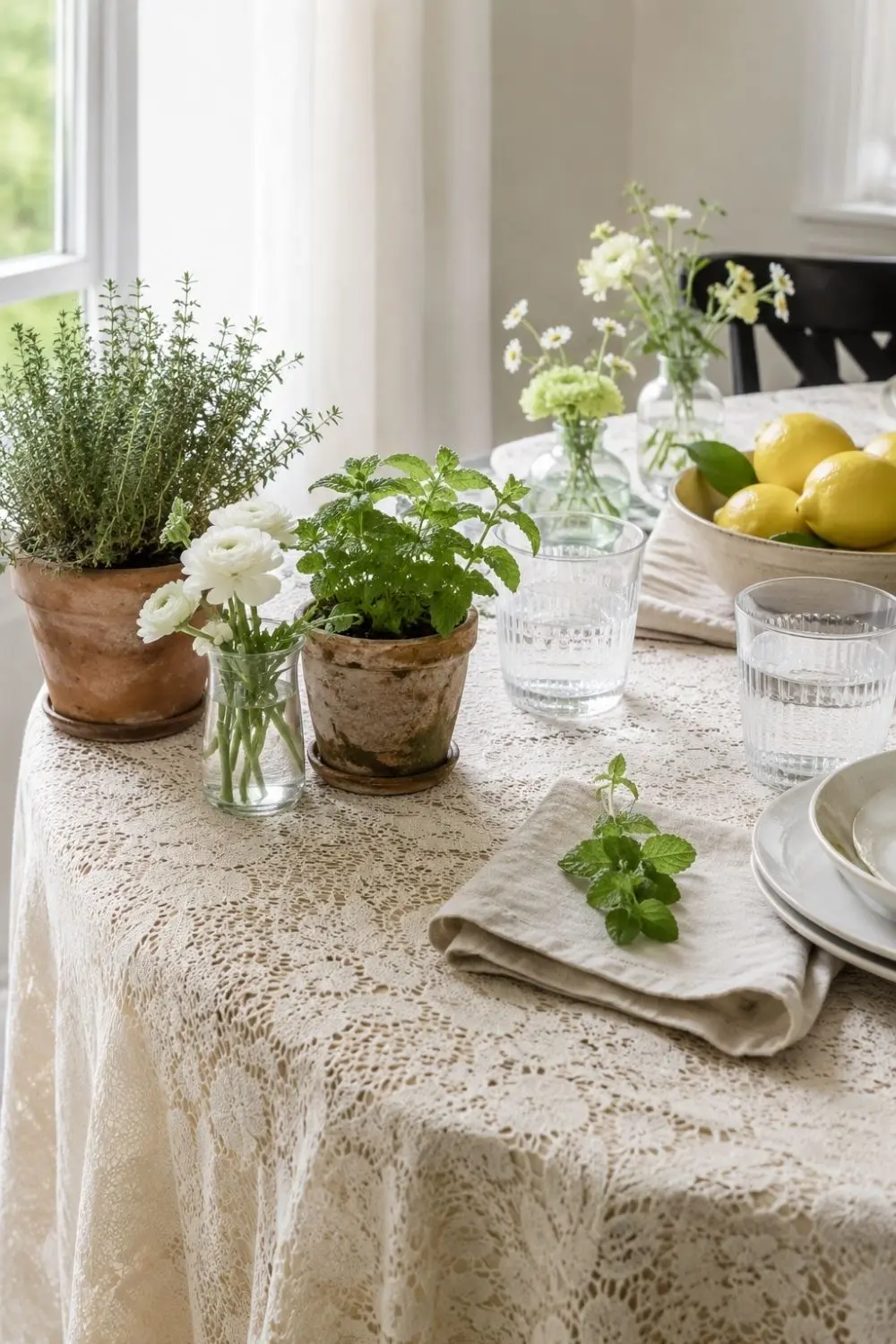
If you want a fresh green detail near the plates, use small pots of mint, thyme, parsley, or rosemary at the ends of the table. They add spring colour without crowding the serving area.
Skip Floral Foam for Small Spring Vases
Most spring home tables do not need floral foam.
Small vases, narrow-neck bottles, floral frogs, pebbles, or reusable wire supports can hold short stems well enough for a dining table.
This is a practical choice as much as a visual one. Floral foam is plastic-based, and floral foam facts from sustainable floristry sources explain why many arrangers now look for reusable or lower-waste alternatives.
Foam-free arranging also suits lace better. The stems look lighter, the vessels stay smaller, and the table keeps its gentle spring rhythm.
Let the Lace Stay Visible
A lace tablecloth is already a pattern layer.
Do not hide it under too many plates, runners, chargers, bowls, and oversized flowers.
Use simple plates. Fold napkins neatly. Keep glassware clear or softly tinted. Leave small spaces between the place settings and the flowers.
If the table still feels empty, add one bowl of lemons, pears, or fresh herbs instead of another floral arrangement. Food-shaped colour often looks more natural than extra decoration.
Care for the Lace After the Meal
The table is not finished when the plates are cleared.
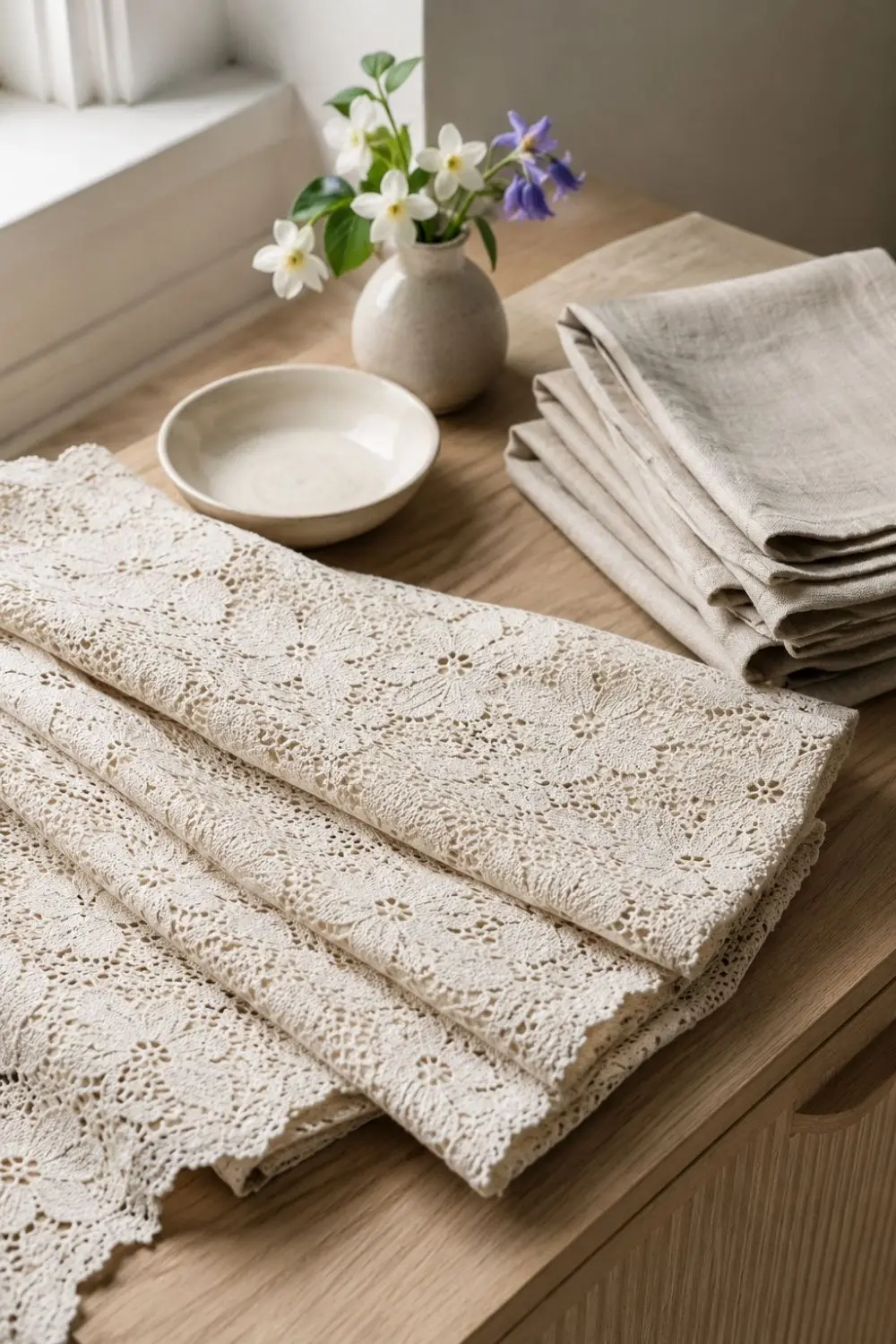
Lace needs gentle handling, especially if it is cotton, linen, handmade, vintage, or emotionally important. The Lace Museum’s lace cleaning guidance recommends checking fibre content first, testing colours, treating valuable pieces cautiously, and knowing when not to force a stain out.
For everyday lace, shake out crumbs, blot spills instead of rubbing, and let the cloth dry fully before storing. If the piece is delicate or valuable, professional textile care is safer than aggressive washing.
A spring lace table should feel beautiful on the day, but it should also leave the cloth ready for another meal.
The Fresh Spring Formula
The easiest formula is this:
Soft base + visible lace + low florals + one gentle colour + clean food zone.
That is what keeps lace from looking old-fashioned.
It also keeps the table from looking copied from every other spring decor post online. The lace gives the setting texture. The flowers add freshness, colour, and gentle movement. The food-safe details make it thoughtful. The quiet colour layer makes it feel current.
That is the version of a spring table worth saving.
Frequently Asked Questions
What flowers look best with a lace tablecloth?
Low, garden-style flowers usually work best. Try tulips, ranunculus, muscari, chamomile, hellebores, anemones, or flowering herbs in small vessels. Keep the flowers low so guests can see across the table.
What colour looks best under a lace tablecloth?
Soft sage, mist blue, oatmeal, pale butter yellow, faded rose, and warm ivory all work well. The colour underneath helps the lace pattern show without making the table feel too busy.
Can I put fresh flowers directly on food?
Only use flowers on food if they are clearly food-safe and intended for eating. Decorative florist flowers should stay in vases and away from shared dishes.
Editorial Styling Note
Women’s Alphabet does not sell the table linens, flowers, dishes, or decorative items shown or described here. The visuals are inspiration-only styling ideas, not product listings, purchase offers, or exact floral instructions. Always check flower safety before placing blooms near food.