

The ‘Boiling Water’ Hack for Instantly Cleaning Your Range Hood Filter
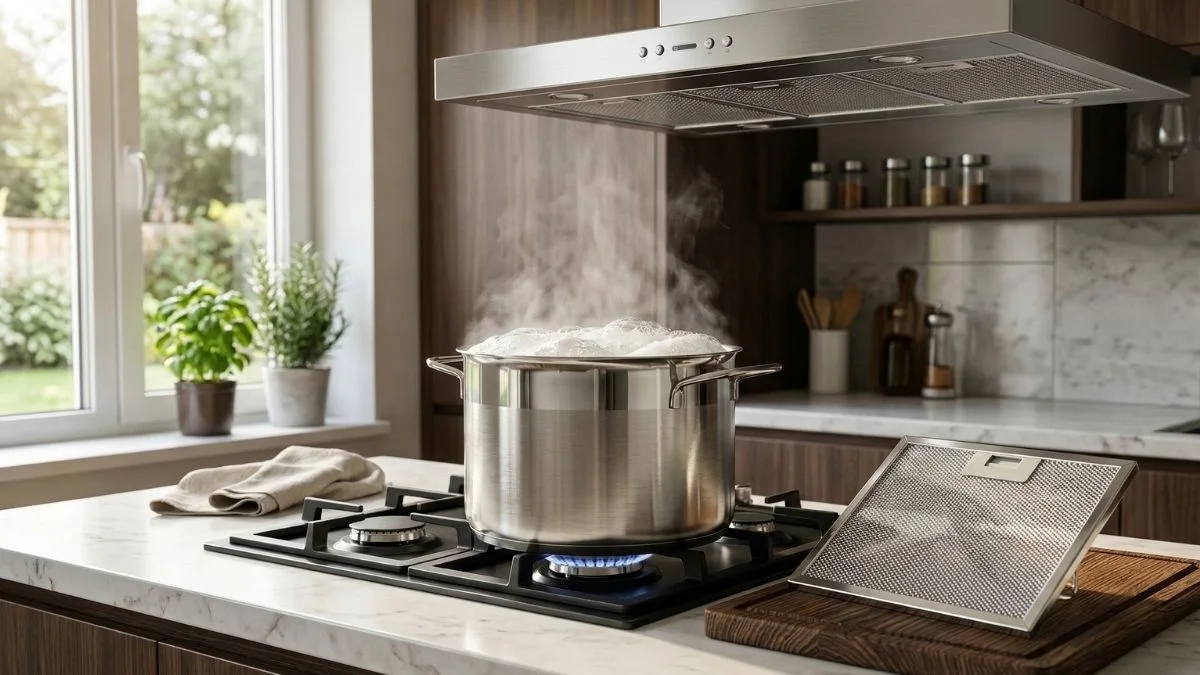
Have you ever glanced up under your kitchen exhaust fan and noticed a thick, sticky, yellowish resin covering the metal grates? It is a universally shared kitchen struggle. When left ignored, these grease-trapping filters clog up, reducing your fan’s efficiency, increasing motor noise, and trapping lingering cooking odors in your home. Lately, a highly popular viral boiling water and baking soda hack has been making the rounds across online communities, promising an effortless, “no-scrub” solution. But before you raid your pantry and fire up the stove, a deep dive into the research reveals that there is a fine line between a sparkling clean filter and a totally ruined sink.
Here is the collective insight on how this method actually works, when it fails, and the crucial infrastructure warnings you need to know before trying it.
The Chemistry of Grease-Busting: How It Actually Works
According to comprehensive material science and cleaning reports, this popular method relies on a trifecta of grease-fighting power: heat, alkalinity, and time.
- Thermal Energy (The Heat): Standard hot tap water simply isn’t hot enough to break down aged, polymerized cooking oil. The water must be at a rolling boil (212°F / 100°C) to transfer enough kinetic energy to melt the solid grease resin back into a liquid state.
- Alkalinity (The Baking Soda): When baking soda is introduced to boiling water, it initiates a mild chemical process called saponification. This essentially turns the hard, stubborn grease into water-soluble soap. Plus, the bubbling effervescence produces microscopic vibrations that physically push the dirt out of the tiny metal crevices.
- Surfactants (The Dish Soap): Adding a heavy-duty dish soap is the final piece of the puzzle. The soap encapsulates the lifted oil droplets so they can’t re-stick to the metal once the water cools down.
Stockpot vs. Sink: The Two Community-Approved Methods
Based on expert guidelines and community consensus, there are two primary ways to tackle this chore safely:
1. The Stockpot Method
For standard-sized filters, fill a large stainless steel or enamel pot with water and bring it to a continuous boil. Crucial warning: Add a half-cup of baking soda very slowly (about a tablespoon at a time). Dumping it all in at once will cause a massive, bubbling eruption that can overflow and cause severe burns. Dip half the filter in for 5 to 15 minutes, then flip it to do the other side.
2. The Sink Soak
If your filters are too large for a pot, plug your kitchen sink, add two tablespoons of grease-cutting dish soap, and sprinkle in a half-cup of baking soda. Carefully pour a kettle of boiling water directly over the dry ingredients. Stir with a long-handled tool, and submerge the filters for 10 to 30 minutes.
Always dry your filters completely before reinstalling them. Trapped moisture can get sucked into the high-speed fan motor, causing internal rust or dangerous electrical shorts.
The Aluminum Warning: Why Filters Turn Pitch Black
Before you begin, you must identify what your filters are made of. High-end ranges often feature stainless steel “baffle” filters, which are virtually indestructible and highly resistant to chemical cleaners.
However, the vast majority of standard residential hoods use aluminum mesh filters. Aluminum is highly reactive to extreme pH levels. When submerged in boiling alkaline water (or placed in a dishwasher with harsh enzymatic detergents), the protective oxide layer on the aluminum is stripped away. In widely shared home maintenance discussions, users frequently report their filters turning a dusty, dark gray or pitch black after using this hack or putting them in the dishwasher.
While a blackened filter usually still works perfectly fine, it is a permanent aesthetic downgrade. If left in the boiling alkaline solution for too long, the chemical reaction will literally eat away at the metal, causing microscopic craters (pitting) that eventually cause the delicate mesh to crumble.
The Hidden Plumbing Disaster (Never Pour It Down the Drain!)
Here is the most critical takeaway from the research: successfully melting the grease off your filter can cause a massive hazard for your home’s plumbing.
Pouring gallons of boiling, greasy water directly down the sink is a terrible idea for two reasons:
- Melted Pipes: Most modern residential drain pipes are made of PVC, which has a strict maximum safe operating temperature of 140°F (60°C). Exposing them to 212°F boiling water can soften the plastic, cause the pipes to sag out of alignment, and melt the chemical glue at the joints, leading to hidden leaks inside your walls.
- The “Fatberg” Effect: As the liquid grease travels down into your colder plumbing lines or city sewers, it rapidly cools and solidifies. Over time, this coats the inside of your pipes and forms rock-hard blockages.
To prevent this, expert plumbing consensus strongly advises letting the water in your pot or sink cool completely. Once the grease hardens into a solid layer floating on the surface, skim it off and throw it in your solid waste bin. If you absolutely must drain the remaining warm water, run your cold tap simultaneously to dilute the thermal shock to your pipes.
A Quick Note on Alternative Cleaners
If your filters have been neglected for years and have developed a hard, varnish-like shell, the boiling water hack might not be enough. In these cases, community experience points to oxygen bleach (like OxiClean) soaked in hot water as a highly effective, low-effort alternative.
Also, skip the popular DIY trend of mixing vinegar and baking soda! From a chemical standpoint, the acid (vinegar) and the base (baking soda) immediately neutralize each other. While the fizzy reaction looks impressive, you are ultimately just leaving your greasy filters to soak in useless, slightly salty water.
The Editor’s Takeaway: For the best results, make filter cleaning a proactive habit. If you cook regularly, giving your filters a quick, safe soak every two to three months will keep your kitchen air fresh, your exhaust fan quiet, and the heavy-duty scrubbing entirely out of your routine!