

The “Salt on Eggshells” Hack for Cleaning Cast Iron Pans Easily: Fact or Fiction?
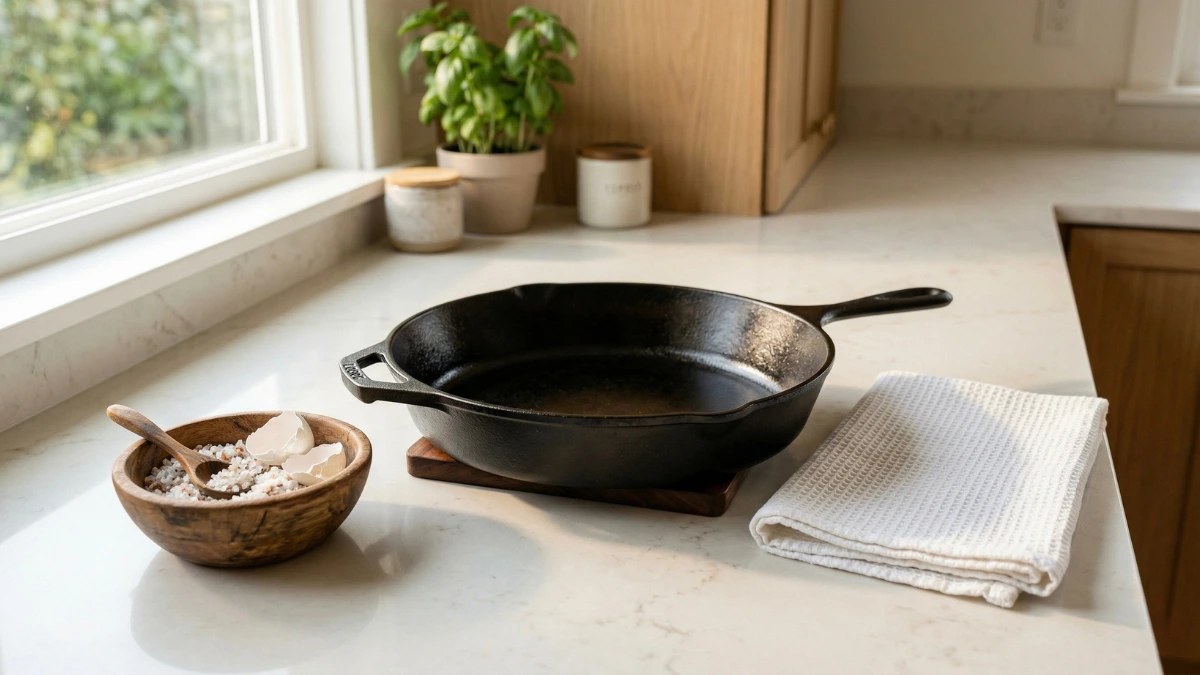
Picture this: You are sipping your morning coffee, casually scrolling through Pinterest or TikTok, and you stumble upon a viral zero-waste kitchen cleaning video. The influencer meticulously crushes up leftover breakfast eggshells, mixes them with a handful of coarse salt, and scrubs their cookware to a sparkling shine. It sounds like the absolute perfect, eco-friendly way to tackle the stubborn, stuck-on mess in your favorite cast iron skillet. You are using natural kitchen scraps to clean your kitchen tools—what could possibly go wrong?
But before you rush to the sink to try this “salt on eggshells” hack, we need to have a serious talk about the long-term health of your cookware. As someone who profoundly loves practical, budget-friendly home solutions, I was immediately intrigued by this trend. However, recent discussions and updated kitchen science in 2026 have brought some crucial insights to light regarding how calcium carbonate interacts with seasoned iron.
Let’s dive deep into whether this viral hack is actually helpful, or if it is secretly ruining your beloved skillet without you even realizing it.
Understanding the “Salt and Eggshells” Trend
Where did this exact idea come from? The concept is deeply rooted in the admirable zero-waste living movement. Eggshells are composed of approximately 95% calcium carbonate, which acts as a mild, insoluble abrasive. When you mix thoroughly washed and dried eggshells with coarse kosher salt, the resulting mixture functions as a DIY natural scouring powder.
Proponents of this method claim that the coarse salt absorbs leftover grease and cooking fats, while the sharp, microscopic edges of the crushed eggshells scrape away baked-on food. All of this is done without the need for harsh synthetic chemicals or expensive store-bought cleaners. In theory, the logic is sound. However, a cast iron pan is not just any regular kitchen pot. It is a highly porous metal that relies on a very specific, delicate layer of bonded oil to function properly. Treating it like a standard stainless steel pot is the first mistake many home cooks make.
The Science: Why Eggshells and Cast Iron Do Not Mix
Here is where we need to look strictly at the chemistry to separate internet myths from culinary facts. Recent articles published by eco-cleaning experts have issued clear warnings about using eggshells on seasoned cast iron.
To understand why, you must understand your pan’s surface. Your skillet’s non-stick quality is not built from modern synthetic coatings like Teflon; it is formed through a fascinating chemical process called polymerization. When you heat high-quality oil in the pan, the fat molecules break down and bond directly with the iron, forming a slick, durable, blackened layer known as “seasoning.”
The glaring problem with the eggshell hack lies in its rigid abrasive nature. While salt dissolves easily in water and is generally gentle enough for quick scrubs, crushed eggshells do not dissolve at all. The sharp edges of the calcium carbonate act like microscopic sandpaper. When you apply mechanical pressure and scrub vigorously to remove stubborn burnt-on food bits, you are not just removing the food; you are actively scratching away that precious polymerized oil layer you worked so tirelessly to build
Once that delicate seasoning is compromised or thinned out, your pan loses its non-stick integrity. Even worse, the exposed raw iron becomes an open invitation for atmospheric moisture, which quickly leads to rust. Furthermore, eggshells can harbor residual organic matter—like tiny traces of proteins from the egg whites. If they are not washed out completely before crushing, these proteins can bake onto the pan the next time you heat it over the stove, leaving a sticky, unhygienic residue that defeats the entire purpose of cleaning.
The Verdict from the Reddit Cast Iron Community
If you want the unfiltered, highly experienced truth about cast iron care, you go straight to the enthusiasts. The r/castiron community on Reddit is an absolute goldmine of practical, real-world advice, and their collective stance on abrasive viral hacks is undeniably clear. In numerous community threads discussing failed morning eggs and heavily stuck-on dinners, the consensus heavily leans away from internet gimmicks.
One veteran user, PigpenMcKernan, dropped some excellent knowledge recently when a beginner asked for cleaning and cooking help, noting that managing heat is far more important than harsh scrubbing: “Next time you cook eggs, turn down the heat… start them in the pan while it’s still cold.”
When it comes to the physical act of cleaning, another seasoned user, Westcoastsailor898, advised: “Get a chain mail scrubber and use some salt and give it a scrub.” Notice the complete absence of eggshells in their recommendation.
Another fascinating debate on the forum revolves around exactly what material you should use to dry the pan. Many experienced users advise against using standard paper towels because they leave tiny white lint particles behind, which can embed into the seasoning over time. Instead, plain woven cotton kitchen towels are the undisputed community favorite. The general rule of thumb from those who use their skillets every single day: stick to the trusted basics.
The Safest, Expert-Approved Ways to Clean Your Skillet
So, if the eggshell hack is firmly off the table for your skillet, how should you actually clean it to maintain that flawless, jet-black surface? Let’s break down the best, most reliable methods.
1. The Classic Salt and Oil Scrub
If you have a moderate amount of stuck-on food, skip the shells entirely and just rely on the salt. Pour two to three tablespoons of coarse kosher salt directly into the warm pan. Grab a clean cotton rag and rub the salt in firm, circular motions. The salt acts as a brilliant, gentle abrasive that absorbs excess oil while physically dislodging stubborn food particles. Once the pan is smooth, dump the dirty salt into the trash, wipe the pan completely clean, and heat it gently on the stove to ensure no hidden moisture remains.
2. The Chainmail Scrubber
This is universally considered the ultimate cleaning tool for cast iron owners. A stainless steel chainmail scrubber provides the exact perfect amount of mechanical action to remove burnt debris without ever scratching the underlying seasoning. Use it under warm running water. It is infinitely reusable and lasts a lifetime, making it a significantly better zero-waste option than saving brittle eggshells.
3. Mild Soap is Not the Enemy
Let’s definitively bust an old kitchen myth right now. Modern liquid dish soaps do not contain the harsh, corrosive lye that used to strip pan seasoning decades ago. Washing your pan with a tiny drop of mild dish soap and a soft sponge is perfectly safe. In fact, it is highly recommended occasionally to remove rancid surface oils that haven’t properly polymerized. Just wash, rinse, dry thoroughly on the stove, and apply a whisper-thin layer of fresh oil.
Where CAN You Use the Eggshell Hack?
Please do not throw away those saved eggshells just yet! While they are undeniably a bad idea for your cast iron, they are absolutely fantastic for non-porous, highly durable surfaces.
You can safely crush them and use them to scrub heavily stained stainless steel pots, the inside of your enameled Dutch ovens (be gentle), or even your white porcelain kitchen sink. They are excellent at lifting dried starches or light mineral deposits when combined with a little warm water and some elbow grease. Just ensure you wash and air-dry the shells thoroughly before crushing them to prevent any bacterial growth.
Frequently Asked Questions (FAQ)
How often should I re-season my cast iron pan? As a general rule, a well-maintained pan only needs a dedicated, full-oven re-seasoning every 6 to 12 months, or if the surface visibly starts looking dull, gray, or patchy. Daily maintenance—simply wiping the warm pan with a tiny bit of neutral oil after drying—naturally builds up the non-stick surface effortlessly over time.
Can I use baking soda instead of salt? While baking soda is an exceptional natural cleaner, it is a mild alkali. Using it aggressively can sometimes strip very light layers of newly formed oil. Coarse kosher salt is heavily preferred because it absorbs grease efficiently and provides excellent physical abrasion without altering the chemical balance of the pan’s established surface.
Why do my eggs still stick even if the pan is perfectly clean? As heavily discussed by the culinary community, sticking is almost always a temperature control issue rather than a cleaning issue. Cast iron holds heat incredibly well. If you preheat the pan on medium-high, it becomes far too hot for delicate proteins like eggs. Pre-heating on low-to-medium heat, adding your cooking fat only when the pan is adequately warm, and letting the eggs cook slowly will yield the beautiful, sliding results you want.
Final Thoughts
In the ever-evolving world of kitchen maintenance, viral internet trends can sometimes do much more harm than good. The “salt on eggshells” hack is undoubtedly a clever zero-waste idea, but it simply does not belong anywhere near your seasoned cast iron skillets. Stick to reliable, proven methods like chainmail and coarse salt, build up your seasoning with patience and care, and your cookware will easily last for generations. Happy cooking!