

The “Wet Knife” Hack for Slicing Hard-Boiled Eggs Perfectly
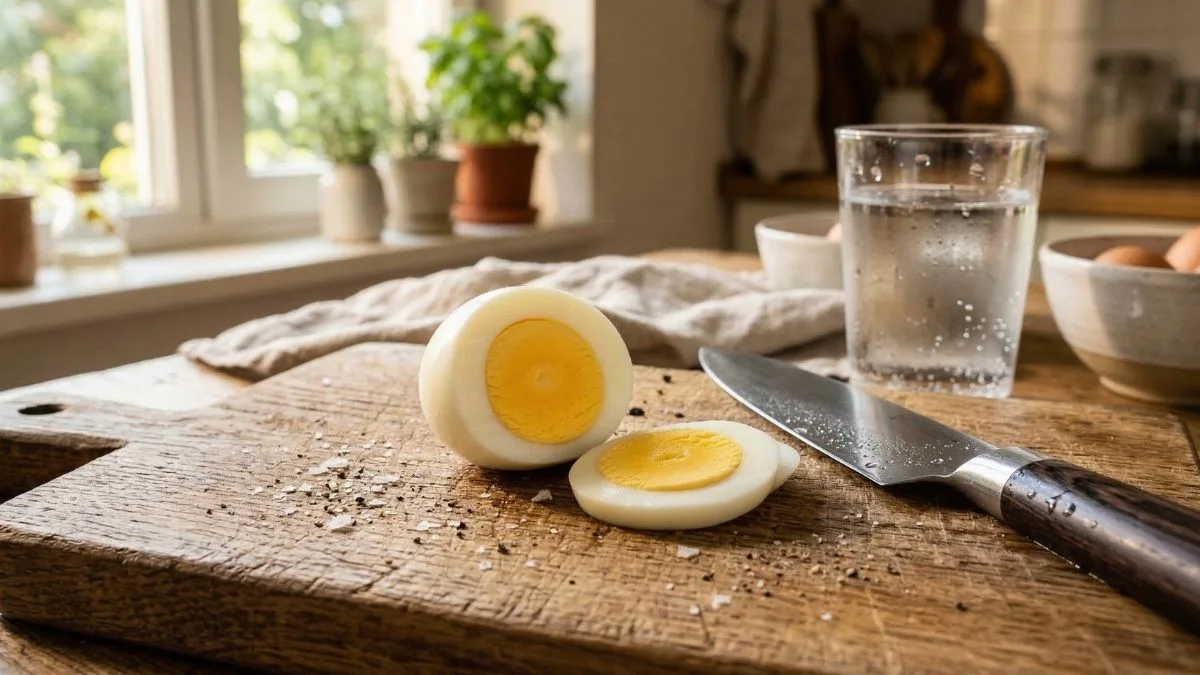
Welcome to another cozy kitchen chat! Grab a warm cup of coffee, settle in, and let us discuss one of the most common and surprisingly annoying culinary frustrations: the dreaded crumbling egg yolk. You have just spent valuable time carefully boiling, cooling, and peeling eggs for a beautiful midday salad, a satisfying sandwich, or a platter of sophisticated garnishes. Everything is going smoothly until the exact moment the kitchen knife goes through the egg. Suddenly, the bright yellow yolk shatters into a million dry, powdery pieces, sticking stubbornly to the blade and leaving the once-pristine egg white looking messy and unappetizing. It is a tiny kitchen tragedy that can easily ruin the presentation of a carefully prepared dish.
Fortunately, there is a remarkably simple solution that requires absolutely no special equipment, no extra purchases, and no complicated techniques. It is known across culinary circles as the “wet knife” trick, a brilliant little method that yields flawlessly smooth, intact egg slices every single time. Today, we will explore exactly how this technique works, the fascinating science of why it is so effective, how to properly execute it step-by-step, and how enthusiastic culinary communities online are using it to elevate their everyday meals.
Why Do Egg Yolks Crumble? The Kitchen Science
To fully appreciate why the wet knife technique is so phenomenally effective, it helps to understand exactly why hard-boiled egg yolks fall apart in the first place. When an egg is hard-boiled, the complex proteins and rich fats within the yolk coagulate, forming a dense, slightly powdery texture. Even when boiled to absolute perfection, the yolk remains inherently fragile compared to the firm, rubbery, and highly elastic texture of the cooked egg white.
When a standard, dry steel knife presses down into the egg, the friction between the metal and the food causes the delicate yolk particles to cling tightly to the blade. As the knife continues its downward motion through the egg, it drags those clinging yolk particles with it, forcibly tearing them away from the center of the egg. This dragging effect is precisely what causes the yolk to crumble, smear across the white, and generally look terrible. The dry metal essentially acts like a powerful magnet for the cooked yolk. Reducing that surface friction is the ultimate key to achieving a clean, restaurant-quality slice that holds its beautiful shape.
Prerequisite: Boiling and Peeling the Perfect Egg
Of course, the most masterful slicing technique in the world will not save an egg that is overcooked, rubbery, or violently mangled during the peeling process. A perfectly sliced egg must necessarily begin with a perfectly boiled and perfectly peeled egg. If the shell sticks to the egg white and tears chunks out of it, no amount of careful slicing will make it look presentable. Here is a foolproof method for getting smoothly peeled, perfectly cooked eggs every time.
First, keep in mind that older eggs are generally much easier to peel than farm-fresh eggs. As an egg ages, the air pocket inside expands, naturally helping the delicate inner membrane separate from the hard outer shell. However, the cooking method itself matters far more than the age of the egg.
Instead of starting the eggs in a pot of cold water—which is a common mistake—bring a pot of water to a vigorous, rolling boil first. Gently lower the eggs into the bubbling water using a slotted spoon to prevent them from hitting the bottom and cracking. Boiling the water first rapidly denatures the proteins in the outermost layer of the egg white, preventing them from bonding tightly with the shell’s inner membrane. For a standard hard-boiled egg with a fully set but pleasantly creamy yolk, set a timer for exactly nine to ten minutes.
Once the timer goes off, it is crucial to immediately transfer the eggs from the boiling water into a large bowl filled with ice and cold tap water. This essential process, known in professional kitchens as “shocking,” instantly halts the internal cooking process. It prevents the dreaded green-gray sulfur ring from forming around the yolk and causes the egg inside to contract slightly away from the shell.
Leave the eggs in the ice bath for at least ten to fifteen minutes. When it is time to peel, gently tap the egg on the kitchen counter to crack the shell all over. Roll it lightly under the palm of a hand. Peel the egg while holding it completely submerged in the cold water; the water will seep under the membrane, helping the shell slip off effortlessly. This leaves a pristine, smooth white exterior ready for slicing.
The Wet Knife Hack: A Step-by-Step Guide
The ultimate solution to the crumbling yolk is as simple as running tap water. By purposefully wetting the knife blade, a microscopic layer of water lubrication is introduced between the solid steel and the fragile egg. This water barrier completely prevents the starchy, protein-rich yolk from gripping the metal, allowing the sharpened blade to glide through cleanly and smoothly. Here is exactly how to flawlessly execute the technique:
- Chill the Eggs Thoroughly: Warm or room-temperature eggs are inherently much more fragile and prone to breaking. For the absolute best slicing results, ensure the hard-boiled eggs are thoroughly chilled in the refrigerator for at least thirty minutes to an hour before attempting to cut them. A cold yolk is significantly firmer and holds its shape much better under pressure.
- Prepare a Water Station: Place a tall glass of clean, cold water directly next to the cutting board, or simply position the cutting board near the kitchen sink so the tap can run on a slow, steady trickle.
- Moisten the Blade: Dip a sharp chef’s knife or a versatile utility knife into the glass of water, or run it quickly under the tap. Shake off any heavy, excess drips; the blade only needs to be damp, not dripping wet.
- Use the Correct Slicing Motion: Never push the knife straight down. Pushing straight down simply crushes the delicate egg structure. Instead, use a gentle, deliberate forward-and-backward slicing motion, letting the actual sharpened edge of the knife do all the work.
- Rinse and Repeat: This is by far the most crucial step of the entire process. After every single slice, wipe the blade clean with a damp cloth or rinse it thoroughly in the water glass, then wet the blade again before making the very next cut. If the blade is allowed to get dry or builds up sticky egg residue, the yolk will immediately start to crumble and tear all over again.
Real Experiences: What the Reddit Community Says
This fantastic technique is not just an obscure old wives’ tale; it is a tried-and-true method heavily endorsed by passionate home cooks and culinary enthusiasts across the internet. On Reddit, where users frequently share, debate, and verify kitchen secrets, the wet knife method frequently surfaces as a top-tier recommendation for food presentation.
For instance, in the popular r/Random_Acts_Of_Amazon community, users discussing their absolute favorite kitchen hacks highly praised this straightforward method. One user described it simply and enthusiastically: “It’s a game changer! Wet knife on both sides, cut, cut, cut, wet again, repeat” (Source: r/Random_Acts_Of_Amazon Discussion). This clearly emphasizes the vital importance of continually re-wetting the blade for total consistency.
Similarly, in the r/CulinaryPlating subreddit, where flawless visual presentation is the entire goal, the wet knife is constantly suggested for crafting perfect garnishes. When a user proudly posted a picture of a plated egg but received feedback about the yolk looking slightly messy, another user specifically asked if they had refrigerated the eggs and used a slightly wet knife to maintain the yolk’s perfect shape. The original poster realized they had missed out on a better result by using a completely dry knife (Source: r/CulinaryPlating Hard boiled egg).
Over in the heavily informative r/AskCulinary forum, when a home cook specifically asked how to get perfectly sliced boiled eggs for a recipe, the immediate top responses strongly suggested using a moistened knife, meticulously cleaned off after every single cut to prevent dragging (Source: r/AskCulinary Perfectly sliced boiled eggs?). The community consensus is overwhelmingly clear: water is the ultimate secret tool for a perfectly clean cut.
Alternative Tools: Wire Slicers and Dental Floss
While the wet knife is incredibly accessible and requires no extra financial investment, it is certainly worth comparing it to other popular methods for achieving a perfectly clean slice in the kitchen.
Dedicated wire egg slicers are very common in many home kitchen drawers. They work by pressing a grid of incredibly thin stainless steel wires directly through the egg. Because the thin wires have very little surface area compared to a solid knife blade, they cause far less friction, resulting in very clean cuts. However, these single-use gadgets take up valuable drawer space, can be annoying to clean, and only serve one specific purpose in the kitchen.
Another widely celebrated and highly resourceful method is using unflavored dental floss or a very thin fishing line. By wrapping a length of floss securely around the thumbs and pulling it completely taut, it can be pressed straight down cleanly through the egg. Much like the wire slicer, the remarkably thin profile of the floss glides right through the delicate yolk without dragging the starchy, powdery particles along with it. This is an excellent alternative if a knife is simply not providing the desired results, but ensuring the floss is entirely unflavored is absolutely crucial to avoid transferring a strange, unappetizing minty taste to the finished meal.
Elevating Everyday Meals with Perfect Slices
Taking the extra few seconds to carefully wet the knife blade entirely transforms otherwise ordinary, everyday dishes into visually stunning, appetizing meals. Perfectly intact, bright yellow egg slices are absolutely essential for putting together a classic, beautiful Nicoise salad, where visual presentation is a major component of the dining experience. They look fantastic carefully layered in a hearty, multi-tier club sandwich, ensuring every single bite has an even, satisfying distribution of flavorful yolk and firm white. Even for a simple, protein-packed afternoon snack, a flawlessly sliced egg lightly sprinkled with smoked paprika, flaky sea salt, and a dash of hot sauce feels much more refined, intentional, and appetizing when the yolk is completely intact and visually appealing.
Final Thoughts
Great cooking and excellent food presentation often come down to mastering very small, highly practical details. The wet knife technique is the perfect example of how a tiny, cost-free adjustment can instantly solve a highly frustrating kitchen annoyance. It requires no special skills, takes only seconds to do, and provides remarkably consistent, beautiful results. Keep a small glass of water handy next time hard-boiled eggs are on the menu, take your time with the slicing motion, and thoroughly enjoy the flawless, professional-looking results!