

Why You Should Store Your Natural Peanut Butter Upside Down
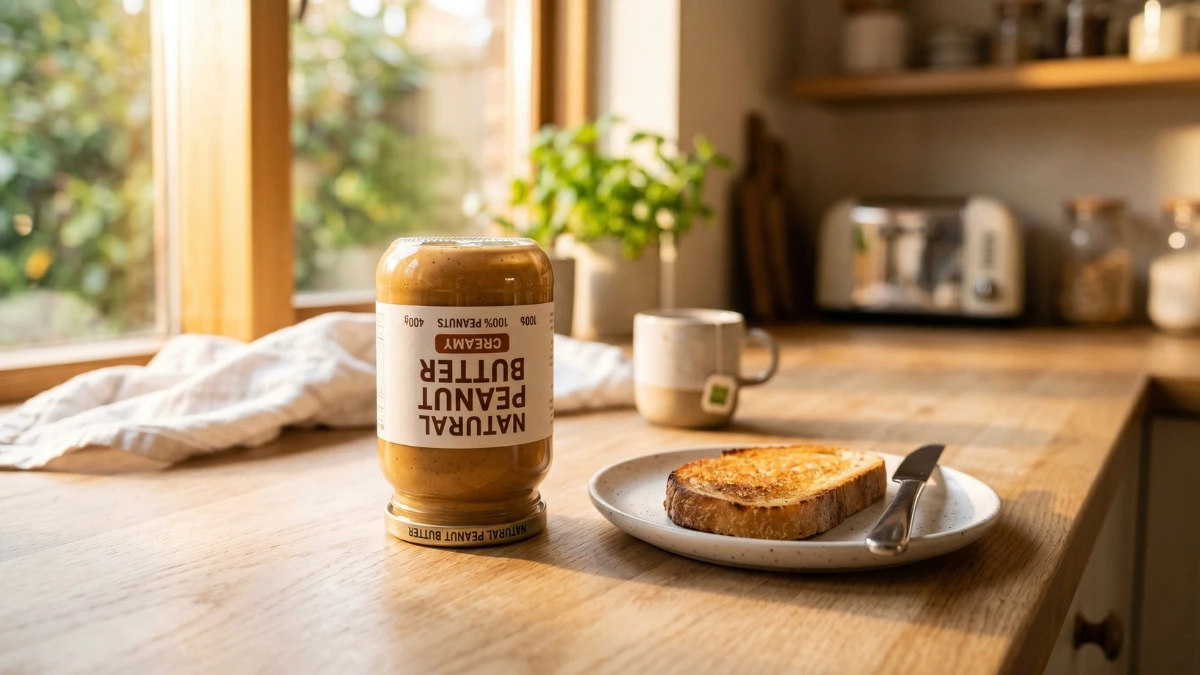
Opening a fresh jar of natural peanut butter often feels like a delicate operation. You unscrew the lid, only to be greeted by a thick layer of separated oil sitting precariously at the rim. One wrong move with a butter knife, and that golden liquid spills over the edge, leaving an oily ring on the kitchen counter and a stubbornly dry, cement-like block of peanuts at the bottom of the jar. It is a universal kitchen struggle that has led many to abandon the pure, unadulterated version of this beloved spread in favor of conventional, highly processed alternatives. But there is a remarkably simple, gravity-powered solution to this messy problem. By simply storing the jar upside down before opening it, the entire textural experience of natural peanut butter is transformed.
This simple adjustment in pantry organization ensures a smooth, easy-to-stir consistency, saving time and keeping the kitchen spotless. It is time to explore the food science behind oil separation, how the upside-down technique works, and the best practices for keeping that perfect consistency until the very last spoonful.
The Science of Separation: Why Natural Peanut Butter Behaves Differently
To understand the solution, it is essential to comprehend the root cause of the separation. When browsing the grocery store aisles, the peanut butter selection is generally divided into two distinct categories: conventional and natural.
Conventional peanut butter brands maintain a perfectly homogenized, spreadable texture at room temperature because they contain added stabilizers. These stabilizers are typically hydrogenated vegetable oils or palm oil. These specific ingredients remain solid at room temperature, and when they are blended with the peanuts during manufacturing, they form a highly stable emulsion. The oil and the peanut solids are forced to stay together, ensuring that the product looks exactly the same on the grocery shelf as it does six months later in the back of a pantry.
Natural peanut butter, on the other hand, embraces a minimalist and pure ingredient list. The label usually lists only one or two ingredients: roasted peanuts and perhaps a pinch of salt. Without those artificial stabilizers, the mixture is entirely dependent on the physical properties of the peanuts themselves. Peanuts are naturally rich in essential oils. Over time, because this natural peanut oil is significantly less dense than the crushed, fibrous peanut solids, the two components begin to separate. The heavy solids sink to the bottom of the jar, while the lighter oils float upward to the surface.
This separation is not a flaw in the product; it is actually a primary indicator of a pure, high-quality spread. However, while it is a sign of authenticity, it undeniably makes the initial stirring process quite a chore. The oil splashing and the rigid, dry clump at the base are the direct, unavoidable results of this natural settling process.
Reversing Gravity: How the Upside-Down Technique Works
The upside-down storage technique is an exercise in basic, everyday physics. It utilizes the exact same force that causes the separation in the first place—gravity—to passively solve the problem.
When bringing a new, sealed jar of natural peanut butter home from the store, the separation process has likely already been underway for weeks on the supermarket shelf. The natural oil is actively pooling at the top, resting just underneath the lid. Instead of placing the jar right-side up in the pantry as one typically would, place it securely upside down, resting flatly on its lid.
By inverting the container, the internal environment is completely flipped. The pool of oil, which naturally seeks the highest point due to its lower density, is now trapped at the physical bottom of the jar. Over the course of a few days in the pantry, the oil will slowly begin to migrate upward, seeking the new top. To do this, it must seep entirely through the dense, dry layer of peanut solids.
This slow, upward migration acts as an effortless, passive mixing process. The oil thoroughly re-saturates the dry peanut solids as it travels. When it is finally time to prepare a snack, simply flip the jar right-side up, unscrew the lid, and observe the immediate difference.
Instead of a messy puddle of oil sitting at the rim, the surface will consist mostly of solid peanuts, while the bulk of the liquid oil has been driven down toward the base. Inserting a knife or a sturdy spoon to give it a final mix becomes incredibly smooth. The harsh resistance from the dry bottom clump is gone, the oil does not surge over the sides, and achieving a perfectly uniform, velvety texture takes only a few seconds rather than a frustrating few minutes.
Community Consensus: Real Experiences from Reddit
This pantry strategy is not merely theoretical; it is a highly discussed tactic within online communities dedicated to everyday domestic efficiency. On platforms like Reddit, specifically within the popular and highly active r/LifeProTips community, users frequently share their successes, failures, and refinements regarding the upside-down peanut butter approach.
A deep dive into these community discussions reveals a robust consensus on the sheer effectiveness of the method. Community members consistently report that storing the jar upside down dramatically reduces the mechanical effort needed for that initial, dreaded stir. Many individuals note that it is the only viable way they can manage certain ultra-pure, small-batch brands that are notorious for extreme separation.
However, experienced users always highlight one absolutely vital rule: this technique should only be executed on jars that still have their factory-sealed inner foil or paper barrier completely intact. If the protective seal has been broken or peeled away, storing the jar upside down can quickly lead to the natural oils seeping directly into the plastic threads of the lid. This results in a greasy, slippery mess on the outside of the container, defeating the purpose of the trick entirely. As long as the tamper-evident seal is secure, the upside-down method is safe, clean, and highly effective.
The Next Step: The Refrigerator Strategy
The upside-down technique brilliantly solves the problem of the initial homogenization, but the journey to perfect peanut butter does not end there. Once the jar is opened and the spread is perfectly mixed, leaving it in the ambient temperature of a pantry will simply restart the separation clock. Gravity will inevitably take over again, and within a few short weeks, the oil will return to the top, requiring another vigorous stir.
To lock in that smooth, spreadable texture permanently, temperature control is the next logical step. After executing the initial upside-down storage and giving the contents a thorough stir, the jar should be transferred directly to the refrigerator.
As highlighted in recent food science discussions and a detailed September 2025 guide from Men’s Journal, cold temperatures fundamentally alter the behavior of natural peanut oils. The distinct chill of the refrigerator causes the liquid oils to thicken and solidify slightly, essentially freezing the emulsion in place. This cold storage completely halts the separation process.
From the first scoop to the last scrape of the jar, the peanut butter will remain perfectly mixed. There is a minor trade-off to consider: chilled natural peanut butter is noticeably firmer than its room-temperature counterpart. It may not spread quite as effortlessly on delicate, un-toasted sandwich bread right out of the fridge. However, simply scooping out the desired amount and letting it rest on a warm piece of toast for sixty seconds will soften it perfectly. For most enthusiasts, the absolute guarantee of never having to stir separated oil again far outweighs the slight initial firmness.
Troubleshooting Common Natural Peanut Butter Issues
Even with the absolute best storage practices, transitioning to purely natural peanut butter can occasionally present unique kitchen challenges. Here are highly practical solutions for maintaining the perfect consistency and getting the most out of every jar.
- Never Pour the Oil Away: It can be immensely tempting to simply dump the liquid oil layer down the kitchen sink to avoid the mixing mess altogether. This is the single biggest mistake one can make. That specific oil is an integral, natural component of the peanuts. Removing it will leave the remaining solids incredibly dry, dangerously crumbly, and practically impossible to spread. The resulting texture is entirely unpleasant. The oil must always be fully reincorporated.
- Reviving an Already Separated Jar: If a jar was inadvertently stored right-side up in the pantry for several months and the bottom has literally turned to stone, the upside-down trick alone might not be enough to fix it in a timely manner. In this extreme scenario, carefully empty the entire contents of the jar into a medium-sized glass mixing bowl. Use a sturdy whisk or an electric hand mixer on a low speed to blend the separated oil and the solid block back together smoothly. Once fully combined into a paste, spoon the mixture back into the original jar and place it immediately in the refrigerator.
- The Single-Blade Mixer Tool: For households that consume large quantities of natural nut butters on a weekly basis, investing in a specialized peanut butter stirring tool can be highly beneficial. These simple, crank-operated manual tools screw directly onto the top of standard jars in place of the lid and feature a robust, long metal mixing blade. They provide maximum mechanical leverage to churn the dense bottom layer without risking a spill over the rim.
Embracing the Purest Flavor
Choosing entirely natural foods often requires a slight, mindful adjustment in daily kitchen routines. Unlike highly engineered, heavily stabilized pantry staples that remain static for years, pure ingredients respond naturally and dynamically to their environment. The separation of oil in a simple jar of peanuts and salt is not a daily inconvenience; it is tangible proof of authenticity and quality.
By understanding the simple, undeniable physics of liquid density and utilizing gravity to your advantage, the messy, frustrating chore of stirring can be virtually eliminated. Storing the newly purchased, sealed jar upside down in the pantry allows the oil to passively do the hard mixing work for you. Following up with a permanent, dedicated spot in the refrigerator guarantees that every single subsequent use is completely effortless. Adopting these small, incredibly smart habits ensures that enjoying a pure, high-quality, and delicious spread is always a flawlessly smooth experience.