

The “Tinfoil Ball” Hack to Replace Expensive Dryer Sheets: A Complete Guide
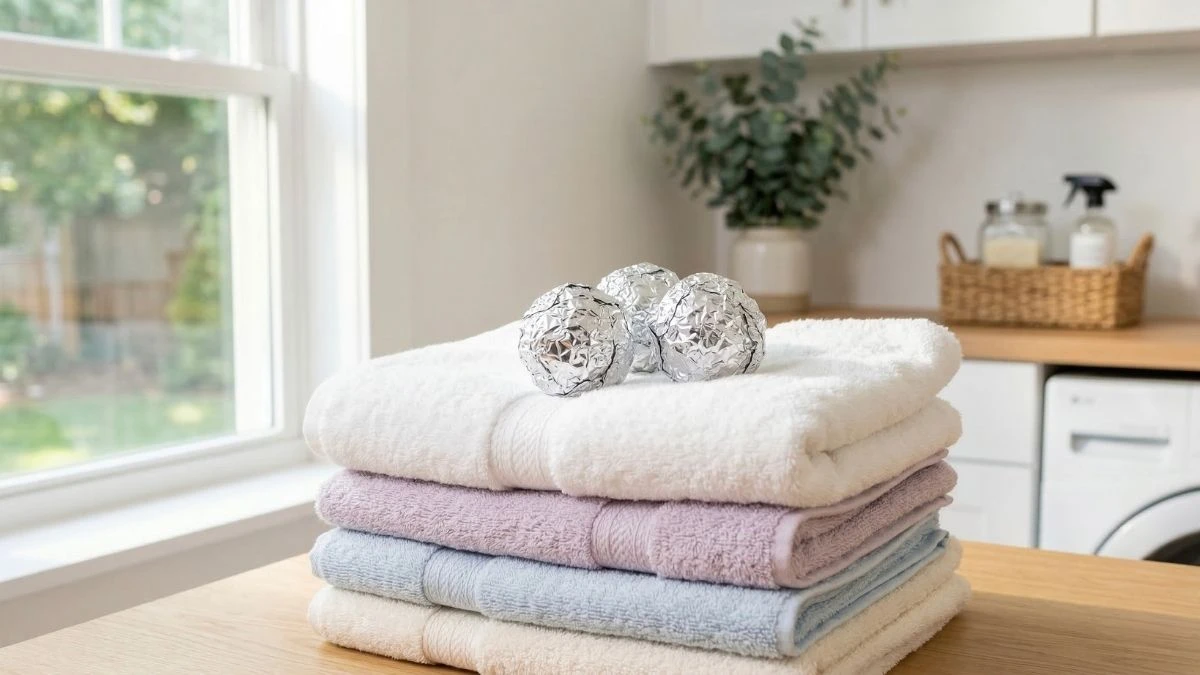
Grab a warm cup of coffee, settle into a comfortable spot, and let us discuss a household chore that never truly ends: laundry. Washing, drying, folding, and putting away clothes is a continuous cycle. Along with this cycle comes the recurring expense of laundry supplies. Detergents, fabric softeners, and those heavily scented dryer sheets quickly add up, taking a noticeable bite out of the monthly household budget.
If you are looking for a highly effective, budget-friendly, and environmentally conscious alternative to traditional dryer sheets, you have likely heard whispers of the aluminum foil hack. Tossing a few balls of crumpled tinfoil into the tumble dryer sounds almost too simple to be true, but it is deeply rooted in basic science. This comprehensive guide will break down exactly how this straightforward swap works, why it is better for your home, and how real people are utilizing it to save money and reduce chemical exposure.
The Hidden Costs of Traditional Dryer Sheets
Before diving into the aluminum foil solution, it is essential to understand why so many people are actively moving away from conventional dryer sheets. For decades, these thin, fragrant squares have been a staple in laundry rooms worldwide. However, their convenience comes with several significant downsides.
1. The Financial Drain
Dryer sheets are a classic recurring expense. A standard box might not seem extraordinarily expensive at first glance, but if a household runs four to five loads of laundry per week, that box empties rapidly. Over the course of a year, families can easily spend a substantial amount of money simply on single-use sheets designed to be thrown away immediately after one cycle.
2. Environmental Impact and Waste
Conventional dryer sheets are typically made from synthetic polyester blends, meaning they do not biodegrade. Every single sheet you toss into the trash ends up sitting in a landfill indefinitely. In an era where reducing single-use plastics and unnecessary waste is a global priority, relying on disposable synthetic sheets is a habit many are eager to break.
3. Chemical Residue and Skin Sensitivity
What exactly makes a dryer sheet soften clothes and reduce static? The answer lies in a coating of fabric-softening compounds and artificial fragrances. When heated in the dryer, these compounds melt and coat your clothing in a fine, invisible layer of residue. Organizations dedicated to consumer safety, such as the Environmental Working Group (EWG), frequently highlight that many artificial fragrances contain volatile organic compounds (VOCs) and allergens. For individuals with sensitive skin, eczema, or allergies, this chemical residue can cause severe irritation, redness, and discomfort.
4. Ruining Your Towels and Athletic Wear
That same chemical coating that makes your sweaters feel soft actually destroys the functionality of certain fabrics. When dryer sheet residue builds up on bath towels, it coats the fibers in a waxy layer, drastically reducing their absorbency. Instead of drying you off, the towel simply pushes water around your skin. Similarly, moisture-wicking athletic wear loses its breathability when coated in fabric softener, trapping sweat and odors rather than releasing them.
The Brilliant Science Behind the Aluminum Foil Ball
If we remove dryer sheets from the equation, we are left with the primary problem they were designed to solve: static cling. Anyone who has pulled a load of laundry straight from the dryer knows the frustration of socks sticking to sweaters and skirts clinging awkwardly to legs.
To understand why the tinfoil trick works wonderfully, we must look at how static electricity builds up. When different fabrics tumble together in the hot, dry environment of a clothes dryer, they constantly rub against one another. This friction causes an exchange of electrons. Some garments lose electrons and become positively charged, while others gain electrons and become negatively charged. Because opposite charges attract, the garments stick together, resulting in static cling.
This is where aluminum foil steps in. Aluminum is a naturally conductive metal. When you introduce balls of aluminum foil into the tumbling laundry, they act as miniature conductors. As the clothes rub against the metal, the foil discharges the static electricity, absorbing the electrical charges and preventing the garments from clinging to one another. It is straightforward physics in action—no artificial chemicals required.
Step-by-Step Guide: How to Make Your Own Tinfoil Dryer Balls
Replacing your dryer sheets with aluminum foil is an incredibly simple process. Here is how to do it efficiently:
- Gather Your Supplies: All you need is a standard roll of heavy-duty aluminum foil. While regular foil works, heavy-duty foil holds its shape better over time and withstands the tumbling action of the dryer much longer.
- Measure the Foil: Tear off a sheet of aluminum foil approximately one square foot (12 by 12 inches) in size.
- Form the Ball: Crumple the sheet of foil tightly in your hands. Compress it as firmly as you possibly can until it forms a dense, solid sphere. The final ball should be roughly the size of a tennis ball or a baseball. Make sure to press down any sharp edges or corners so the surface is relatively smooth and will not snag delicate clothing.
- Make a Set: For a standard load of laundry, you will want to use three to four foil balls simultaneously. This ensures there is enough conductive material tumbling around to interact with all the clothing.
- Toss Them In: Simply leave the foil balls in your dryer. When you transfer wet clothes from the washing machine, just throw them in with the foil and start the cycle as usual.
Real Experiences: Voices from the Online Community
When evaluating life hacks, it is always helpful to look at real-world applications rather than just theory. On community-driven platforms like Reddit, particularly in subreddits dedicated to practical living, this hack is frequently discussed and praised.
In threads across r/Frugal and r/ZeroWaste, users consistently report that aluminum foil balls are a legitimate game-changer. One common sentiment shared by long-term users is the sheer longevity of the foil. Many report using the exact same set of foil balls for six months to a year before they begin to shrink or unravel.
However, the community also provides honest feedback regarding expectations. Users are quick to point out that while the foil absolutely eliminates static cling, it does not physically soften the fabric the way chemical waxes do. Additionally, it obviously does not impart a “fresh linen” scent to the laundry. Understanding these limitations is key to managing expectations when making the switch.
Addressing the Drawbacks: Noise and Scent
While the benefits are significant, transitioning to this method does come with a few minor adjustments.
The Noise Factor: Tossing solid metal balls into a spinning metal drum will inevitably generate some noise. It sounds similar to having a few loose zippers or heavy buttons tumbling around. If your laundry room is located right next to a bedroom or a quiet home office, the clanking might be slightly distracting. However, tightly compacting the foil minimizes the noise, and the sound usually becomes white noise after a few loads.
The Lack of Fragrance: For those who love pulling heavily scented clothes out of the laundry, the neutral smell of un-scented, static-free laundry might feel unusual at first. If having a specific scent is important to you, you can easily replicate it naturally. Consider storing your folded clothes in drawers with dried lavender sachets, or using a wool dryer ball alongside your foil balls, adding a few drops of pure essential oil (like lemon or eucalyptus) to the wool before starting the cycle.
Natural Alternatives for Softening Clothes
Since aluminum foil strictly handles static electricity but does not soften textiles, you might wonder how to keep your towels plush and your cotton shirts comfortable without synthetic softeners.
The most highly recommended, natural, and inexpensive fabric softener is standard distilled white vinegar. By adding half a cup of white vinegar to the fabric softener compartment of your washing machine (or during the rinse cycle), you naturally break down hard water minerals and detergent buildup that make clothes feel stiff. Do not worry about the smell; the vinegar scent completely dissipates during the rinse and spin cycles, leaving your laundry smelling perfectly clean and feeling naturally soft.
Maintenance and Longevity: How Long Do They Last?
One of the most appealing aspects of this method is the incredibly low maintenance required. You do not need to wash or clean the foil balls. You simply leave them in the dryer between loads. Over time, due to the constant tumbling and heat, the balls will slowly become smoother, denser, and slightly smaller.
A well-compressed set of heavy-duty foil balls will typically last anywhere from three to six months, depending on how frequently you do laundry. You will know it is time to replace them when they shrink to the size of a golf ball or if they begin to flake and leave tiny bits of aluminum behind in the lint trap. When that happens, simply toss the old ones into the recycling bin and roll a fresh batch.
Final Thoughts: A Simple Swap for a Greener Routine
Making the switch from conventional, single-use dryer sheets to reusable aluminum foil balls is one of the easiest household changes you can implement. It is a highly practical solution that directly addresses the problem of static cling using basic science rather than synthetic chemicals.
By adopting this method, you are actively reducing your family’s exposure to unnecessary artificial fragrances, preventing waxy build-up on your expensive fabrics, keeping single-use plastics out of landfills, and keeping more money in your wallet month after month. It is a brilliant, zero-waste approach that demonstrates how sometimes the most effective household solutions are already sitting right there in your kitchen pantry. Next laundry day, rip off a few sheets of foil, form them tightly, and experience the results for yourself.